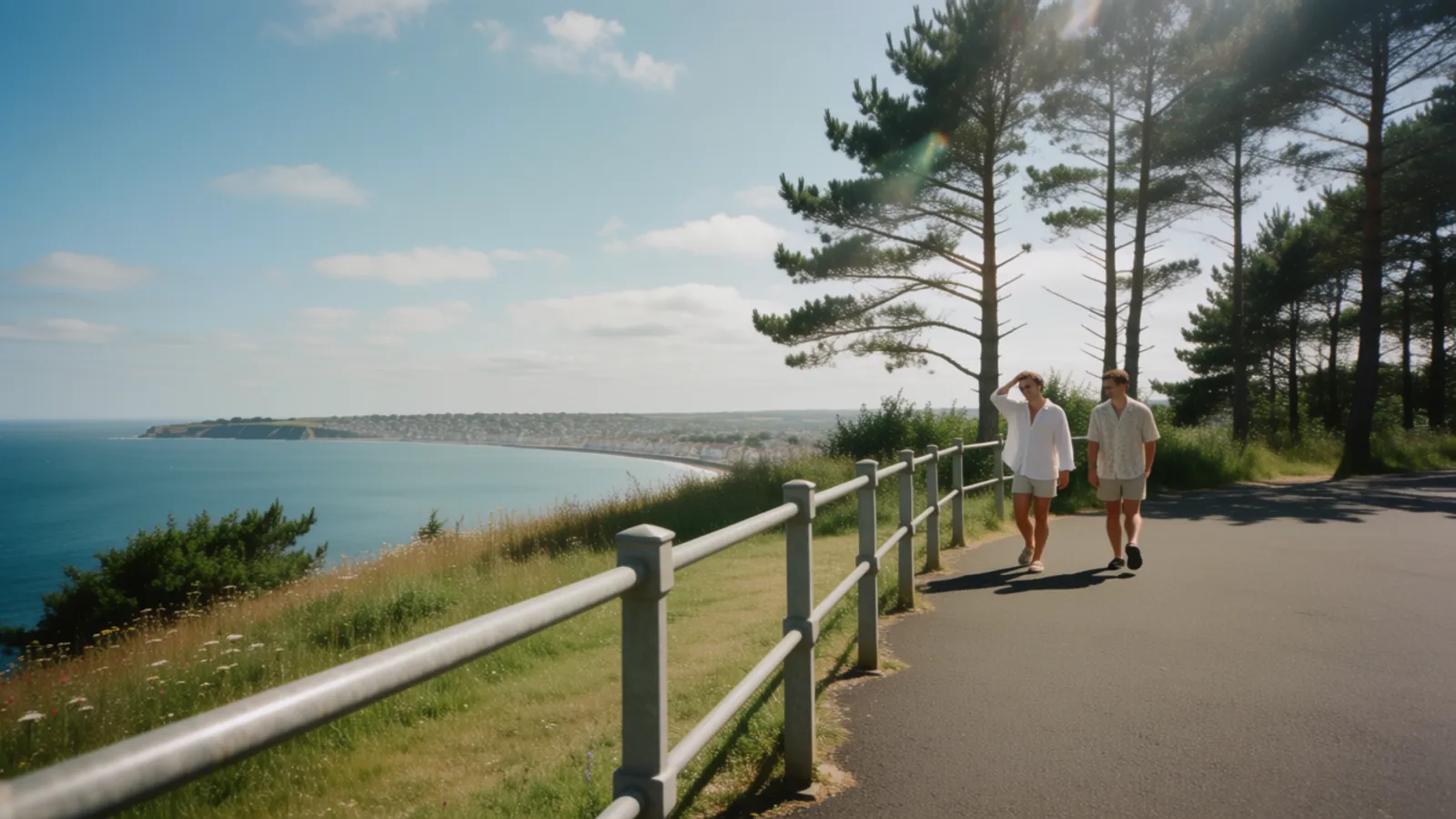

Estepona: what living behind the old town actually feels like

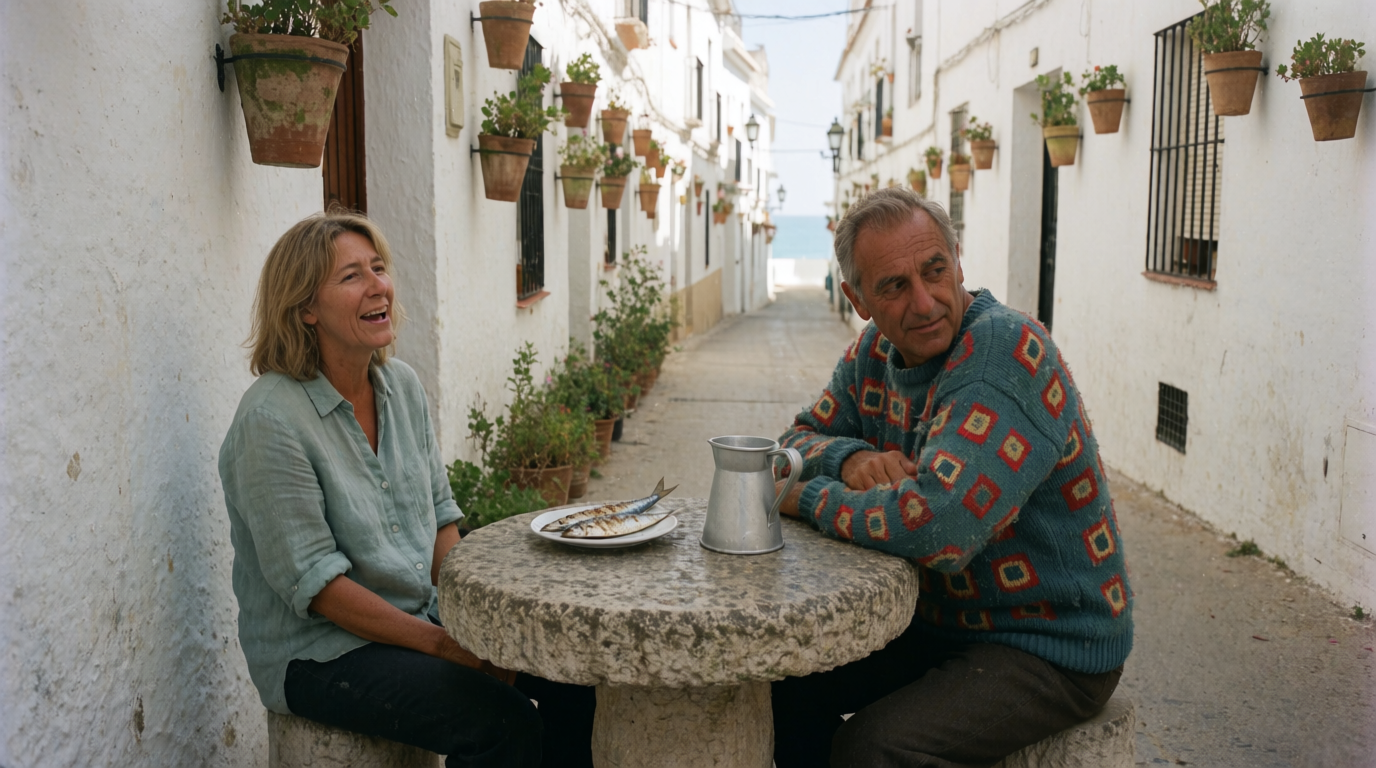
Estepona sits on the western stretch of the Costa del Sol, close enough to Marbella to borrow its restaurants for a night out, far enough from it to keep its own rhythm. It was, for a long time, the coast's overlooked town, the one people drove through on the way to somewhere else. That has changed, but slowly, and mostly on Estepona's own terms.
What strikes people first is the old town. Not a restored showpiece but a place that is still lived in, with washing lines above the geraniums and old men on plastic chairs outside the same bar they have used for thirty years. It is the kind of detail that either seals the decision or tells a buyer this particular town is not for them.
We write this for people trying to work out which one it is.
The seasons, honestly
Winter in Estepona is mild and unglamorous in the best sense. The town empties of day-trippers, the paseo belongs to locals walking dogs and doing the daily constitutional past the fishing boats, and cafés fill with retirees reading the paper over a café con leche that costs less than it does further east along the coast. Rain comes in short bursts off the Atlantic-facing hills rather than long grey spells.
Spring and autumn are, for most residents, the real reason to live here rather than simply visit. The almond blossom on the drive up toward Casares, the light on the Sierra Bermeja, terraces that are comfortable at both breakfast and dinner without air conditioning or a jacket. These are the months when the town feels entirely its own, before the summer crowd arrives and after it leaves.
Summer is different, busier, and worth being honest about. The seafront fills, parking in the centre becomes a genuine daily negotiation, and the pace that drew people here in March gives way to something closer to any coastal resort in July and August. Year-round residents tend to develop a private summer routine, early beach mornings, later dinners, a general retreat from the parts of town given over to visitors.
Neighbourhoods, in plain terms
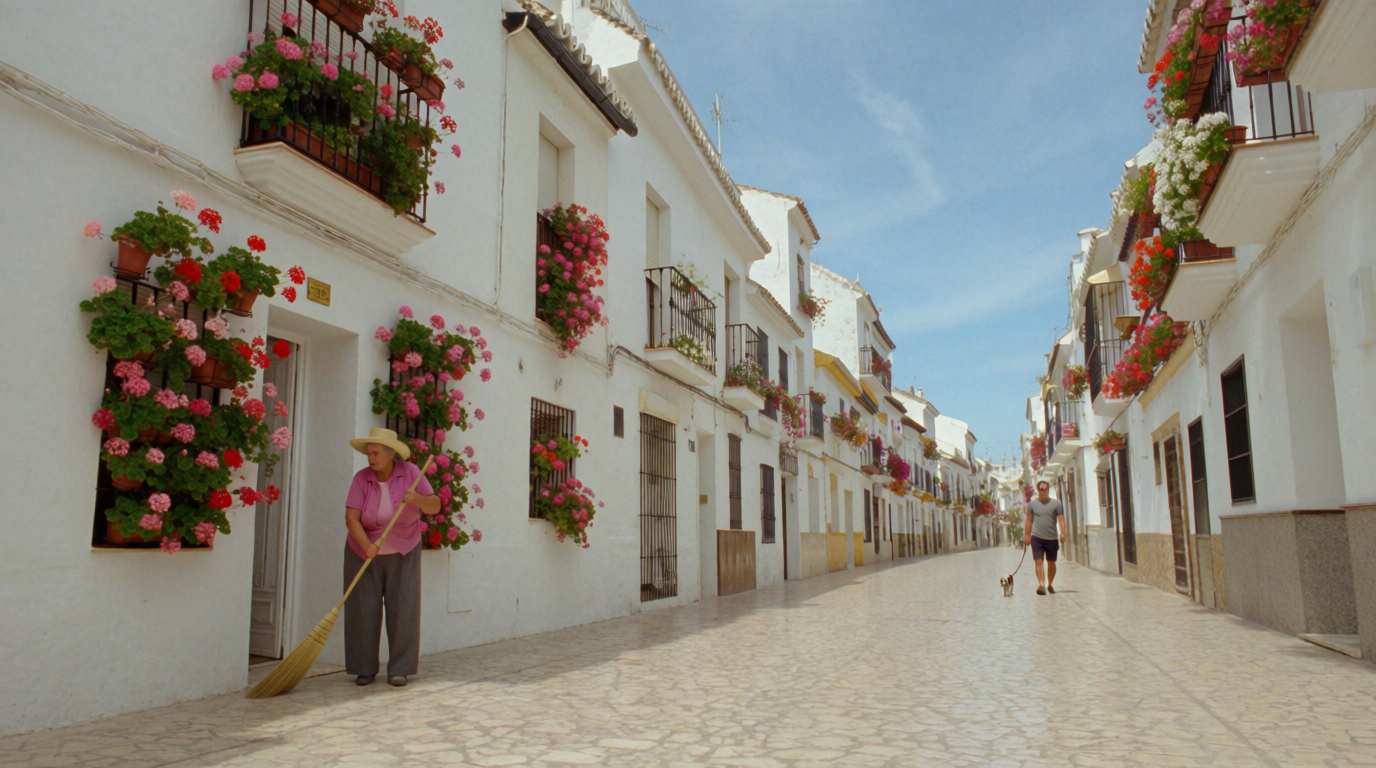
The old town (casco antiguo) is compact, walkable, and increasingly sought after, with narrow streets running back from Calle Terraza and the church of Los Remedios. Prices here reflect the demand, and parking is a genuine daily consideration rather than a footnote.
The new town and the seafront, particularly around Playa de la Rada and the marina, offer newer apartment blocks, sea views, and an easy walk to the promenade. This is where a good number of northern European buyers settle, drawn by lifts, terraces, and proximity to the beach rather than old-town charm.
Inland and up toward the hills, developments like Seghers Hills or the area around the Estepona golf courses (there are several within a short drive, including Estepona Golf itself) suit people who want a garden, more space, and a car-based life rather than a walk-to-everything one. Further out, urbanisations toward Cancelada and the boundary with Benahavís attract families drawn by international schools and the AP-7 motorway link.
Selwo and the areas nearer the bullring sit somewhere between the two, quieter, more residential, popular with people who want proximity to the centre without old-town prices.
The texture of an ordinary week
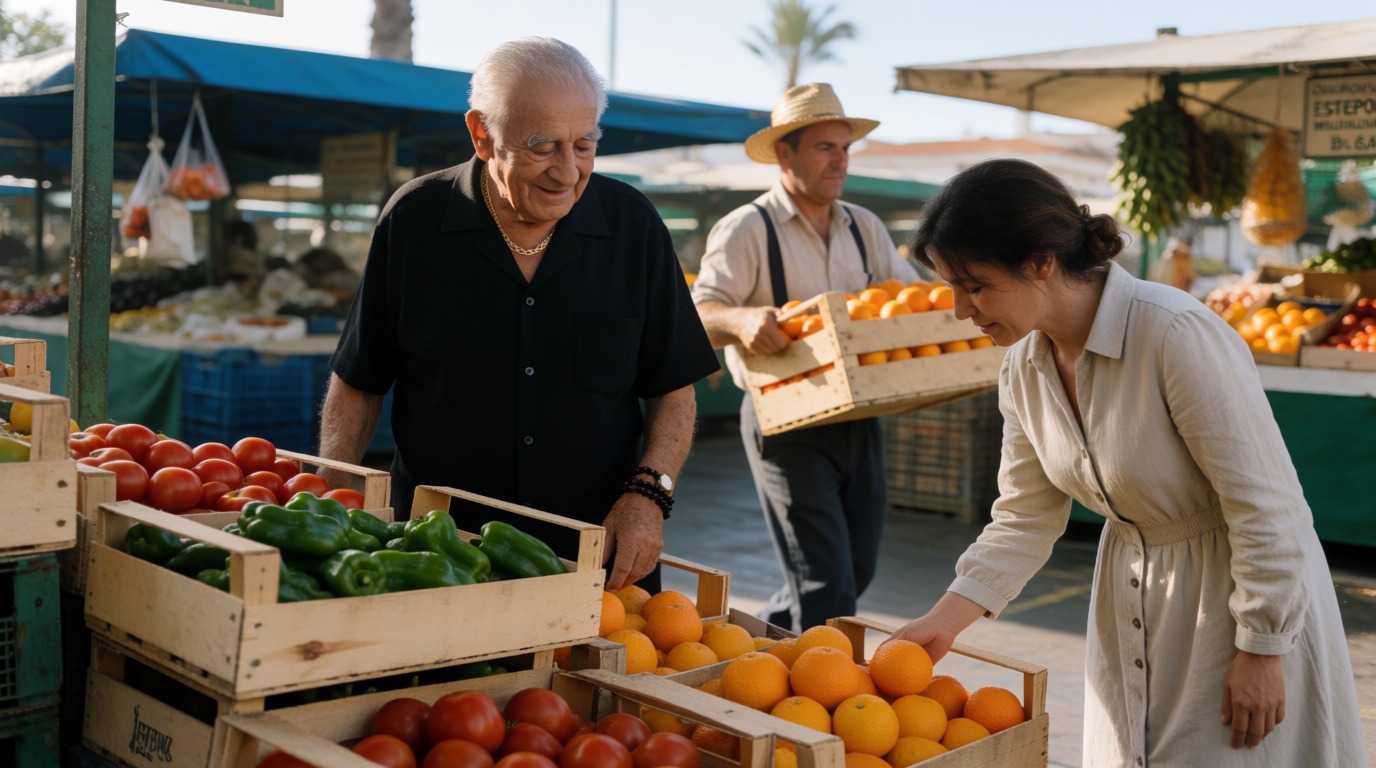
The Wednesday market on Avenida Juan Carlos I remains a genuine fixture, not a tourist performance, where locals buy their week's fruit and fish alongside the odd expat who has learned to arrive before ten to beat both the heat and the queues. The municipal fish market near the port does the same for the days in between.
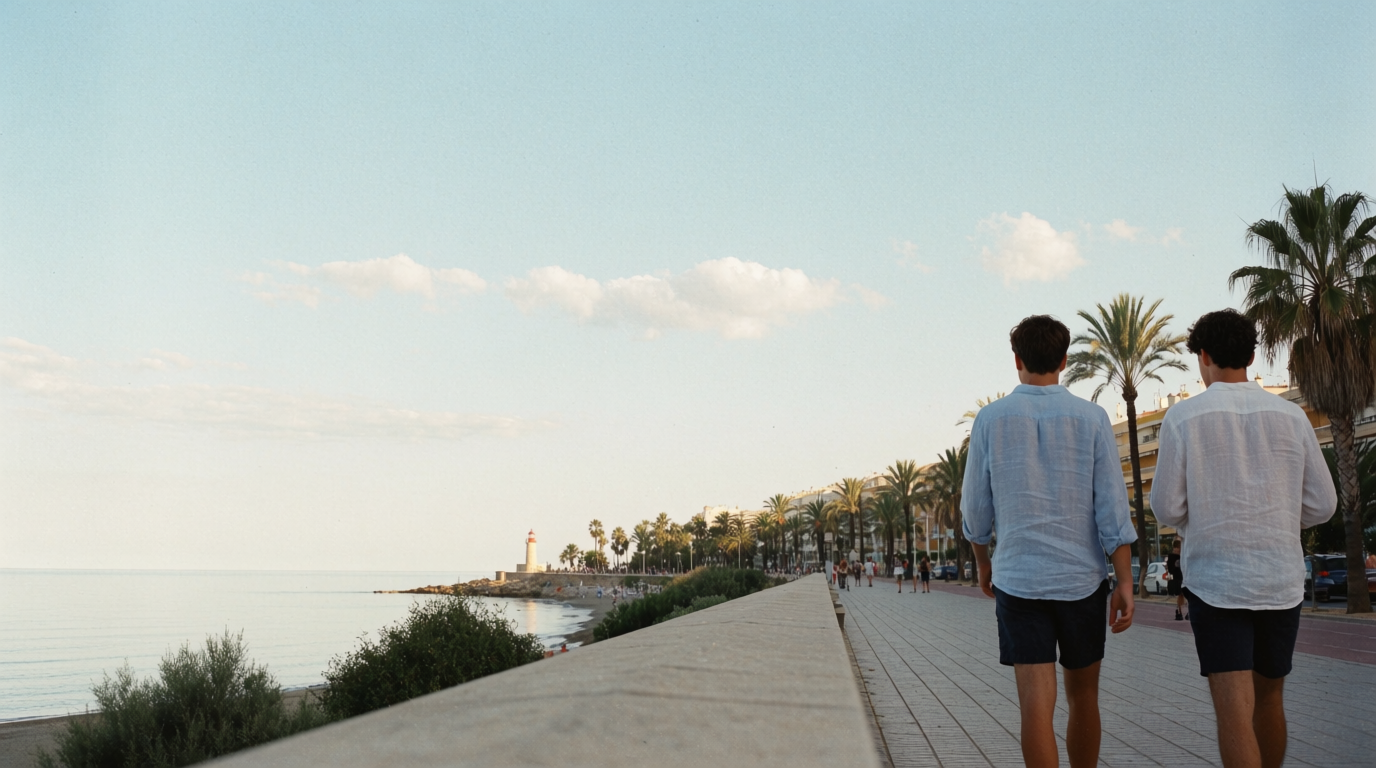
The murals scattered through the old town, over sixty of them by last count, have become a quiet point of civic pride rather than a gimmick, and they give an early evening walk through the back streets a reason beyond dinner. The paseo marítimo, running from the marina past Playa de la Rada, is where the town actually gathers, at the hour when the heat drops and everyone seems to be walking the same direction at once.
The town's own pace, not the resort's, is usually what decides whether someone stays.
Golf brings a distinct and steady population, mostly northern European, mostly retired or semi-retired, who treat the Costa del Sol's western courses as the organising principle of their week. Estepona's own course and its neighbours toward Casares and Sotogrande put a dozen respectable options within a twenty-minute drive, which matters more to some buyers than any other single factor.
Who tends to be happiest here
Families who want a proper Spanish town rather than a resort bubble tend to do well here, particularly once children are at an age to walk to school or catch a bus rather than depend entirely on being driven. The schools serving the international community sit mostly toward Cancelada and the Benahavís side, which shapes where many families end up looking first.
Walkers and hill people find more here than the seafront suggests. The Sierra Bermeja rises directly behind the town, and the paths up past Peñas Blancas or toward the Los Reales pine forest give a version of Andalucía that has nothing to do with beach towels.
Remote workers who need genuine year-round quiet, rather than a summer base, generally settle well here, provided they accept that August requires a different rhythm than April. Summer-only owners tend to have the easier arrangement of the two, since they can simply avoid the parts of the calendar that ask the most patience.
What Estepona is not
Estepona is not Marbella, and it does not particularly want to be. There is no equivalent of Puerto Banús, no comparable concentration of high-end retail or nightlife, and anyone who needs that on their doorstep should look fifteen minutes up the coast rather than expect Estepona to grow into it.
It is also not the place for someone who wants total anonymity within a large expatriate community. The town is Spanish first, and the pace of integration, learning enough of the language to manage the ayuntamiento, the market, the pharmacy, is part of the deal rather than optional colour.
Someone drawn purely to nightlife or a fast social scene would likely find Estepona quiet even by the standards of this coast, and would probably be better served by Marbella itself or, further east, by somewhere like Fuengirola.
If Estepona feels like yours
If what you have read here sounds less like a holiday and more like a life you could actually live, that is usually the sign worth trusting. We are always glad to talk through what a particular neighbourhood or season would mean for your own circumstances, and to introduce you, when the time comes, to the local people we trust to handle the rest properly.