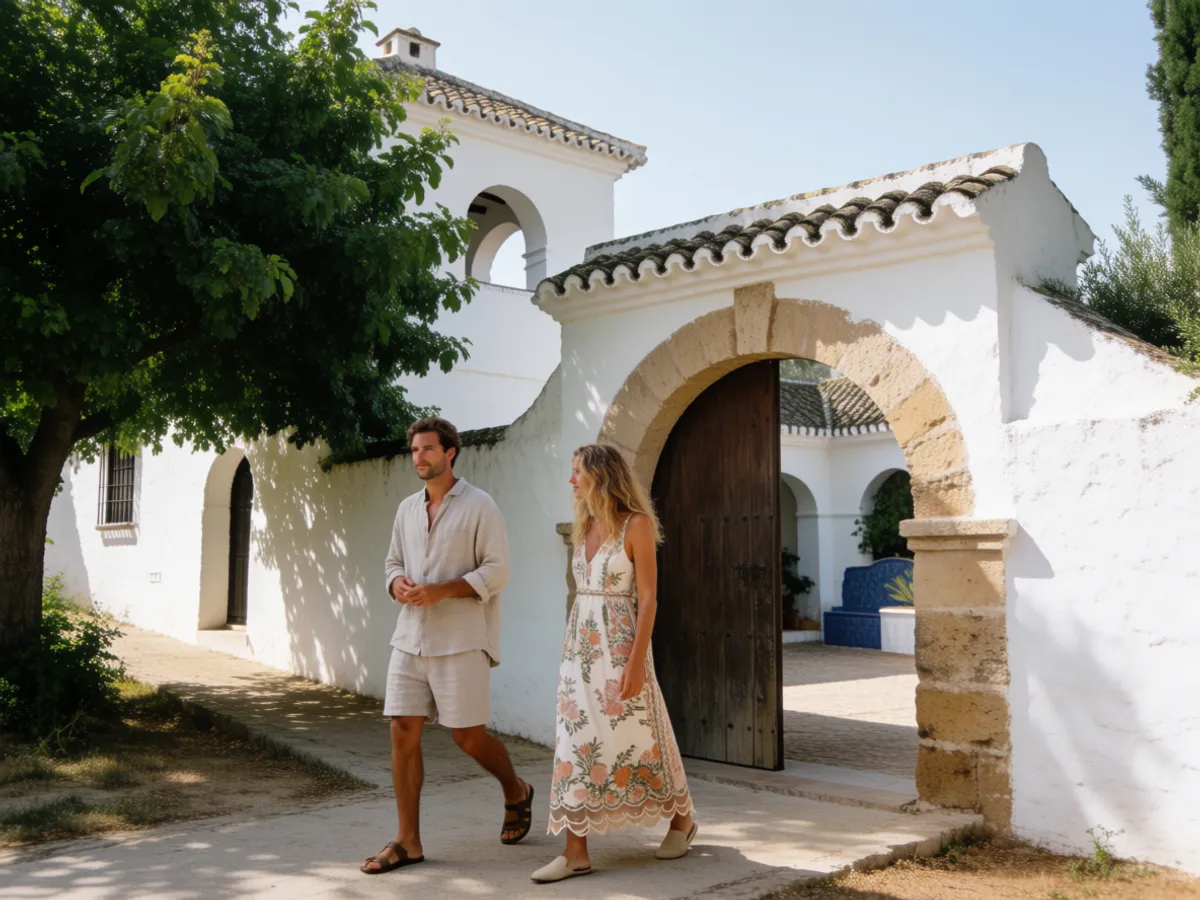
Casares: living between the hill village and the coast road

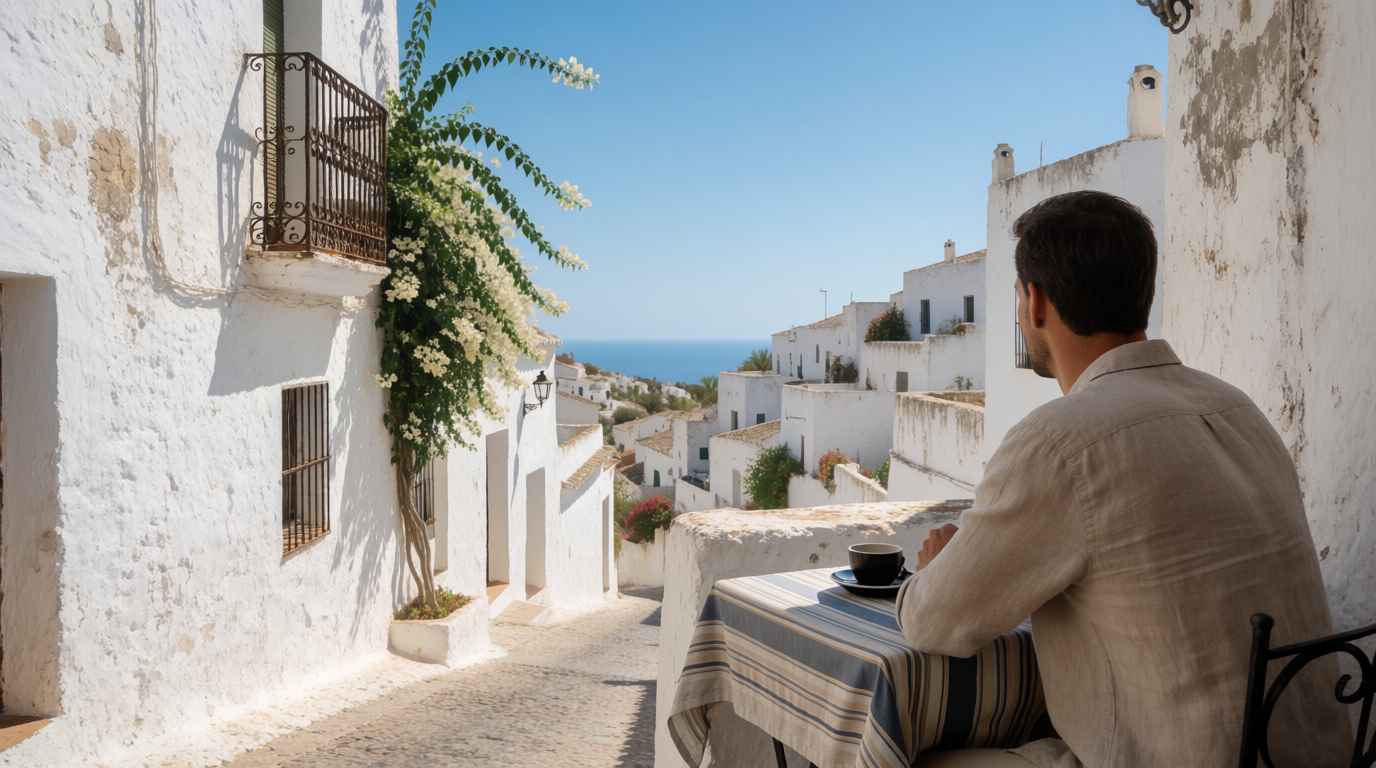
Casares is really two places wearing one name. There is the hill village, a knot of whitewashed houses stacked beneath a Moorish castle, the kind of silhouette that ends up on postcards without ever trying to. And there is Casares Costa, six or seven kilometres of hillside and coastline down toward the Mediterranean, closer to Estepona and Sotogrande than to the village it is named after.
People who buy here are usually choosing one of those two Casares, not both, even if they visit the other often. The village is inland life at its most complete: a working pueblo with a butcher, a baker, a pharmacy, and a town hall that still runs on Spanish hours. The coast is a different proposition entirely, closer to the golf courses and marinas that define this stretch between Estepona and Manilva.
We find the honest way to think about Casares is not as a single market but as a choice of altitude. What you give up in one direction, you gain in the other.
The village: steep streets and a slower clock
Casares village sits at around four hundred metres, and the drive up from the coast road takes you through switchbacks lined with prickly pear before the whitewash appears all at once. It is one of the more convincingly authentic pueblos blancos on this coast, not because it has resisted change but because change here has been slow and mostly Spanish rather than foreign.
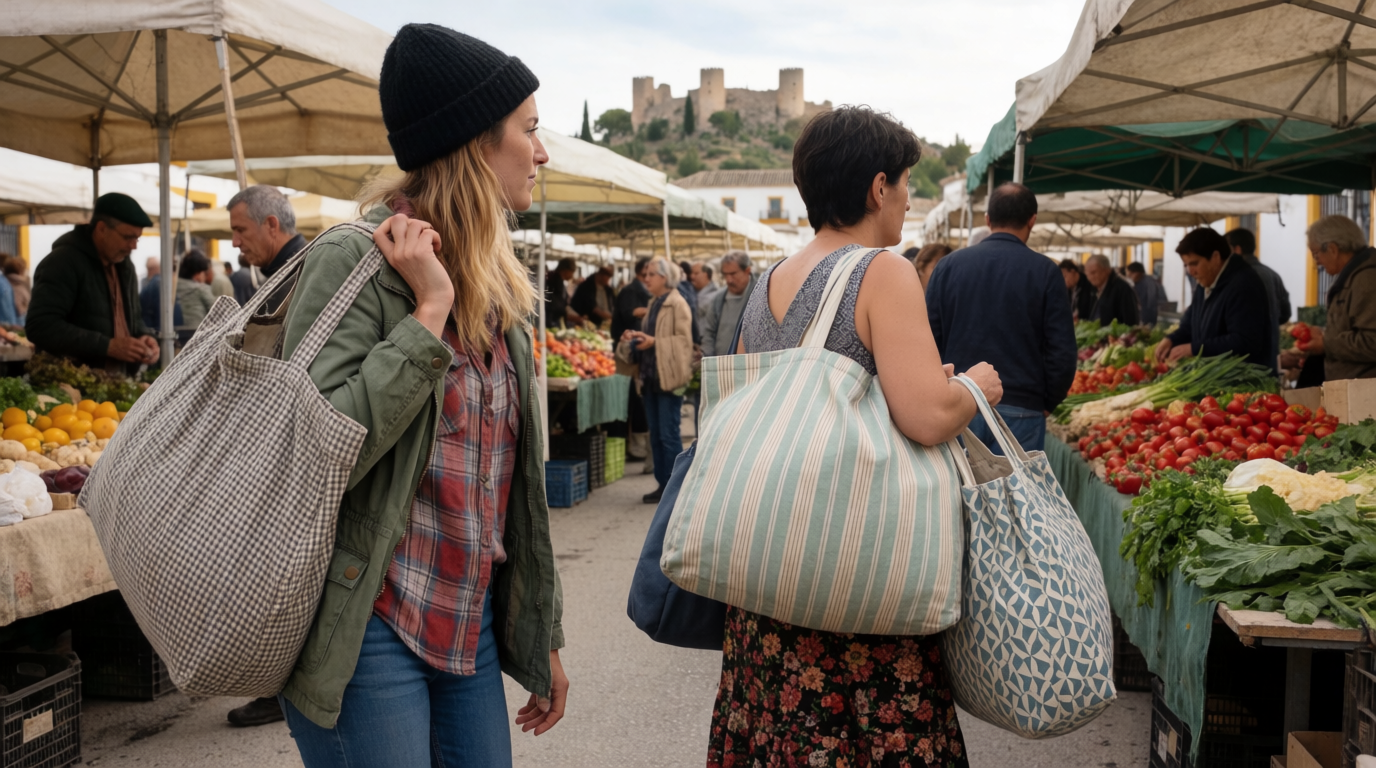
Daily life follows the horario partido. Shops shut early afternoon, the Plaza de España fills again once the heat breaks, and by nine the bars along Calle Carrera are doing steady trade in tapas rather than cocktail menus. There is a Wednesday market, a handful of good local restaurants serving goat and rabbit rather than fish, and a genuine sense that the village would carry on exactly the same if every foreign resident left tomorrow.
That authenticity is the appeal and the trade-off in the same breath. Winters can feel quiet if you are used to a busier social calendar, and some of the steepest streets are not kind to anyone who struggles with stairs or hills. Parking near the centre is tight year-round. People who love it tend to be walkers, painters, retirees who wanted Spain rather than an expat enclave, and remote workers happy to drive twenty minutes for a wider choice of shops.
The coast: golf, quiet beaches, and easier logistics
Casares Costa is a looser geography, really a series of urbanisations and golf developments strung along the N-340 and up into the hills behind it: Casares del Mar, Doña Julia, and the wider stretch that blends into Manilva and the western edge of Estepona. The beaches here are less developed than Marbella's, longer and quieter, with a working-class Spanish character in places like the Playa de Ancón.
Golf is the organising fact of life for a lot of residents, with several courses within a short drive and a social calendar that runs around them almost as much as around the beach. This is also where you find newer builds, easier parking, and a shorter drive to Sotogrance and the AP-7 for anyone commuting toward Marbella or Gibraltar. Málaga airport is roughly an hour away in normal traffic, a fact worth knowing if you are weighing this against towns further east.
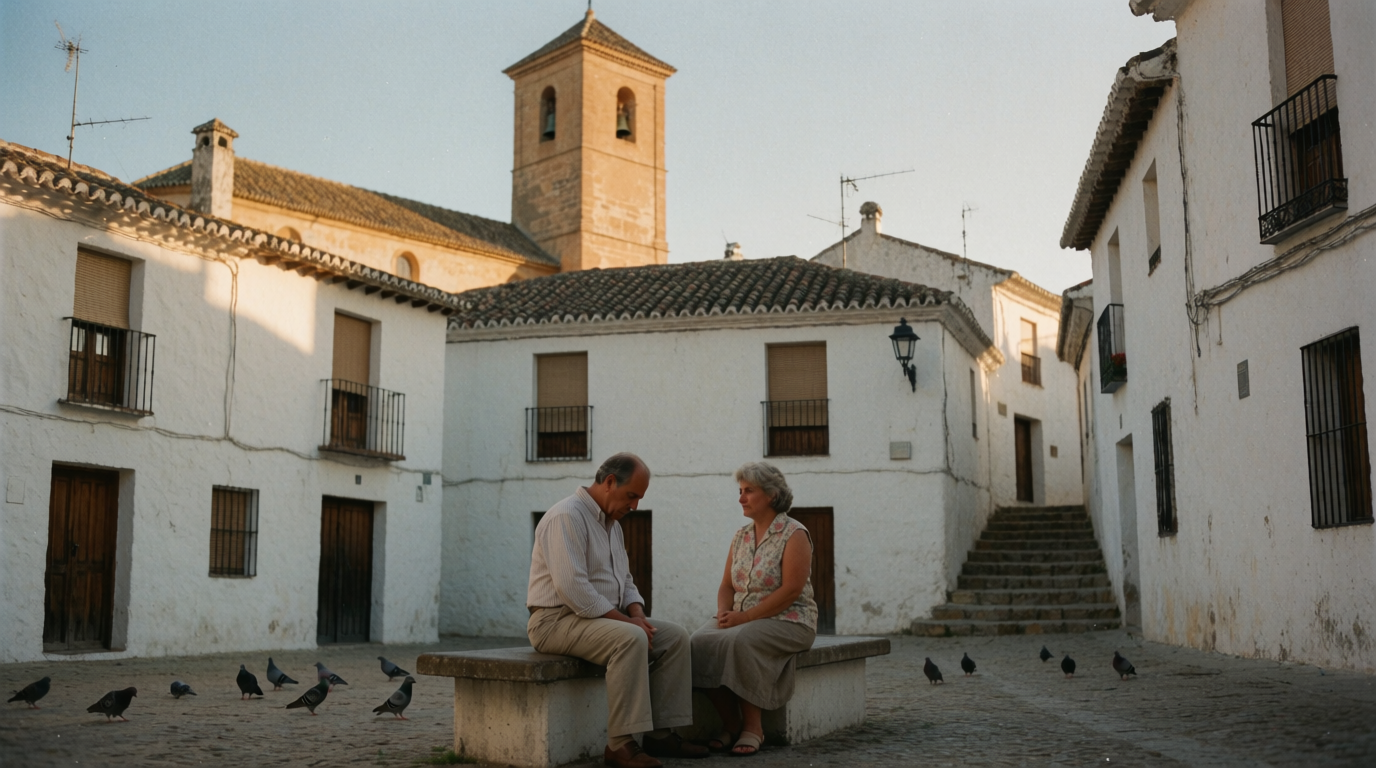
The trade-off on the coast is character. Casares Costa does not have a plaza with three hundred years of pigeons in it, and some of the developments feel more generically Costa del Sol than Spanish. What you get instead is convenience: flatter streets, closer supermarkets, and a shorter learning curve for anyone new to the country.
Who tends to be happiest here
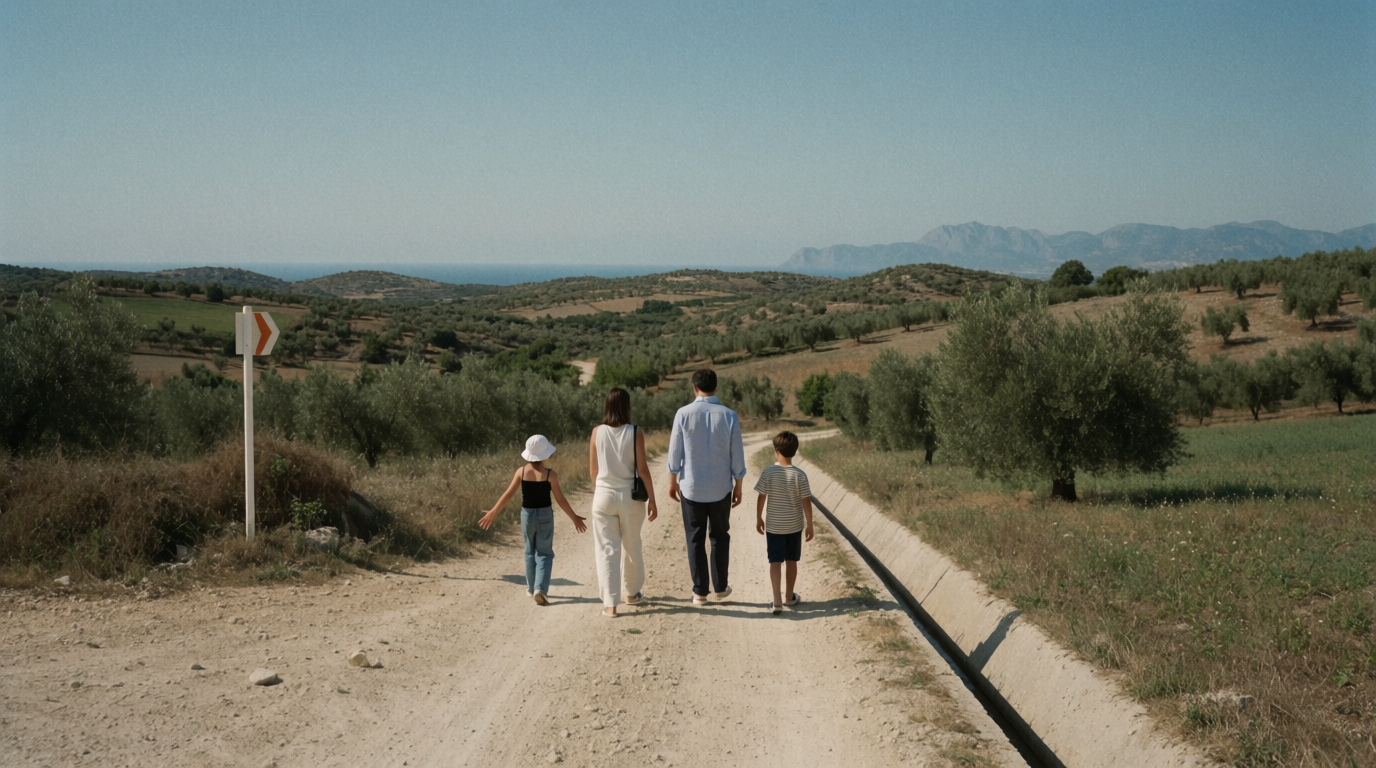
Families with school-age children usually settle on the coast side, closer to international schools around Sotogrande and Estepona, using the village for weekend lunches rather than daily life. Retirees split more evenly, though the ones who thrive in the village tend to be genuinely comfortable with a quieter, more Spanish rhythm and a car for anything beyond the essentials.
Walkers and anyone drawn to the Sierra Bermeja do well here in a way that few other spots on this coast can match; the trails above Casares are some of the least crowded on the whole Costa del Sol. Golfers naturally gravitate to the coast, where the courses and clubhouse social life are the point rather than an afterthought.
Casares rewards people who already know roughly which version of Spain they want. It is a poor fit for anyone still deciding between village life and beach life, because here you mostly have to pick.
What Casares is not
It is not a nightlife town, and it is not a place with a dense old-town restaurant scene like Estepona's. If you want summer evenings filled with options within walking distance, or a bustling paseo marítimo, Casares Costa is quieter than Estepona or La Cala de Mijas, and the village has none of that at all after dark outside festival weeks.
It is also not the easiest coast for someone without a car. Public transport along this stretch is thin, and the village in particular needs you to drive for almost everything beyond a coffee and a loaf of bread. Anyone who wants to walk to a supermarket, a cinema, and a decent choice of restaurants without getting in a car most days would likely be better served in Estepona itself or further along toward San Pedro.
Seasons that actually differ
Summer on the coast side is busy with Spanish holidaymakers rather than international tourists, the beaches filling with families from Málaga and Seville rather than package-holiday crowds. The village barely notices summer beyond a fuller car park and a livelier August feria.
Winter is where Casares shows its real character. The village goes properly quiet, mist sometimes sitting in the valley below the castle in the early morning, while the coast stays mild enough for lunch outside most days. Spring and autumn are, as on most of this coast, the best months to actually see the place: wildflowers on the hillsides in March, and a soft light over the sea in October that photographs never quite capture.
If any of this sounds like the life you are picturing, whether that is a terrace above the fairways or a house with a castle view and a market on your doorstep, we would be glad to talk it through and introduce you to people on the ground who know Casares properly, both halves of it.