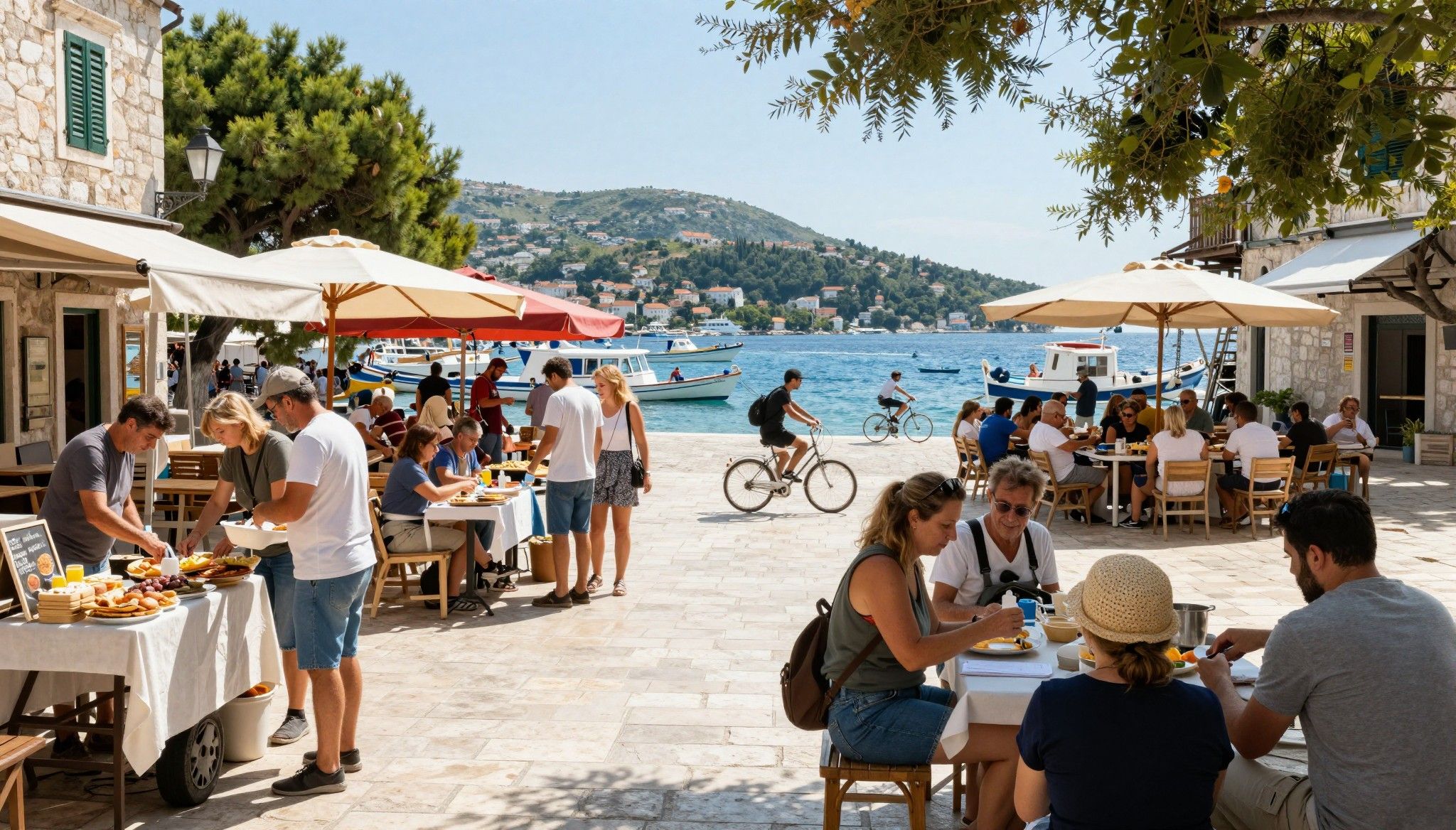
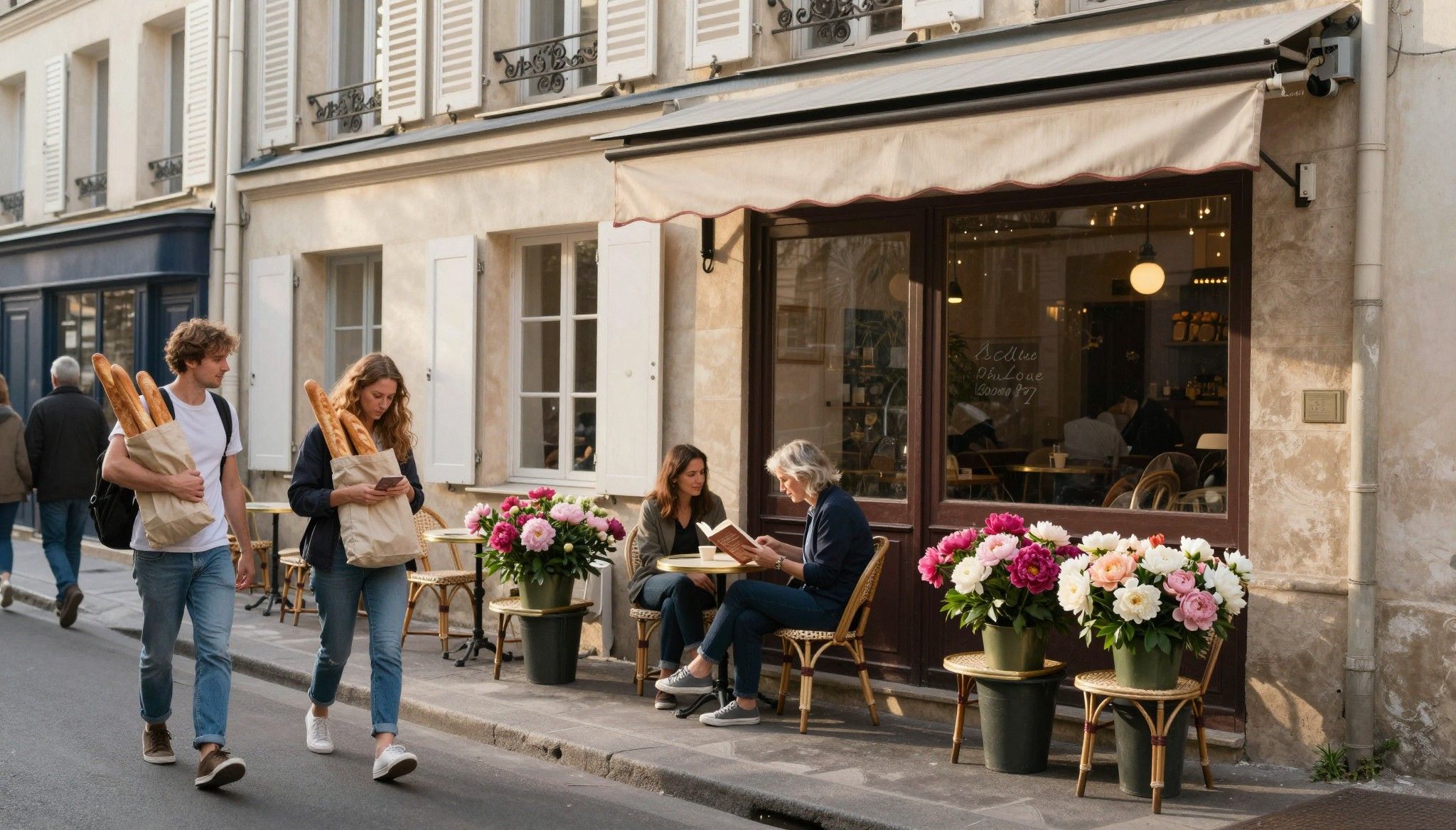
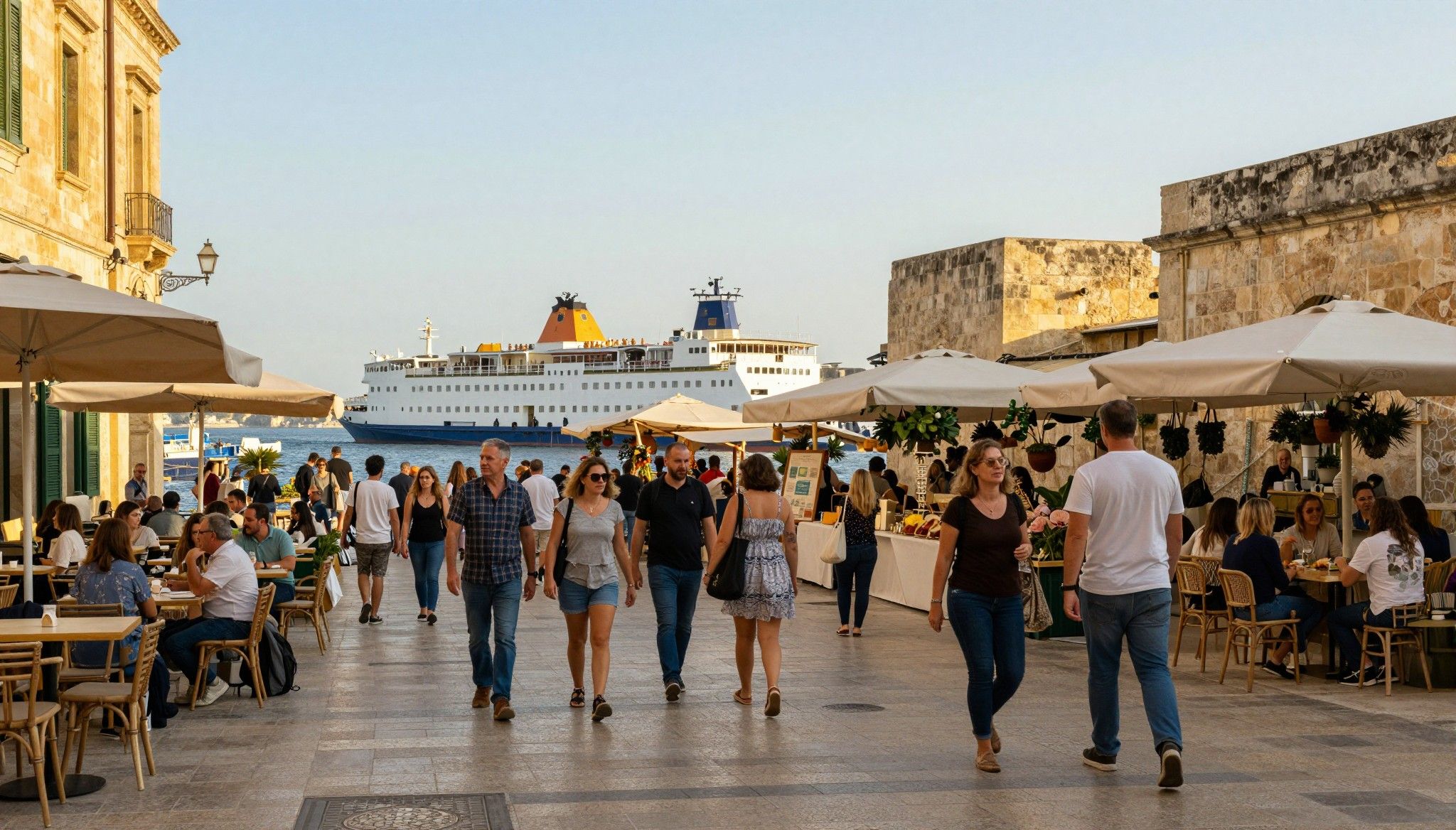
Fall for France — Then Insist on the File
France pairs romantic daily life with unusually open transaction data (DVF, Notaires‑INSEE). Fall for the lifestyle — but insist on the file and season‑aware checks.

Imagine morning light through tall shutters on Rue Cler, a market basket heavy with chèvre and ripe tomatoes, and a neighbour who knows the weekend café order by heart. France sells that life first — but the market behind it is unexpectedly open if you know where to look.
Living French: day-to-day scenes that shape choice
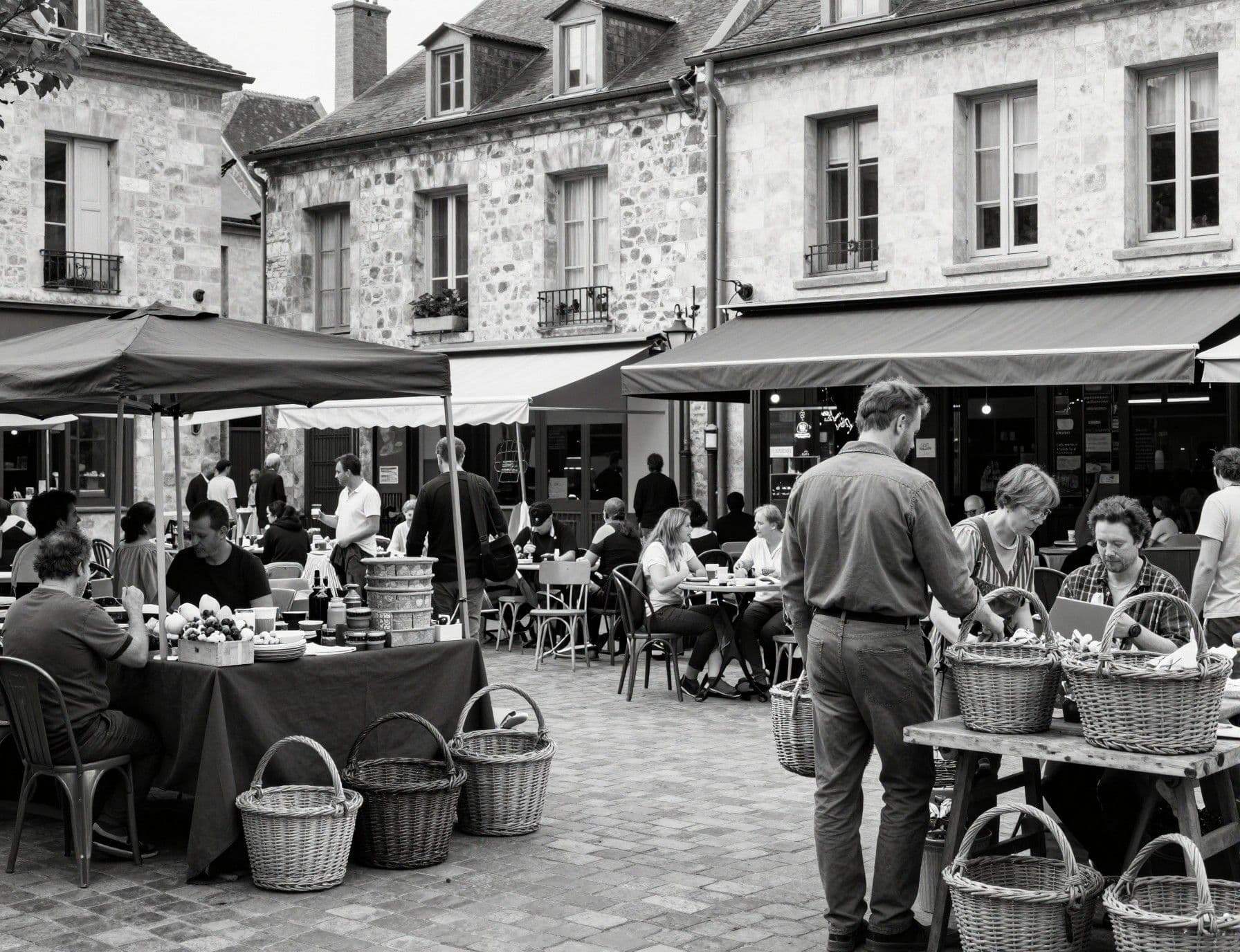
France’s neighborhoods are defined by rhythm: the marché on Tuesday morning, the boulanger at 7:30, evening promenades on the quay. Those rhythms determine what you’ll actually use in a home — terraces in Marseille, a compact pied-à-terre in Le Marais, or a stone farmhouse near Sarlat. Public data (DVF) and Notaires‑INSEE figures show the patterns; the mood you’ll buy into is what makes value stick.
A few neighborhood portraits
In Paris, narrow streets around Canal Saint‑Martin still hum with cafés and independent shops; buyers pay for proximity to that life as much as square metres. In Bordeaux, the riverfront and Chartrons trade calm for weekend food culture. On the Côte d’Azur, Saint‑Jean‑Cap‑Ferrat and Cassis sell sea mornings; further west, Biarritz sells surf and town-centre cafés. Each micro‑rhythm changes resale appeal and rental demand.
Food, markets and the calendar of life
Picture Saturday at Marché des Enfants Rouges in Paris, or a Sunday marché in Lourmarin where neighbours trade garden produce. These weekly anchors explain why ground‑floor apartments with small outdoor space can command premiums in small towns — and why a countryside home needs a reliable winter heating plan more than a second terrace.
- Lifestyle highlights: Rue Cler (Paris), Marché des Capucins (Bordeaux), Plage du Port (Cassis), Rue Mouffetard (Latin Quarter), Place du Marché (Lourmarin)
Making the move: how transparency changes the game
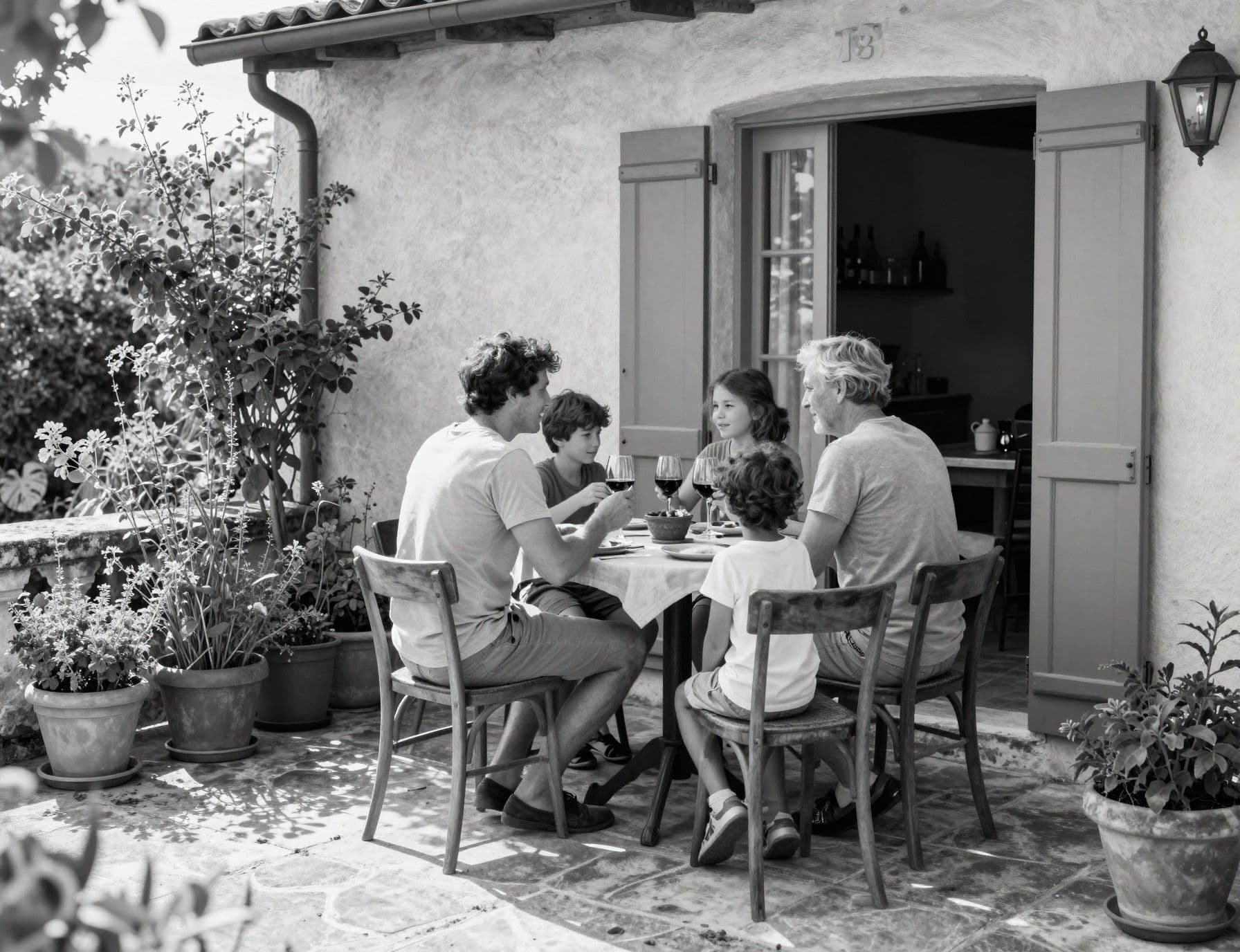
If you love the life, the next question is simple: can you prove the price? France is ahead of many markets on transaction transparency — the DVF public dataset lets you pull historic sold prices by address, and Notaires‑INSEE publish quarterly indices that track regional movements. That means buyers who dig can make offers based on facts, not fog.
Property types and what they mean for living
Stone farmhouses in Dordogne give you land and slow mornings but can demand renovation and fuel costs; Haussmannian flats in Paris offer centrality and predictable rentals but little outdoor space. Consider how the property’s lifestyle role (full‑time home, seasonal bolthole, or rental asset) moves the needle on acceptable tradeoffs.
Work with local experts who know the file
A good local notaire or agent will not only explain contracts but show you comparable sold prices from DVF, recent local permits, and typical running costs. We recommend asking for the three most recent sold comparables within 500 metres and the latest energy diagnosis — those documents are small efforts with big protective value.
- Stepwise checklist when an appealing property appears: 1) Request DVF comparables for the exact address and the last five years. 2) Ask for the diagnostic de performance énergétique (DPE) and recent utility bills. 3) Confirm any co‑propriété charges and emergency reserve funds. 4) Have a local notaire run a pre‑contract search for liens, servitudes and planning constraints. 5) If renovation is needed, get at least two local contractor quotes and a timeline.
Insider knowledge: what expats wish they’d known
We’ve heard the same confessions from clients: they fell for a view, then discovered seasonal silence, tiny supermarkets, or a summer parking nightmare. France’s transparency helps spot many of these traps early — but only if you ask the right local questions and visit across seasons.
Cultural cues that change your choice
Leisure patterns matter: if you crave late‑night dining, skip villages where shops close by 7pm. If you want neighbours, target quartiers with active associative life (local clubs, markets, boulangeries). Language matters less than effort; neighbours warm to buyers who join the marché or a pétanque team.
Long‑term lifestyle and the property’s durability
Think 10 years ahead: energy retrofits, changes in tourist-season pressures, and local planning rules can alter a property’s desirability. Use DVF/DV3F and local planning services to check the past trend and planned developments — transparent records exist, but they require homework.
- Red flags and honesty checks: • No recent DVF comparables for the address. • Missing or vague DPE (energy) report. • Unexplained high co‑propriété charges. • Planning applications nearby that could change light or access. • Seller unwilling to provide three months of utility bills.
France offers a rare mix: lively street life and public data that lets you verify the price. Fall for the market’s poetry — markets are happiest when paired with the file. Visit in two seasons, pull DVF comparables, meet a notaire, and let local rhythm, not reputation, guide your offer.
British expat who relocated to Marbella in 2012. Specializes in rigorous due diligence and cross-border investment strategies for UK and international buyers.