Croatia: Street Life, Seasonality & Price Signals
Croatia’s property story blends city rhythm and Adriatic seasonality — use national indices plus street‑level sales to match lifestyle aims with price reality.
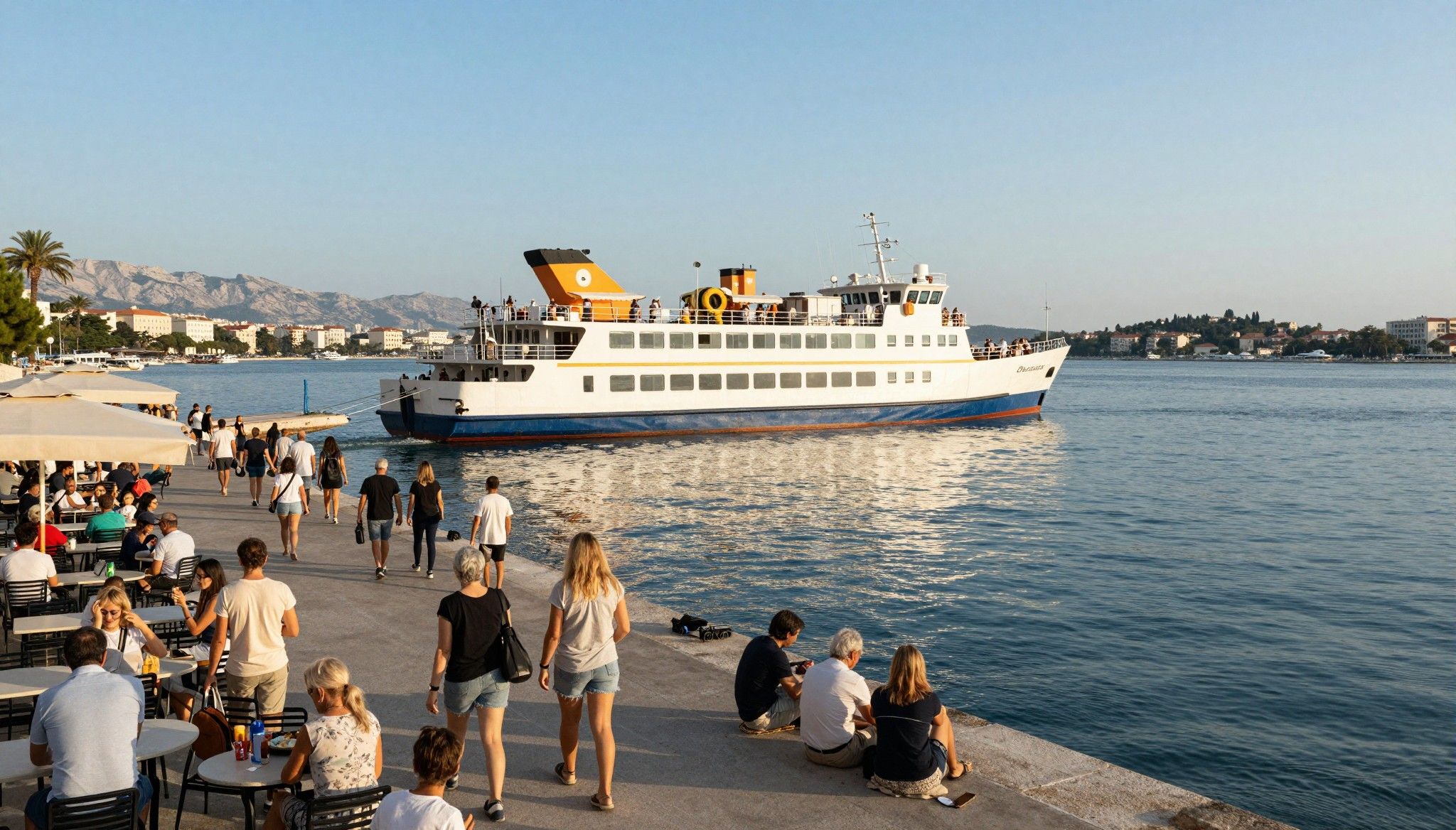
Imagine walking down Ilica in Zagreb at 9am, espresso in hand, then catching a late-afternoon ferry to Hvar for seafood on the harbour. Croatia is both a city‑center rhythm and an Adriatic slow‑dance — and those two lives feed its property story.
Living Croatia: city mornings, island evenings
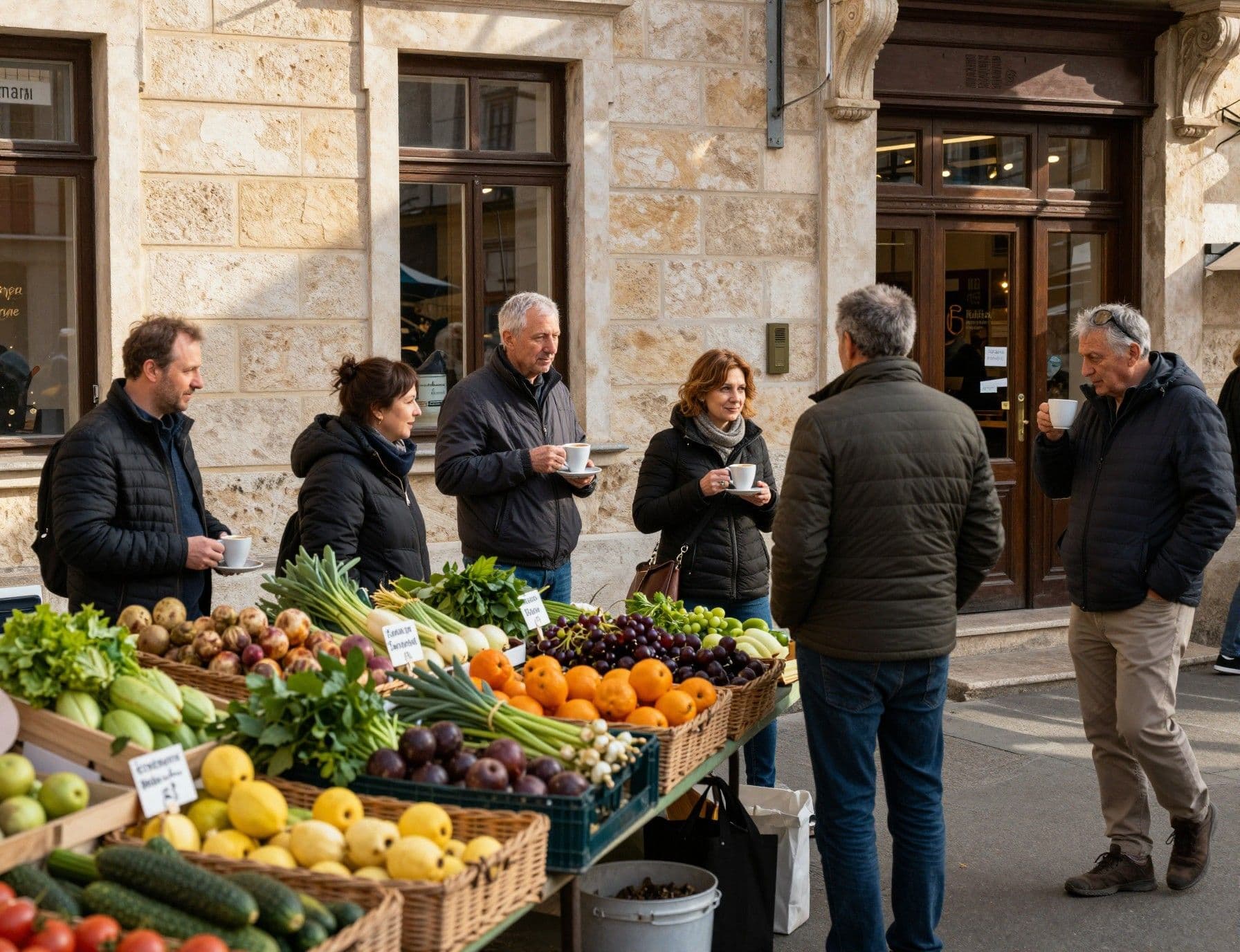
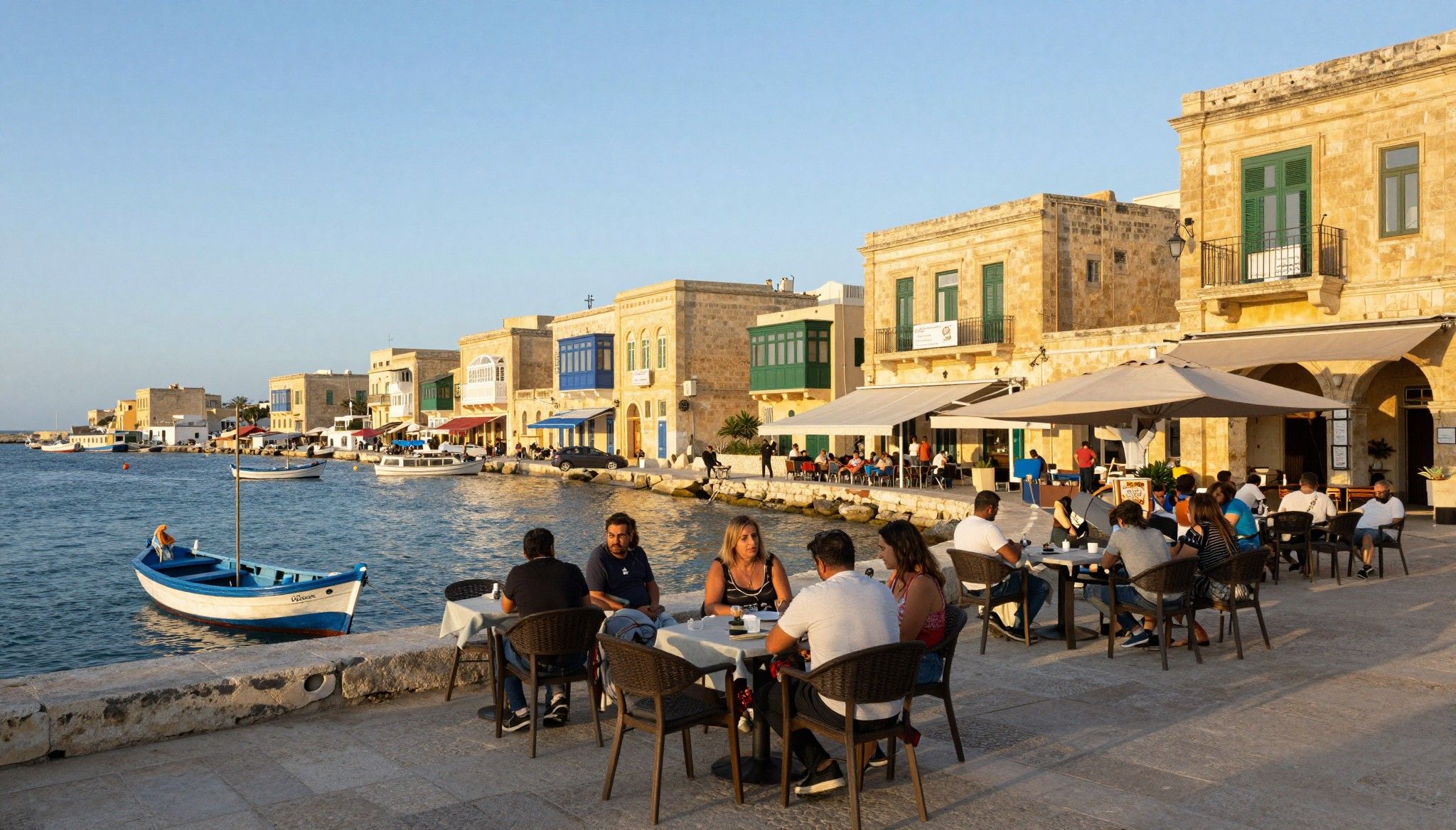
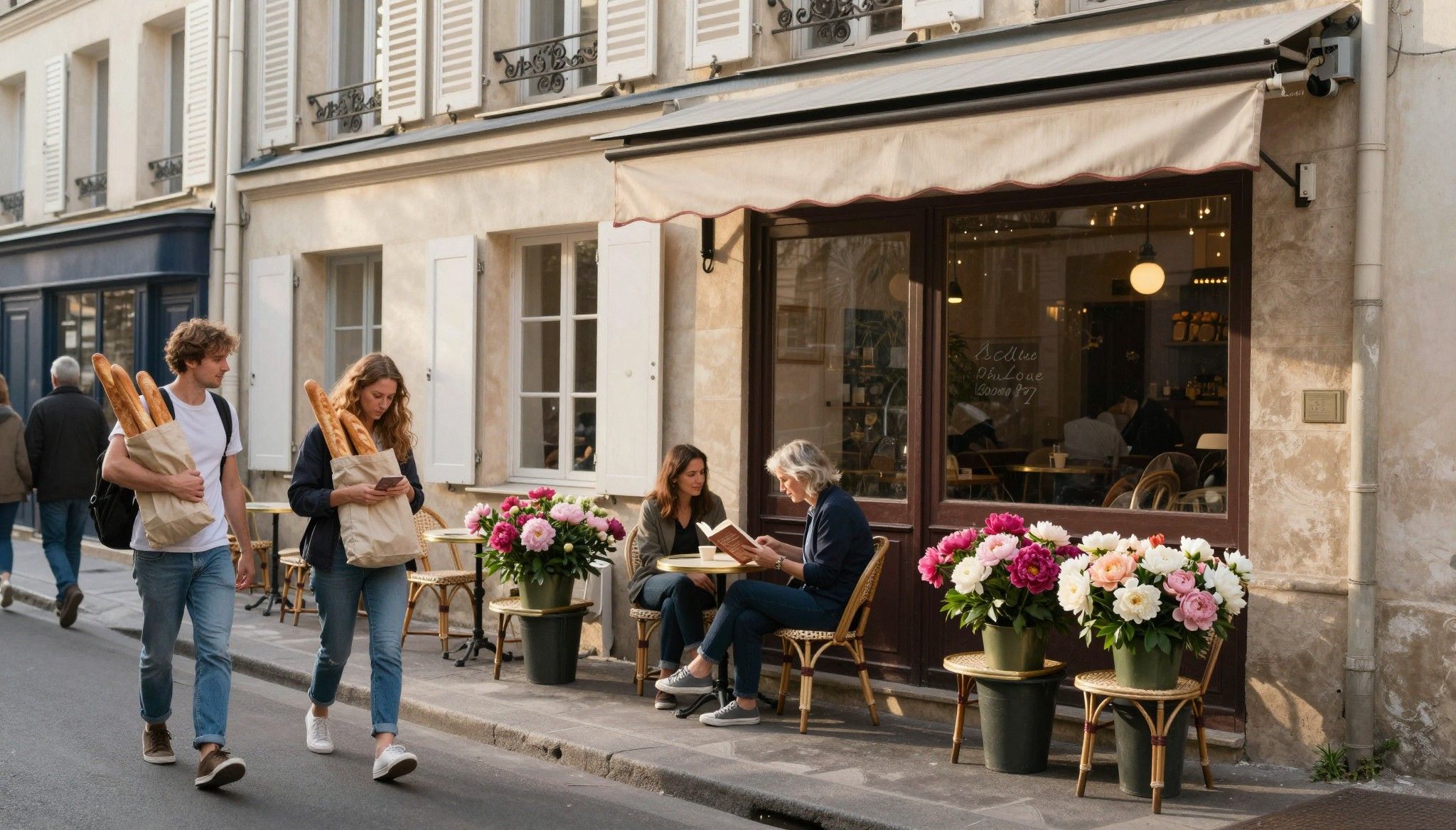
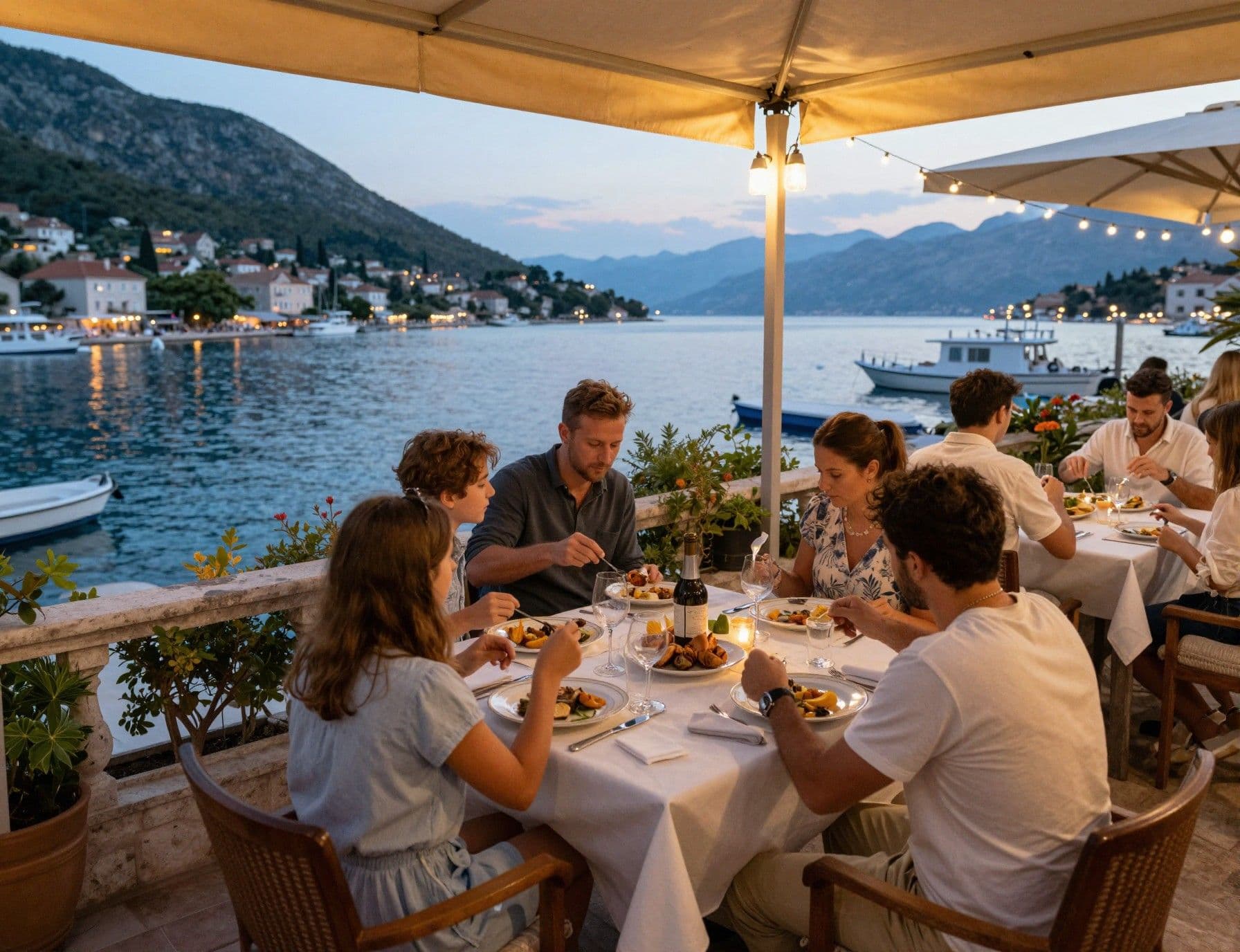
The life you buy in Croatia depends on the tempo you choose. In Zagreb you’ll find bakeries opening at dawn, tram routes that become conversations, and neighbourhood pockets like Upper Town (Gornji Grad) where stone courtyards outnumber cars. On the coast — Split’s Riva, Dubrovnik’s old city walls, the pebble beaches of Brela — evenings are about lingering meals and wind‑cooled terraces. For many international buyers the attraction is the ability to stitch both lives together: city infrastructure for year‑round living and islands/coast for seasonal escape.
Neighbourhood focus: Zagreb’s Ilica & Split’s Veli Varoš
Ilica’s blend of apartment blocks, boutique workshops and weekday markets makes it a practical base for families and remote workers. Veli Varoš in Split is narrower streets and sea views — less polished but full of morning rituals: fishermen mending nets, coffee on stone steps. These streets tell you how you would actually live, not how a listing photo wants you to feel.
Food, markets and the weekend routine
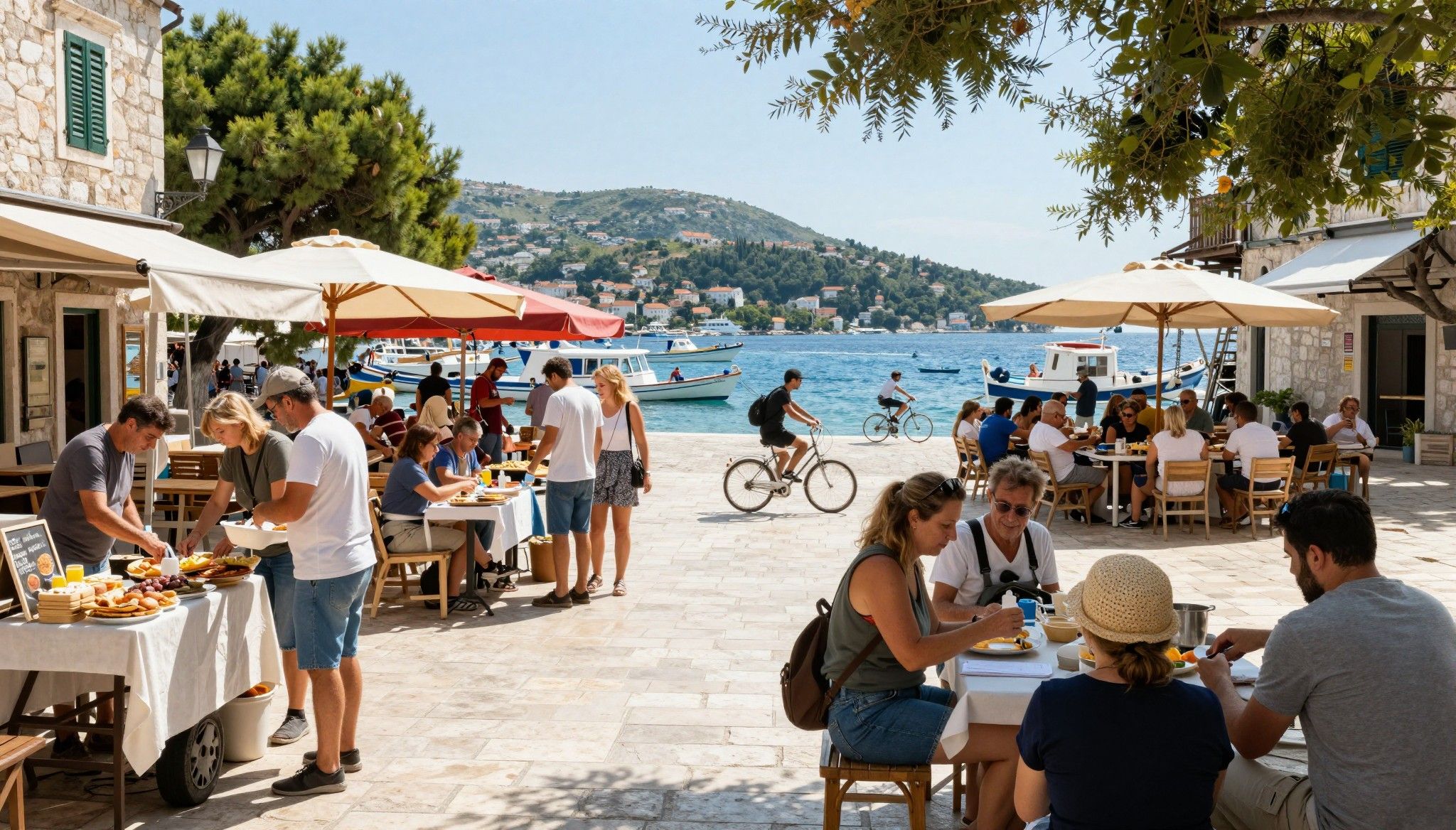
Weekends in Croatia often start at a market. Dolac in Zagreb is where neighbours cross paths; in Istria you’ll hunt truffles, and on the Dalmatian coast the morning catch defines the day. This sensory rhythm shapes what buyers want: outdoor kitchens, balconies with shade, storage for bicycles and sea‑gear, not just a view.
- Lifestyle highlights: Dolac market (Zagreb); morning espresso on Split’s Riva; sunset swims at Zlatni Rat; Konoba dinners in Rovinj; island ferry rituals in Hvar; weekend truffle hunts in Motovun.
Making the move: how prices and seasons actually behave
Putting the romance aside, Croatia’s house price indices rose through 2024–2025, with official statistics showing positive year‑on‑year growth in early 2025. But coastal markets behave differently to inland cities: tourist demand lifts asking prices on islands and prime seafront, while Zagreb’s market is driven by employment and new‑build supply. Read the data next to the street‑level reality: a compact apartment near Dolac will move differently than a stone villa on Brač.
Property types and what they mean for lifestyle
Stone coastal houses demand outdoor space and maintenance; city apartments offer convenience and rental flexibility. New builds in Zagreb offer modern insulation and predictable running costs; historic Dalmatian houses reward restoration but require local craftspeople and time. Choose property type by how you intend to live: primary residence, seasonal escape, or a rental play — each has different turns in price and upkeep.
- Steps to match lifestyle to price dynamics: 1. Map the seasonality: compare summer rental demand vs winter occupancy. 2. Inspect running costs: insulation, water systems, road access on islands. 3. Factor renovation lead times and local builder availability. 4. Ask agencies for transaction histories on specific streets, not just neighbourhood averages.
Insider knowledge: what expats wish they’d known
Expats often tell the same story: they fell for the light and sea, then learned the local calendar (ferries, shop openings, summer crowds) matters as much as square metres. Practical issues—seasonal heating, road maintenance to a villa, or municipal plan changes—can change a purchase’s day‑to‑day comfort. The IMF and local reports also flag that supply constraints and foreign demand have kept prices elevated in key areas, so measured patience usually pays off.
Language, community and the small rules
Croatians will appreciate effort with language and local customs — a few phrases, and time spent in neighbourhood cafés, will get you further than perfect paperwork alone. Many expats find local clubs, olive‑oil cooperatives or sailing groups are the quickest route to integration and practical knowledge about contractors and seasonal quirks.
- Red flags and local realities to check before you sign: • Unofficial access roads on island properties. • Water supply limitations in peak summer months. • Incomplete permits for extensions or terraces. • Listings priced by view but with high seasonal vacancy.
When data points and neighbourhood life disagree, trust the street. Use official indices to understand macro trends (the Croatian Bureau of Statistics HPI and CNB reports), then ask agents for recent closed‑sale examples on the exact street. That combination — statistics plus local record — is how smart buyers avoid paying for a postcard view and end up buying a life.
- Practical checklist before making an offer: • Obtain recent sale prices for comparable addresses. • Verify building permits and cadastral maps with the municipality. • Check seasonal access (ferry timetables, snow clearance inland). • Get a local quantity surveyor estimate for restorations.
Working with the right local agency
A good local agency brings both market records and lifestyle translation: they’ll know whether that stone house’s septic system copes with summer guests, who the reliable masons are, and whether the neighbours host a summer music festival. Ask for written transaction records, references and examples of clients they’ve helped buy the specific type of property you want.
- How we recommend evaluating agencies: 1. Request three recent closed sales on the street of interest. 2. Confirm they use bilingual lawyers and local notaries. 3. Ask about after‑sales service: property management, rental logistics. 4. Check client references and online transaction records.
Conclusion: fall in love, then check the file. Croatia offers a rare combination: everyday European city life and effortless summer freedom. Let the markets and statistics inform timing and price expectations, but use local knowledge to match a street with a season and a property with how you actually want to live.
Norwegian market analyst who serves Nordic buyers with transparent pricing and risk assessment. Specializes in residency rules and tax implications.