Buy the Street, Not the Postcard — Greece’s Urban Reality
City life in Greece is sensory and seasonal — buy the street, not the postcard. Market data show steady urban price rises; marry lifestyle choices with forensic local checks.
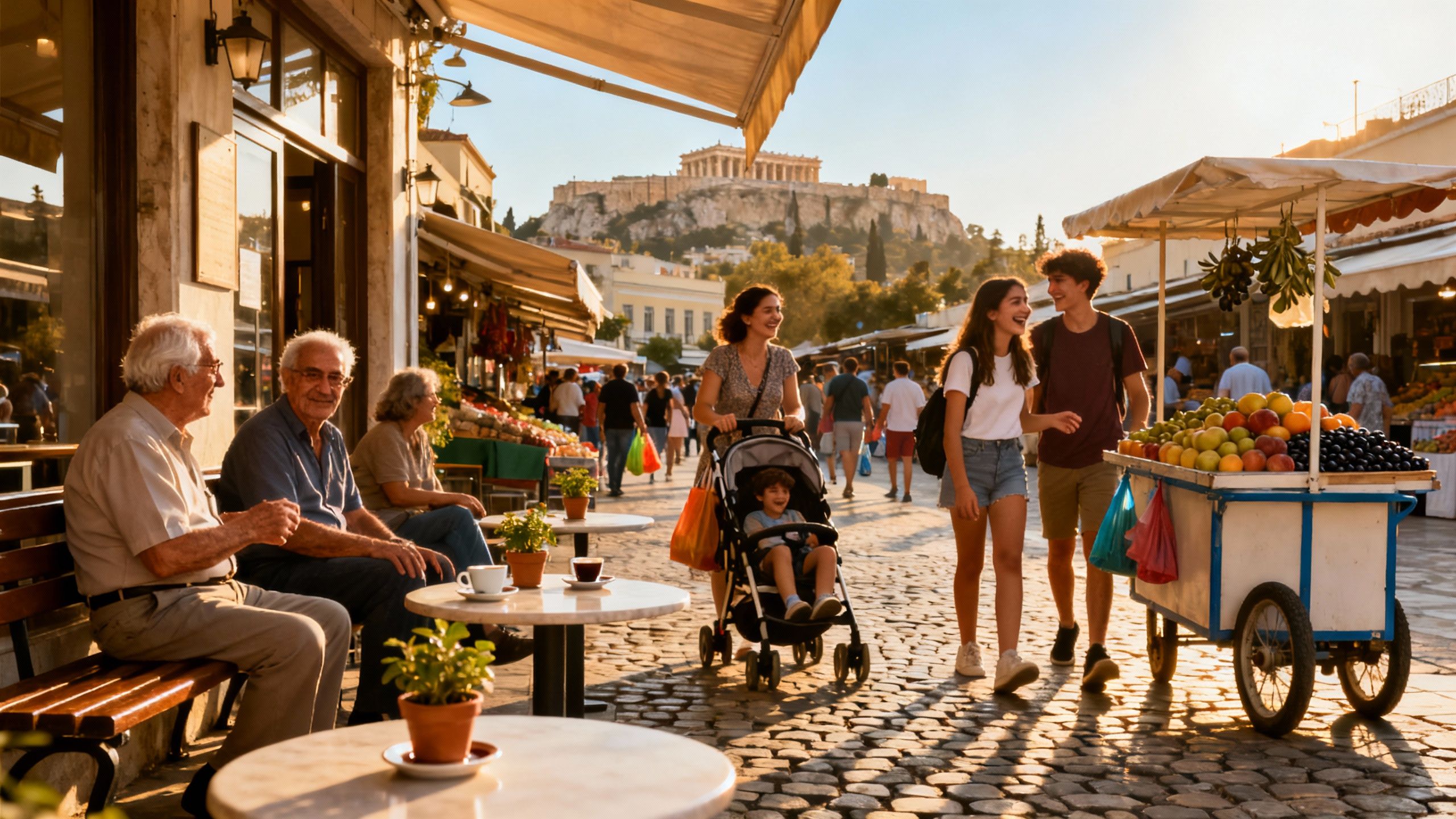
Imagine sipping a strong espresso at Drakou Street in Koukaki as the Acropolis wakes in soft morning light — neighbours buying fresh koulouri from the corner stall, a baker folding phyllo for midday spanakopita, and a trampling of dogs chasing schoolchildren across the square. That mix of ordinary life and ancient backdrop is Greece’s urban heart. For international buyers this is the seduction; beneath it lie accelerating city markets, shifting rules on residency, and neighbourhoods being reshaped by tourism and local demand.
Living the Greece lifestyle: city rhythms and neighbourhood texture
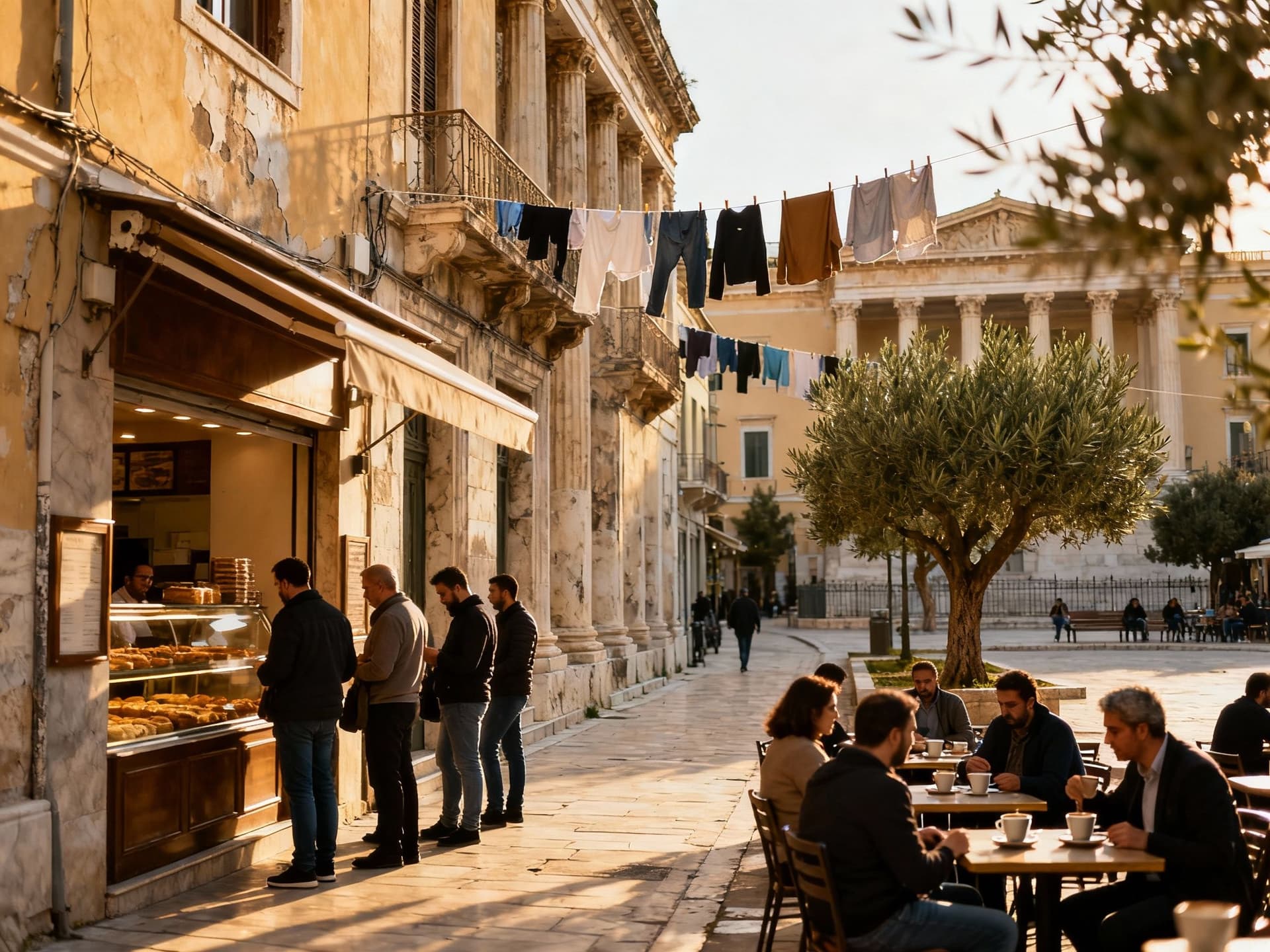
Greece’s cities feel lived-in rather than staged. Athens mixes the tactile — peeling neoclassical plaster, bakeries with bread smoke in the doorway — with a strong café culture that runs morning to night. Thessaloniki’s waterfront hums with families and tavernas; Patras and Heraklion still carry provincial rhythms beside university life. For buyers, the daily texture matters: streets with markets, bakeries, and small squares will determine how you actually live here, not just the view.
Athens: Koukaki, Pangrati, Metaxourgeio — neighbourhoods that tell different stories
Koukaki is the compact, lived-in base for city life near the Acropolis: vine-draped tavernas, narrow streets and a strong local rhythm. Pangrati offers green avenues and a growing restaurant scene; it feels quieter and better suited to families. Metaxourgeio and Kerameikos are the creative edges — industrial shells turned into galleries and cafés. Each area trades different comforts: quiet side streets versus proximity to cultural anchors versus potential short-term rental demand.
Seasonal life: how winter and summer change the city
Summer turns many Greek streets into open-air living rooms; terraces fill, and islands send a spillover of tourists into coastal cities. Winter reveals the real neighbourhood — cafés stay full, markets bustle, and life slows to human scale. For buyers, that means assess a street in February as well as August. What feels charming in July can be vacant in December; conversely, a winter-stable street signals a resilient local community rather than purely tourist income.
- Lifestyle highlights to look for on the ground
- Morning markets: Varvakios Market (Athens) or Kapani Market (Thessaloniki) — fresh produce and neighbourhood social life
- Cafés with character: Drakou Street cafés in Koukaki and the terraces along Nikis Avenue in Thessaloniki
- Evening piazzas: small squares where locals gather — Plateia Iroon (Pangrati) or Plateia Xaplov (Kerameikos)
Making the move: practical considerations that preserve the lifestyle

You can fall in love with a street but make a mistake on title, zoning or seasonal supply. Greek urban markets have been rising: Bank of Greece data show sustained price increases across recent years, and industry reports note double-digit growth in some quarters. That means buying decisions should be street-led, not headline-led: confirm how a street functions off-season, check short‑term rental pressure, and verify renovation limits before you sign.
Property types and the life they enable
In Athens you’ll find everything from neoclassical flats to stripped-back lofts in Metaxourgeio. A restored neoclassical apartment gives immediate character and central access; a modern apartment near the waterfront offers light and views but often less internal character. If you plan to live year-round, prioritise insulation, double glazing and a sunny aspect. If you plan to rent seasonally, check municipal licensing: several central neighbourhoods now face short‑term rental limits.
Working with local experts who know the street, not just the price
- 1. Ask agents for recent transactions on the same street and visit those properties in person.
- 2. Retain a local lawyer to confirm title, building permits and flood or archeological constraints.
- 3. Verify short‑term rental licensing and municipal restrictions — licences can be frozen in saturated districts.
- 4. Insist on an energy performance certificate and an engineer’s report for structural risks in older buildings.
Insider knowledge: expat mistakes and contrarian neighbourhood picks
Expat buyers often chase the postcard quarter — Plaka or Monastiraki — and then find noise, tourist crowds and municipal restrictions. A contrarian, and often smarter, move is to consider streets adjacent to these hubs: small lanes in Kerameikos or blocks in Kypseli where locals still run shops by day and community life persists after midnight. These streets give the proximity buyers want without the seasonal volatility.
Cultural integration: what locals expect and what we wish we’d known
Learn basic Greek phrases for everyday interaction — shopkeepers and neighbours will reciprocate. Join a local association or a sports club; these are fast tracks to community integration. Expect bureaucracy to be slower than you might prefer; patience and a trusted local advisor save time and mistakes. Small gestures — bringing sweets to a new neighbour, asking about building repairs — build the social capital that makes Greek street life work.
Long-term view: how neighbourhoods evolve and what to watch for
Urban neighbourhoods in Greece can change quickly once a metro line opens, a municipal restoration begins, or short‑term rental rules tighten. Look at local infrastructure projects and permit flows. A quiet street with pending station works may lose charm short-term but gain liquidity and price uplift long-term. Balance lifestyle patience with clear exit criteria: know your minimum acceptable rent yield or resale timeline before you buy.
- Red flags to spot during a street visit
- Empty shops on a traditionally busy strip — signs of commercial decline, not a hole to be filled by tourists
- Multiple short‑term rental listings for the same block — signals saturation and future license freezes
- Unfinished or illegal rooftop additions — common in older buildings and a structural/legal headache
Conclusion: Greece rewards buyers who marry place-sense with due diligence. If the lure is the morning espresso and the neighbour who knows your name, protect that life with street-level research, a lawyer fluent in local practice, and an agent who measures neighbourhood rhythm, not just square metres. Come for the light and the food; stay because you bought on a street that still lives in every season.
Dutch relocation advisor who moved to Marbella in 2016. Guides Dutch buyers through visa paths, relocation logistics, and balance of lifestyle with value.