Croatia: Lifestyle Promise Meets 2025 Tax Reality
Croatia offers Mediterranean daily life and rising coastal values — but the 2025 property tax and reciprocity rules change holding costs and who should buy which property.
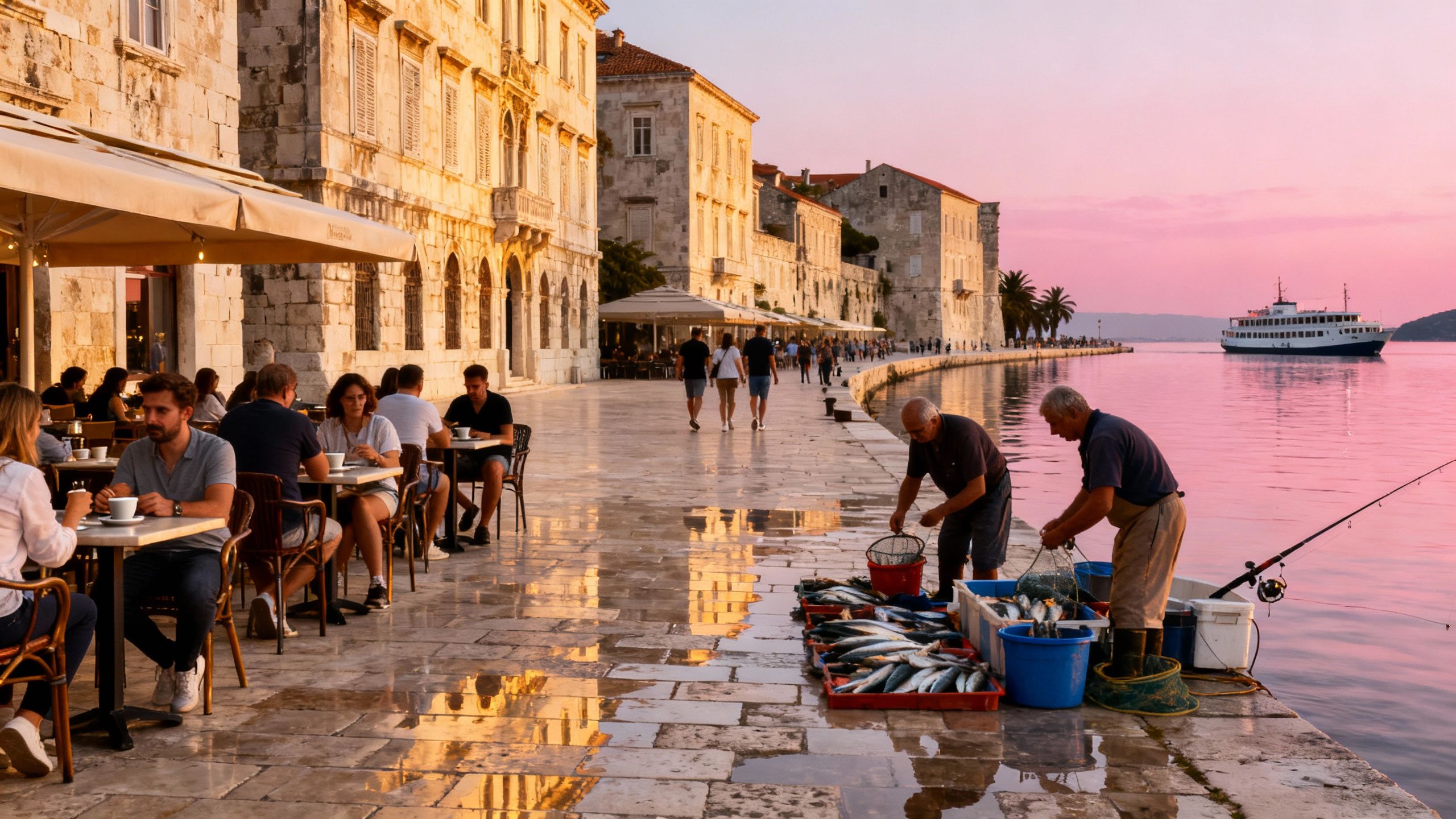
Imagine sipping espresso on Split’s Riva at 8 a.m., market stalls just opening, fishermen arranging their nets while children race past the seafront fountain. Croatia moves with Mediterranean rhythm: slow mornings, lively afternoons, quiet nights. For many internationals the promise is proximity to the Adriatic, compact historic centres and a lifestyle that stitches outdoor life, fresh food and festivals into everyday routines — but the purchase journey carries its own seasonal, legal and tax textures you should know before you fall completely in love.
Living Croatia: sun, stone and neighbourhood life
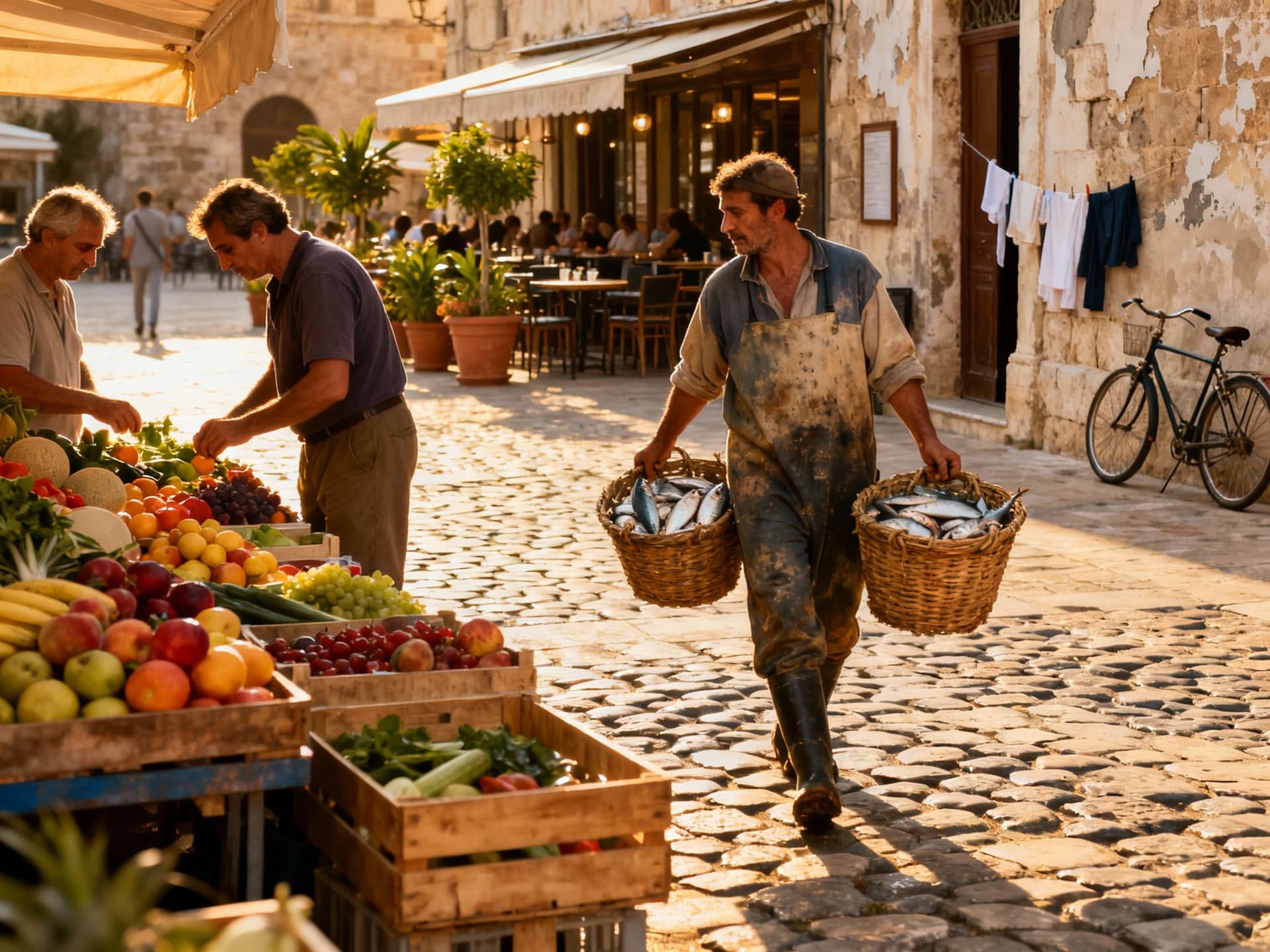
Daily life in Croatia is tactile: the scent of grilled fish, small bakeries on side streets, terraces where neighbours know your name. Coastal towns from Rovinj and Opatija to Split and Hvar centre life around promenades and fish markets. Inland, Zagreb and smaller continental towns offer weekday rhythms — coffee culture, weekday markets and a different tempo. These lifestyle differences also shape what properties work here: a stone house with thick walls on Hvar feels very different in maintenance and use from a modern apartment in Zagreb. Market data shows coastal prices remain materially higher than inland averages, reflecting that lived quality. (See regional price work-ups.)
Coastal neighbourhoods: Riva, Bačvice, Grad
If you want waterfront life, look at Split’s Riva or Dubrovnik’s Old Town for immediacy to cafés, museums and boat moorings. Bačvice (Split) is lively with beach culture and a younger crowd; Grad districts on small islands reward you with narrow lanes and stone homes. Expect premium pricing for direct sea access — studies indicate a 30–60% premium for sea‑front or view properties on many Adriatic micro‑markets.
Food, markets and the rhythm of seasons
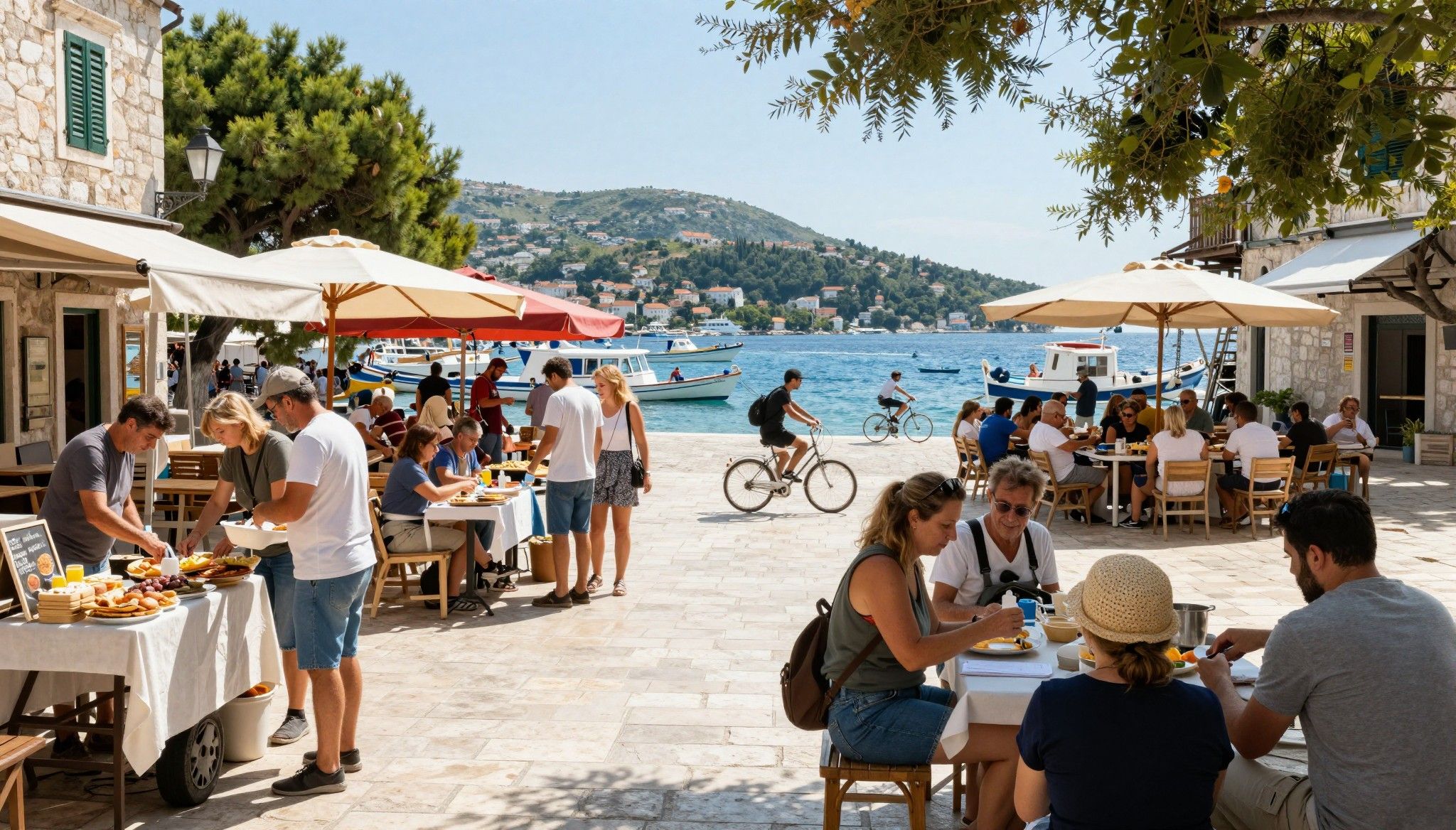
Saturday markets define neighbourhood calendars: Dolac in Zagreb, Pazar in Split and local island markets shape weekly shopping and social life. Truffle season in Istria and summer festival circuits on Dalmatian islands make buying decisions seasonal — inspection in August will show crowded streets and inflated short‑term rental activity; visit in spring or late autumn to see how a place breathes off‑peak.
- Lifestyle highlights: markets, beaches and hidden corners
- Dolac market, Zagreb — morning produce and weekday neighbours
- Riva promenade, Split — espresso culture and evening promenades
- Ston/ Pelješac — shellfish, vineyards and quieter coastal life
Making the move: rules, taxes and realistic trade‑offs
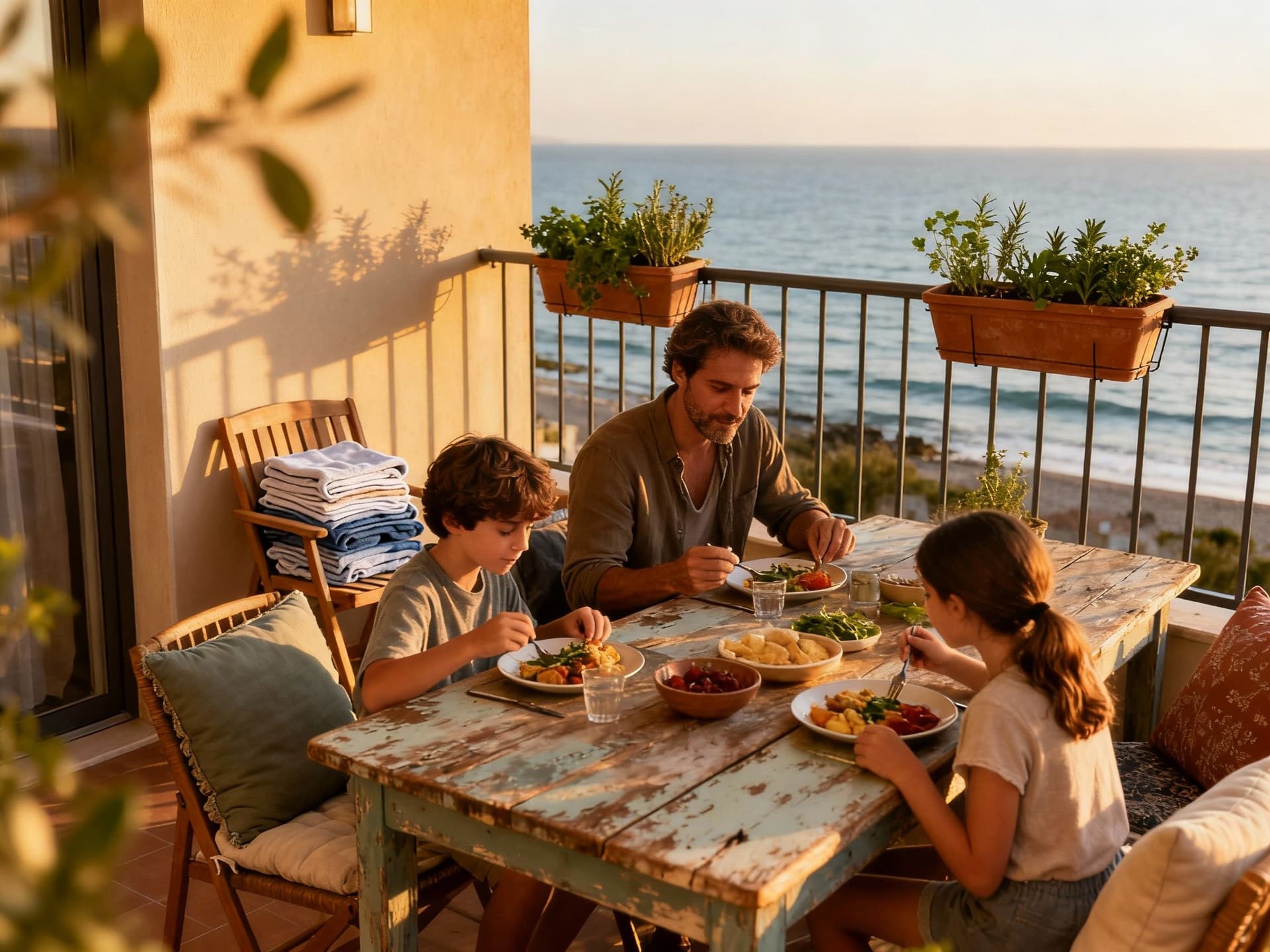
Dreams meet paperwork here. EU citizens buy under the same rules as Croatians. Non‑EU buyers need reciprocal‑rights approval except where bilateral agreements apply. Practically, this means EU nationals can contract and close with standard due diligence; other nationals should budget time and lawyer fees to secure ministerial consent where required. Ownership rules are stable but confirm reciprocity early — the legal step is not a formality for many non‑EU buyers.
Taxes that change behaviour: the 2025 property tax reform
From January 1, 2025 Croatia introduced a municipal property tax intended to curb speculation and encourage long‑term rentals. Rates are set locally and reported ranges run roughly €0.60–€8/m². There are common exemptions for principal residences and properties rented long‑term (typically 10+ months a year). For buyers who planned on short‑term holiday lets, this shifts the arithmetic — some coastal owners now face a material holding cost where previously only income tax and tourist levies applied.
Property types and how that affects costs
Stone houses require different budgets than new builds: expect higher maintenance on old masonry and septic systems in remote islands, but pay less VAT if buying used stock. New builds carry modern insulation and lower running costs but command higher per‑m² prices along the coast. Think in lifecycle terms: initial purchase price is only the start — insurance, maintenance, municipal tax and winterisation can add a predictable 1–2% of value annually in many coastal cases.
- Practical steps before you sign
- 1. Confirm buyer status (EU or non‑EU) and whether reciprocity applies; secure legal opinion.
- 2. Ask the municipality for the local property tax rate and exemptions for long‑term rent or principal residence.
- 3. Commission an up‑to‑date land registry extract (izvadak iz zemljišne knjige) and a cadastral plan; check encumbrances.
Insider knowledge: what expats wish they'd known
Expats tell a similar story: inspection timing matters, neighbourhood micro‑differences matter more than region‑level headlines, and agency selection changes the outcome. Search in high season and you see the postcard; search in shoulder months and you see how life functions. Data show coastal counties command the highest prices, but inland towns deliver different daily comforts and lower holding costs. Many wish they’d visited during winter to observe heating, winds and access issues before buying.
Cultural and practical integration
Croatians value local relationships. Register at the local municipality, learn basic Croatian phrases for routine transactions, and join markets or sport clubs to meet neighbours. Language isn’t a legal barrier for EU buyers but it matters in day‑to‑day management — hiring a bilingual property manager can reduce friction and protect rental cashflow.
Long term lens: yield, resale and community change
If you think in five‑ to ten‑year terms, Croatia’s tourism‑driven growth and EU membership continue to underpin demand in quality locations. Expect rental yields to be modest (often sub‑5% gross in core coastal spots) but capital growth potential remains where supply is limited. For investors, the policy shift to tax long‑term vacancy and short‑term lets changes the comparative advantage of buy‑to‑let strategies — long leases, professional management and local partnerships now outperform casual short lets.
- Insider red flags to watch
- Unclear title or missing cadastral plan
- Seller claiming 'planning permission granted' without permits in records
- Municipal property tax higher than advertised; no exemption for short lets
- Hidden communal fees, unresolved utility connections on islands
- How a local agency adds value
- 1. Local agencies arrange reliable cadastral and registry checks and translate municipal rules into total holding costs.
- 2. They run seasonal inspections and give realistic income estimates across shoulder months, not just high summer.
- 3. Good agencies coordinate lawyers, notaries and bilingual managers — shortening time to close and reducing friction for non‑EU buyers.
Conclusion: fall in love deliberately. Croatia offers a tangible Mediterranean life — markets, beaches and community rituals that reward presence. But regulatory detail and the 2025 tax changes materially affect holding costs and use. Visit off‑peak, confirm reciprocity status early, insist on full registry extracts and local municipal tax figures, and work with an agent who measures lifestyle against real running costs. If you want the Adriatic life, do so with open eyes — it will make the decision both joyful and durable.
Swedish expat who moved from Stockholm to Marbella in 2018. Specializes in cross-border legal navigation and residency considerations for Scandinavian buyers.