

Why the tax gap between our two coasts is closing


September brings the coast back to its working rhythm. Offices reopen properly, agents stop apologising for August's slow replies, and the people who spent the summer just looking start making calls. It felt like a good moment to set down what the market actually looks like from where we sit, without dressing it up either way.
This is not a piece about whether to buy. It is a piece about what buying involves right now, coast by coast, so that anyone starting a search this autumn does so with a clearer picture than the portals alone tend to give.
Who is buying, coast by coast
British buyers remain the largest single foreign nationality on the Costa del Sol, a pattern that has held for decades and shows up consistently in the transaction data Spain's Colegio de Registradores compiles by nationality. What has changed is the shape around them. Their share of the total has eased gradually since the Brexit transition, while Belgian, Dutch, Polish and Scandinavian buyers have each taken a slightly larger slice than they held five years ago.
On the Costa Blanca the mix has always leaned differently, with British and Belgian buyers historically dominant around Torrevieja and Orihuela Costa, and a strong German and Dutch presence further north around Jávea, Moraira and Dénia. That pattern has not been upended so much as thickened. We are simply meeting more nationalities than we used to at the same viewing, which is its own kind of evidence that the coast's reputation has widened.
What we cannot yet say with confidence is how firmly non-European buyers will feature going forward, given a tax proposal we cover below that remains unresolved. Anyone from outside the EU should treat that as a live question to check rather than a settled fact.

The tax gap that used to decide it
For years, one quiet reason buyers leaned toward the Costa del Sol over the Costa Blanca was the transfer tax on resale homes. Andalucía moved early to a flat, competitive rate, while the Comunidad Valenciana kept a higher tiered structure. That gap has been narrowing. Valencia's regional government has been lowering transfer tax on second-hand homes in stages over the past couple of years, part of a broader push to make the region's tax treatment less of a disadvantage against its southern rival.
The practical effect is that the tax line in a Costa Blanca purchase now sits closer to what it would be for an equivalent Costa del Sol purchase than it did three or four years ago. It has not disappeared as a factor, and the exact rate still depends on the property's value band and the town it sits in, but it no longer does the heavy lifting it once did in steering buyers toward one coast over the other.
Separately, a proposal debated in Madrid since early last year would apply a substantially higher tax to property purchases by non-EU, non-resident buyers. As things stand it remains a proposal rather than law, and has not moved through parliament in the way its early headlines suggested it might. We mention it not to alarm anyone but because it is the kind of change worth confirming with a Spanish tax adviser at the point of offer, not assuming away.
Borrowing, and what it costs now
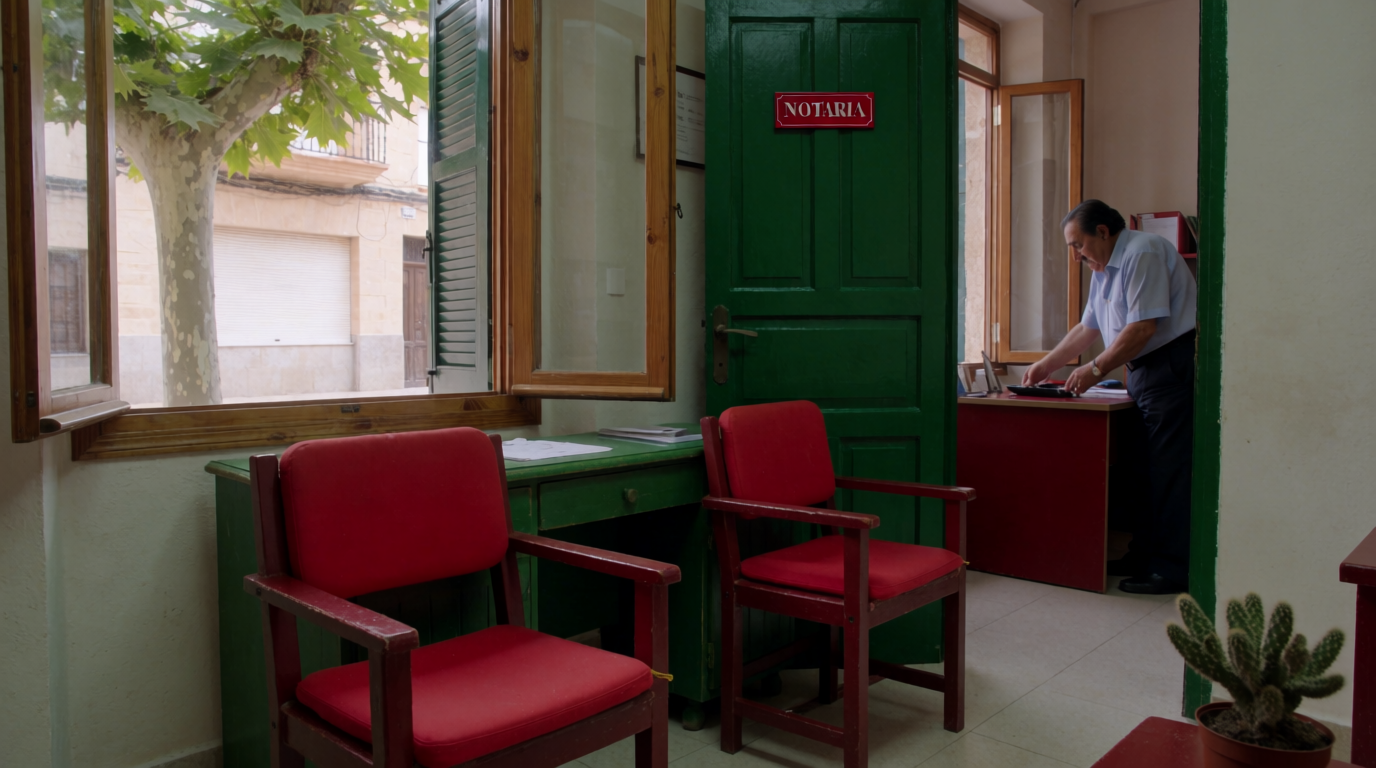
Mortgage costs have eased from the peaks of 2023, as the European Central Bank's cutting cycle has worked its way into Spanish bank pricing. Several lenders that pulled back their fixed-rate offers during the high-rate years have quietly reintroduced longer fixed terms, which had all but vanished from the market for a while.
Non-resident buyers still typically borrow a smaller share of the purchase price than residents do, and the paperwork trail (income proof, tax returns, existing debt) takes longer to assemble than most first-time buyers expect. None of that has changed. What has changed is that the monthly sums, for those who do borrow, are a little less punishing than they were two years ago.
Supply, still the quieter story
On both coasts, resale stock in well-established areas continues to move at a steady rather than frantic pace, while genuinely new construction remains slower to reach the market than demand alone would suggest, held back by licensing timelines in town halls that have not sped up as much as buyers would like. It means well-priced homes in sought-after pockets still attract interest quickly, while less differentiated stock sits for longer and gives buyers more room to negotiate than the headlines about a hot coast might imply.
What this means if you are starting now
If you are beginning a search this autumn, the practical takeaways are fairly simple. Treat nationality-specific tax rules, especially the non-EU question, as something to confirm fresh rather than something to assume from last year's article. Ask any Costa Blanca agent for the current transfer tax rate on the specific property and price band, since the regional gap has genuinely moved. And if borrowing, get a Spanish bank's current terms in writing early, because the numbers have shifted enough in two years to be worth re-checking rather than remembering.
None of this changes what the coast offers day to day. It changes what it costs to arrive, and that is worth getting right before you fall for a particular street.
If you would like to talk through what any of this means for a specific search, on either coast, we are always happy to have that conversation. Penrose Bay does not sell property, but we know the people who do it well, and we would rather you went into a purchase with the sums straight than in a hurry.