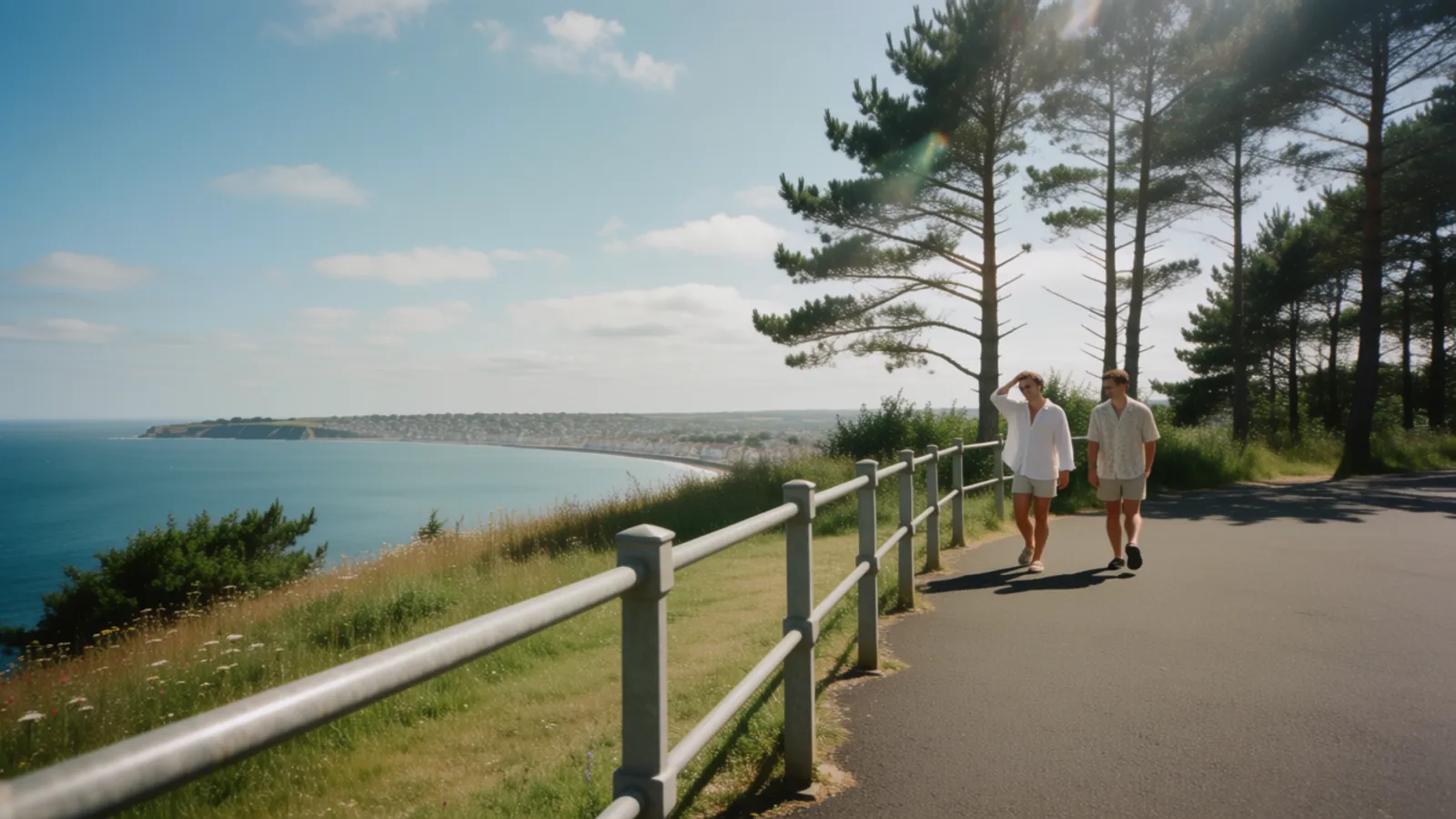

The paseo marítimo, or why everyone walks after dinner

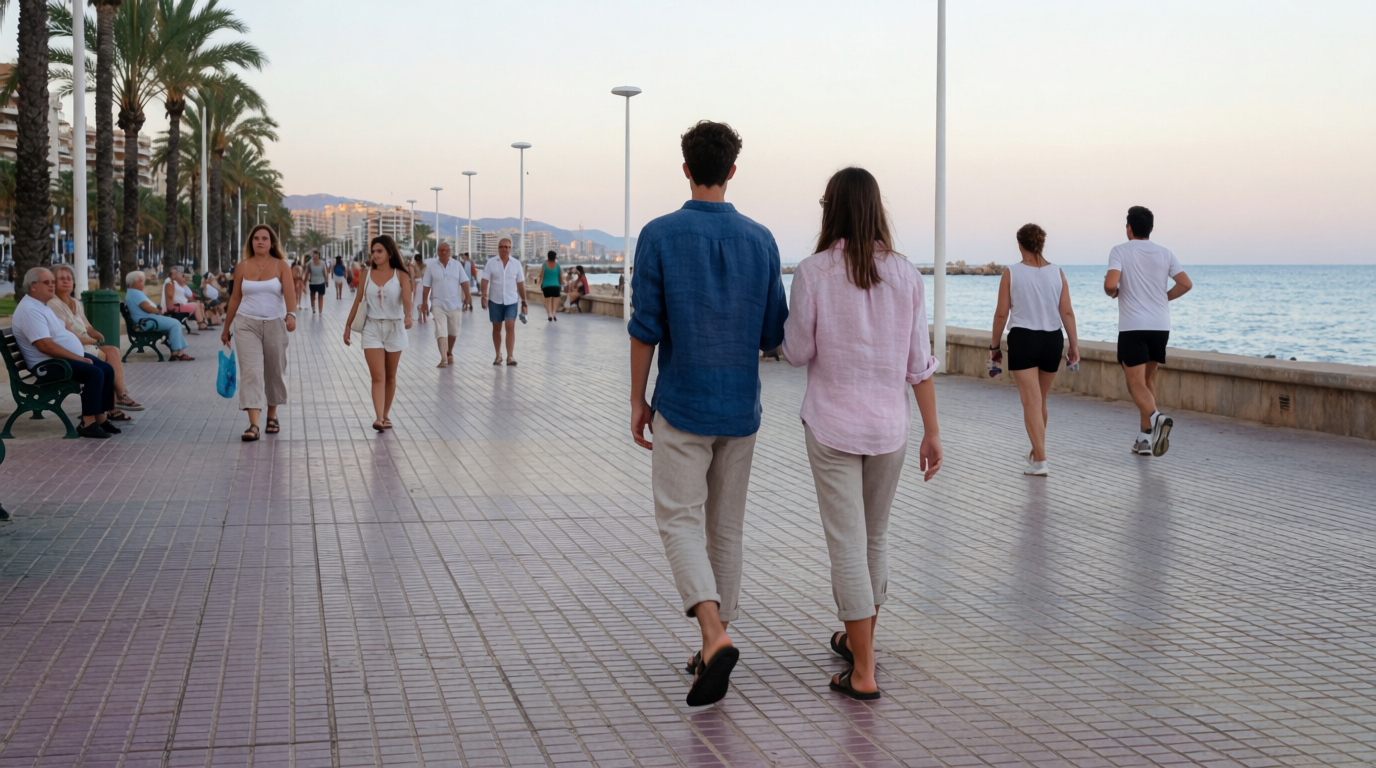
Ask anyone who has lived here more than a summer what they do in the evening, and the answer is rarely a restaurant booking. It's a walk. The same stretch of tiled promenade, the same direction most nights, the same rough hour, usually somewhere between eight and half past nine depending on the season. Nothing is scheduled and everything is understood.
We've come to think of the paseo marítimo as the coast's real appointment, the one nobody writes down because nobody needs to. Dinner moves around it, not the other way round. Visitors tend to notice the walk only once they've stopped rushing to fit one more thing into the day, and by then it usually has them too.
This isn't exercise in the gym sense, though plenty of people count it that way. It's closer to a shared exhale, the whole town stepping outside at once to let the heat of the day settle and the evening properly begin.
What the paseo actually is
Most coastal towns here have a proper one: a wide, flat, paved walkway running along or near the water, wide enough for four abreast, usually lined with palms, benches, the odd chiringuito with its shutters half down for the night. Torre del Mar has one of the longest and flattest on the Costa del Sol. Dénia's runs from the port past the old fishing quarter. Altea's climbs gently along the bay before the old town takes over on the hill.
What they share is purpose. A paseo marítimo isn't a scenic route you stumble on, it's infrastructure, built and maintained because the evening walk is expected to happen there. Councils resurface them, replace the benches, add lighting, because a well used promenade is a sign the town is working the way it should.
Who you'll see, and when
The walk has its own loose timetable, and once you've lived here a season you can read it without thinking. Early evening, before the sun is fully down, belongs to families and prams, older couples out before dinner, dog walkers doing a first lap. Later, once the heat has properly gone, the crowd changes: teenagers in loose groups, couples who've eaten and are working off the meal before deciding whether to stop for a helado, groups of friends who've clearly been sitting somewhere for hours and are now upright and talking just as fast.
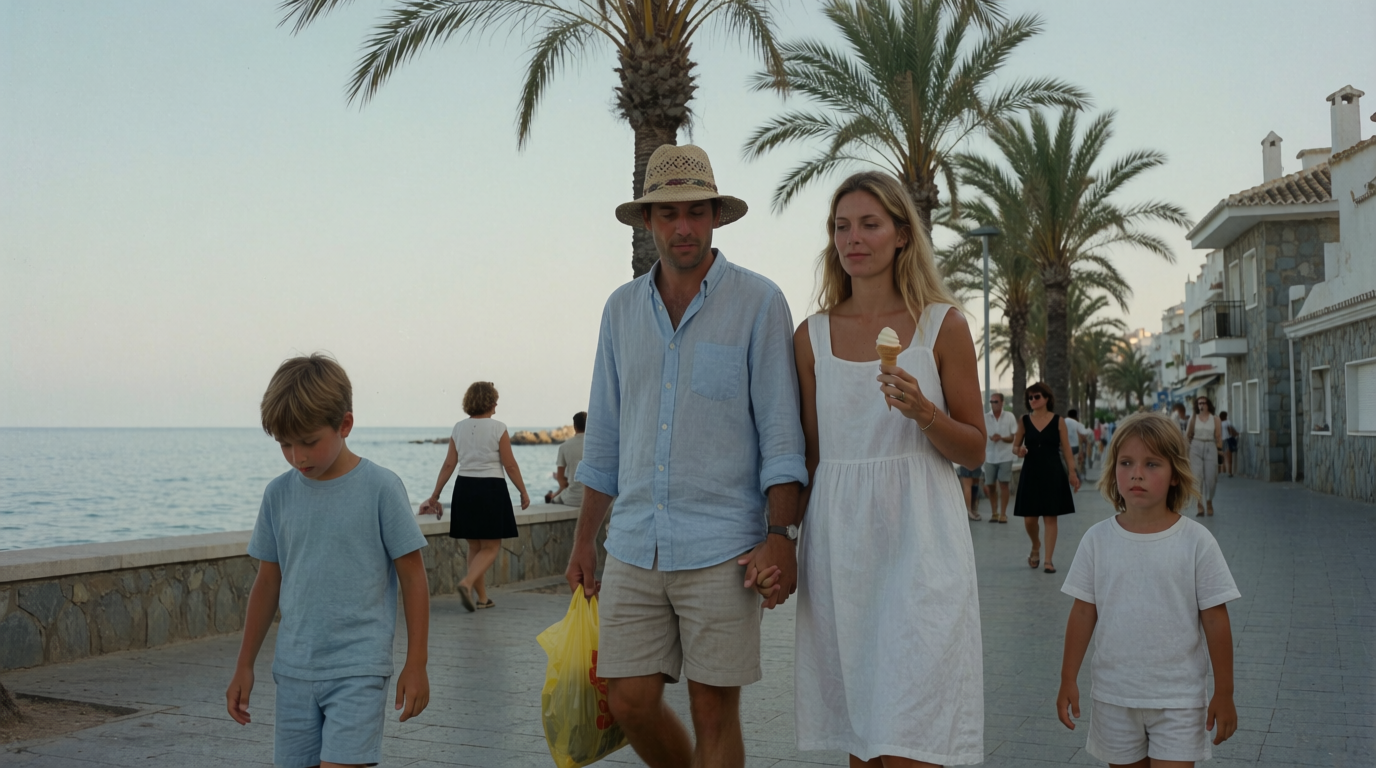
In winter the walk still happens, just earlier and in coats rather than linen. This is one of the things that surprises people who only know the coast in August: the paseo doesn't stop when the tourists leave, it just gets quieter and more local, which for many residents is when it's best.
The walk doesn't ask anything of you. That's precisely why it works.
The unwritten rules
Nobody hands you a guide to this, but a few things become obvious fast. Pace is unhurried, close to a stroll rather than a stride, and anyone walking briskly tends to move to one side rather than expecting the crowd to part. Greetings happen more than you'd expect, a nod or a "buenas" to a neighbour, even one you've only met once at the community pool.
Stopping is entirely normal and never rude. People pause mid-walk to talk to someone they've spotted, lean on the railing to look at the water for a minute, sit on a bench for ten and then rejoin. The walk isn't really about covering distance, it's about being out, being seen, seeing others, and there's no penalty for interrupting it.
Choosing a promenade to live near
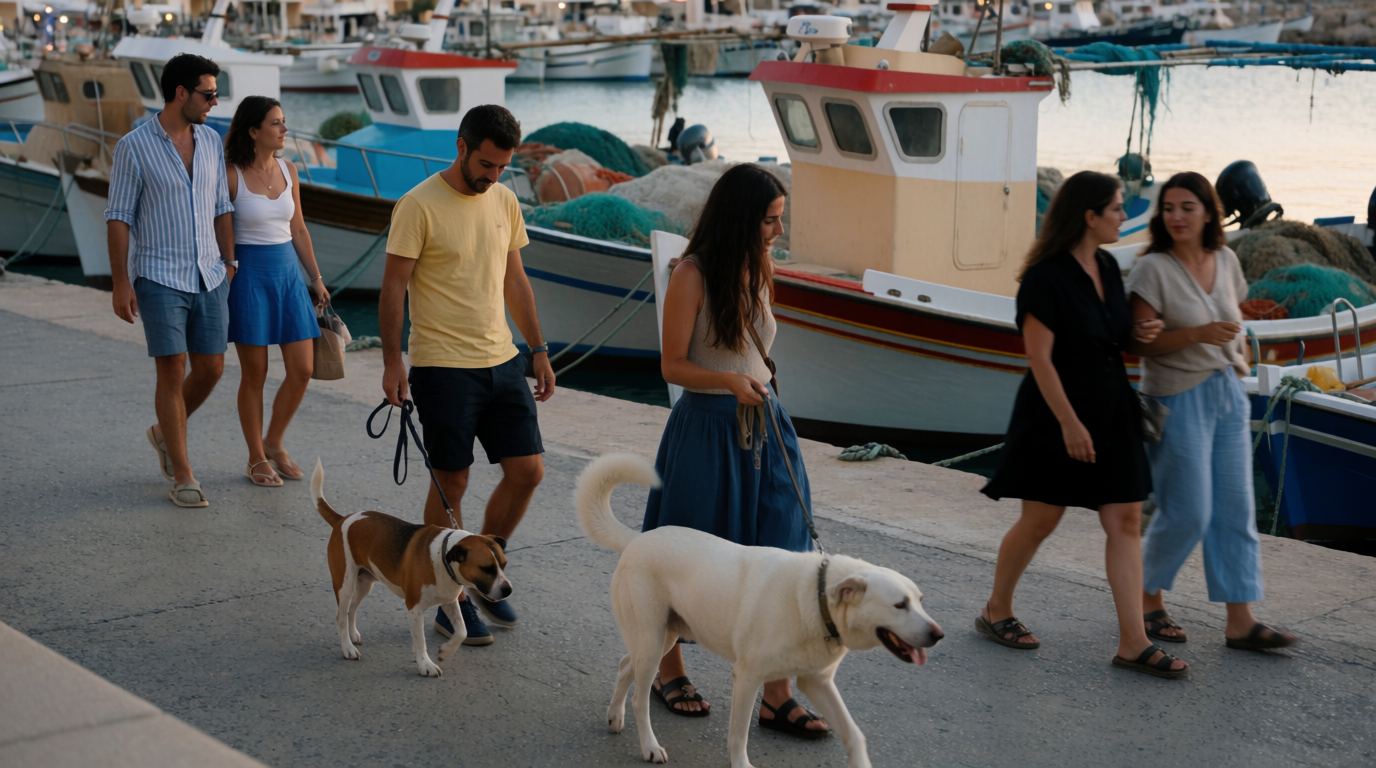
If you're weighing up towns, it's worth walking the paseo at the hour you'd actually use it, not at midday when it tells you nothing. A promenade that's dead at half past eight on a Tuesday in March says something different from one that's still busy. Fuengirola's is long and lively nearly year round. Nerja's paseo, shorter and set above the cliffs near the Balcón de Europa, has a different, quieter character, more suited to those who want the ritual without the crowd.
Proximity matters more than most buyers expect at first. A flat five minutes from a proper promenade tends to get used for the walk every evening; one that's a fifteen minute drive away becomes an occasional outing instead of a habit, and the habit is really the point.
Making it your own ritual
The paseo rewards repetition more than novelty. Walking the same stretch at the same hour most evenings, you start to recognise the same dog, the same couple, the same man who sets up his easel near the same bench every Thursday. That familiarity, built slowly and without any effort, is often what makes a place start to feel like home rather than a very pleasant holiday.
We'd say this to anyone weighing up where on the coast to settle: don't judge a town only by its beach or its market. Walk its promenade after dinner, more than once, in more than one season, and see whether you find yourself wanting to do it again the next night. That's usually the honest answer.
If you're exploring the coast and want to talk through which towns actually suit the way you'd like to live, not just the listings, we're always glad to help. Get in touch with us at Ashworth & Drake and we'll share what we've learned, walk by walk.