
The espeto hour: learning how a Costa del Sol chiringuito really works

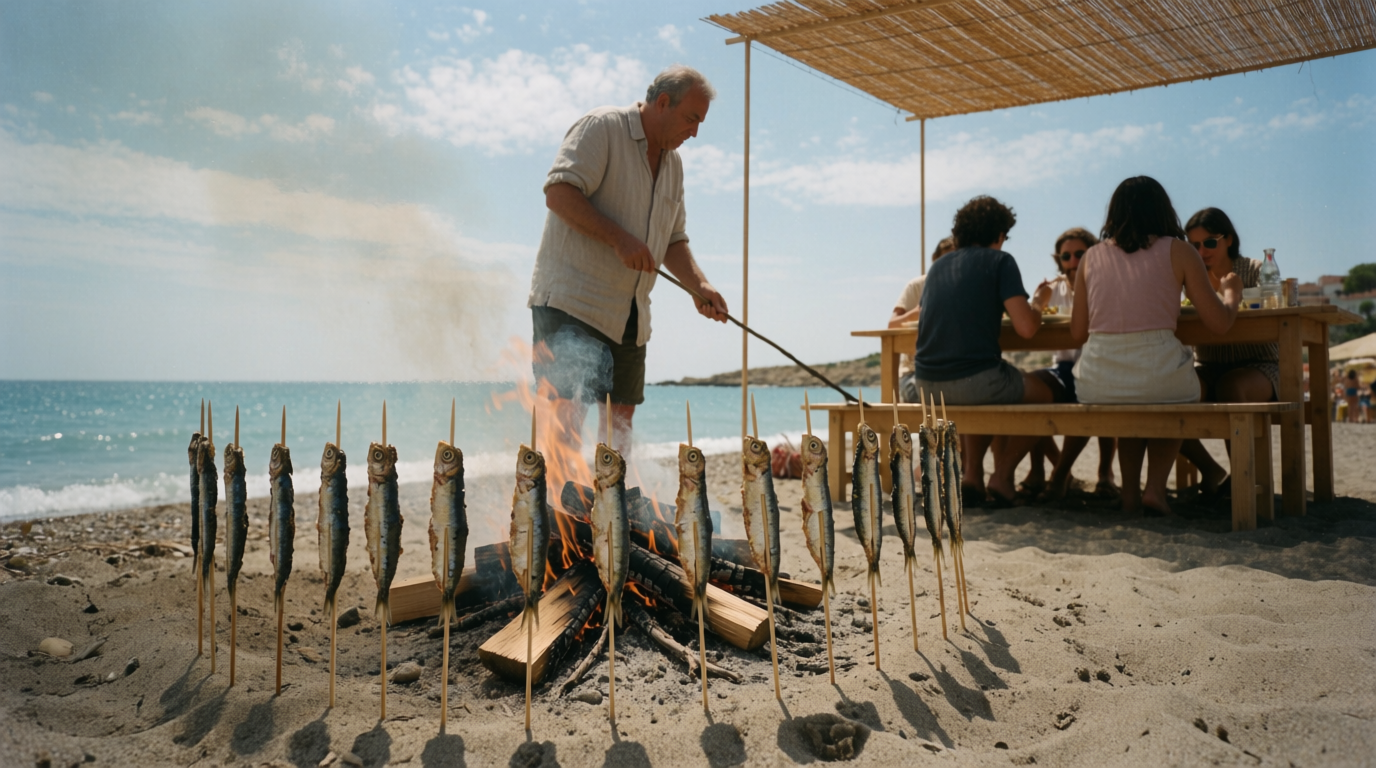
There is a particular smell that tells you a chiringuito is doing things properly. Not suncream, not frying oil, but woodsmoke and salt, coming off a boat-shaped grill dug straight into the sand. If you can smell that before you can see the tables, you are probably in the right place.
Most people meet the word chiringuito before they understand it. It gets used loosely now for anything with a thatched roof and a cocktail list on the beach, and plenty of those are pleasant enough. But the original thing, the one that gave the coast its rhythm long before anyone called it a lifestyle, is simpler and slower than that, and it is still there if you know where to look.
For anyone settling on the Costa del Sol or the Costa Blanca, learning to tell the two apart, and learning to sit properly in the real one, is one of the small pleasures of actually living here rather than just visiting.
What a chiringuito actually is
The word comes from beach shacks that fishermen and their families ran along the sand from the mid twentieth century onwards, grilling the morning's catch over driftwood because that was the simplest way to cook it and sell it before it spoiled. Málaga is usually credited as the birthplace of the espeto, the sardine skewer, and stretches of Pedregalejo and El Palo still run chiringuitos that trace a direct line back to those fishing families.
A proper chiringuito is small, often family run, usually with a name rather than a brand, and its kitchen is largely outdoors. You will see the fire before you see a menu. Many still do not print one at all. Someone comes to the table, tells you what came in that morning, and you choose from that.
The espeto itself
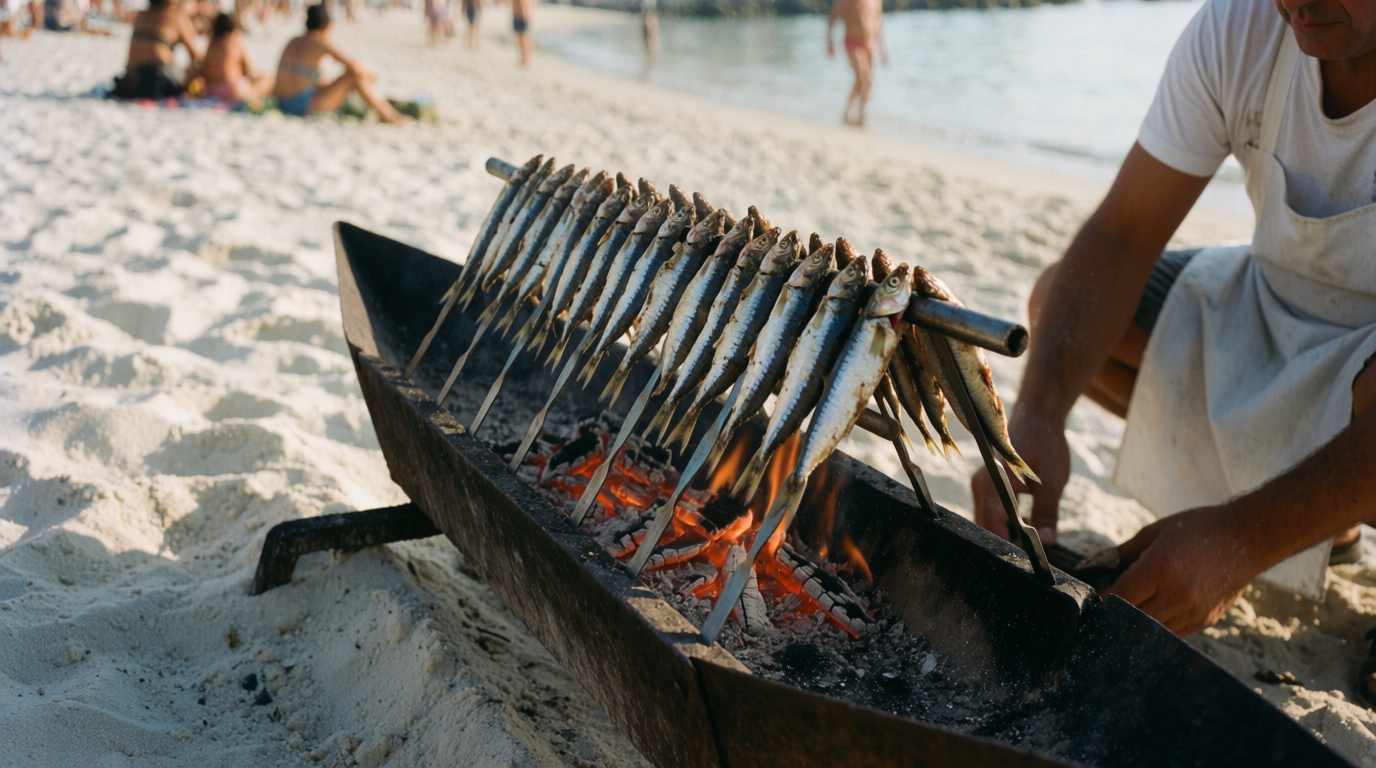
The classic order is espeto de sardinas, six or eight small sardines threaded on a cane or metal skewer, angled over embers of olive wood so the fat renders slowly and the skin crisps without the flesh drying out. A good one takes minutes, not seconds, and arrives too hot to eat immediately, which is exactly the point.
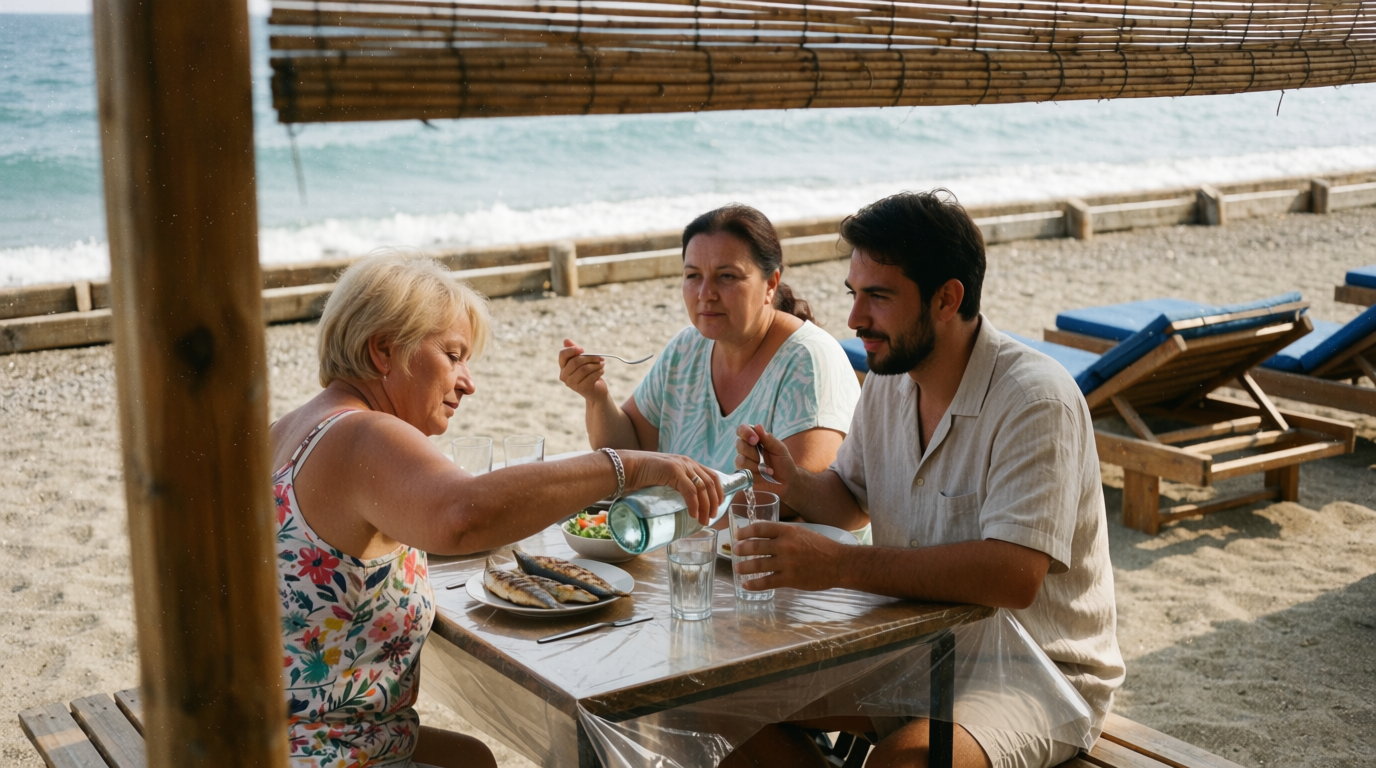
You eat it with your hands, off the skewer, with bread and perhaps a simple salad of tomato, onion and green pepper on the side. A glass of chilled white or a very cold beer does the rest. It is not a dish that photographs as tidily as a plated restaurant meal, and it was never meant to.
The best chiringuito lunches end with sand on the table and no memory of checking the time.
Reading a chiringuito before you sit down
A few honest signals help, wherever you are on either coast.
- Look at the fire, not the sign. If there is a visible espetero with skewers actually leaning over embers, someone is cooking properly, not reheating.
- Notice who is eating there. A chiringuito full of Spanish families at two in the afternoon on a weekday is telling you something a glossy terrace with only sunbed guests is not.
- Ask what came in that morning rather than ordering from memory of a tourist menu. The answer, and how quickly it comes, tells you a lot.
None of this is a rule against the smarter beach clubs that have opened along parts of Marbella or the Costa Blanca in recent years. They have their place, and some do very good food. It is simply worth knowing the difference, so you choose the one you actually want on a given afternoon rather than the one that happened to have the best parasols.
The unwritten etiquette
The biggest adjustment for newcomers is usually pace. Nobody will bring the bill unless you ask for it, and asking too early can read as slightly rude rather than efficient. Lunch at a chiringuito is meant to run long, often from two until well past four, with coffee and perhaps a small glass of something sweet arriving only once the table has properly settled.
Booking is rarely how it works either. The good ones fill up by simply turning up early, particularly on a Sunday, and a family will often send someone ahead to claim a table while the rest park the car. It looks chaotic from outside and runs, in practice, on a set of understandings everyone but the newcomer already knows.
A seasonal, not a year-round, world
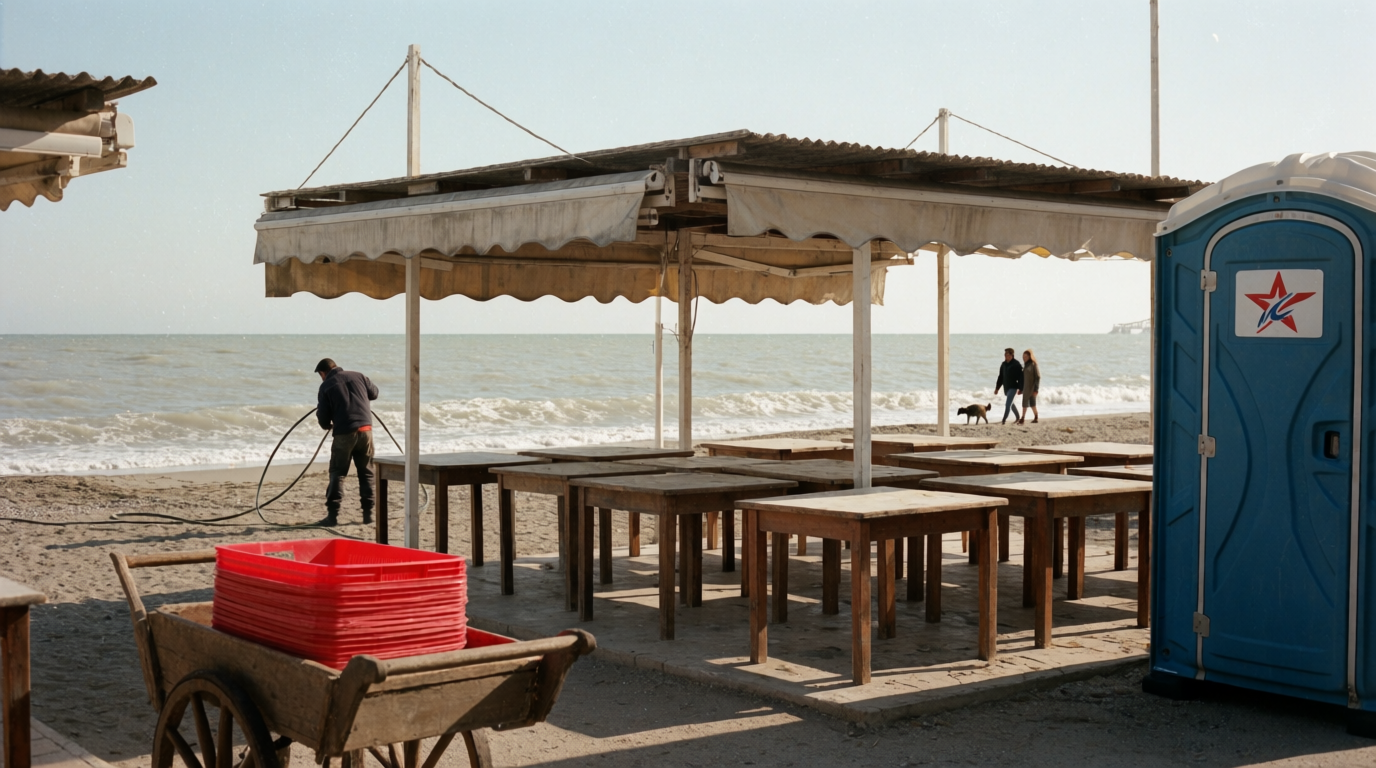
One thing surprises a lot of new owners: many chiringuitos, especially the smaller, sand-based ones, close for winter entirely, sometimes from November through to Semana Santa in spring. The structures come down, the tables are stacked, and the beach returns to something closer to what it looked like a century ago.
This is worth knowing if you are picturing a year-round espeto habit from a coastal apartment. The season has its own calendar, roughly Easter to October along most of the Costa del Sol and Costa Blanca, and the closing of the chiringuitos each autumn is as much a marker of the year turning as the first cool evening on a terrace.
Owning nearby simply means you get to notice both ends of that calendar, the fires lighting again in spring and the awnings coming down in autumn, in a way a fortnight's holiday never quite allows.
If you are still deciding which stretch of coast might suit the life you actually want, including the small, particular pleasures like this one, we are happy to talk it through. We do not sell property. We simply enjoy helping people understand a place properly before they choose it, and can introduce you to vetted local contacts when the time feels right.