

The dog at your feet: how pets became part of coastal life here

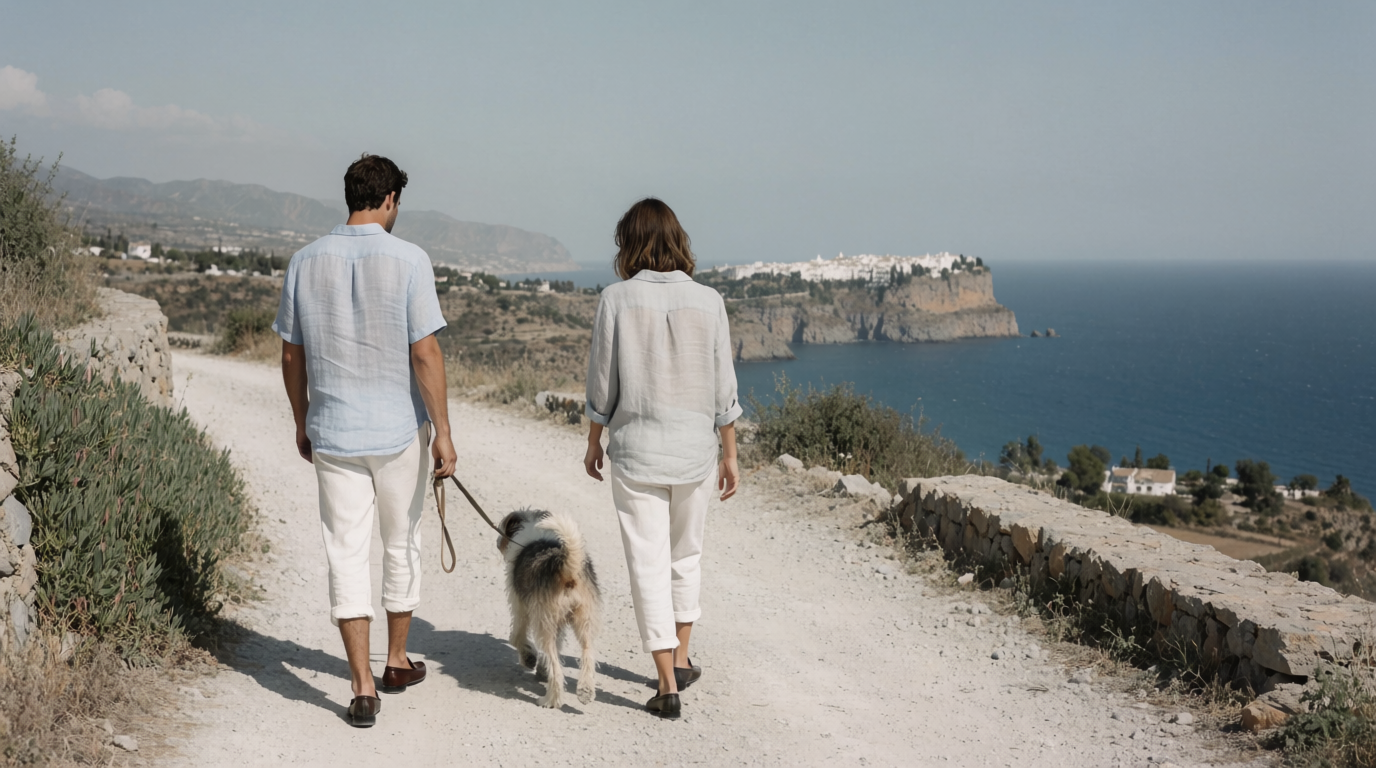
Somewhere in the first year of owning a place on this coast, a lot of people end up with a dog. It rarely starts as a plan. Someone begins walking the same stretch of seafront each morning and gets to know the other regulars, human and canine, and before long there is a dog asleep under the kitchen table that was not there when the removal van arrived.
It is worth understanding why this happens here in particular, because dog life on the Costa del Sol and Costa Blanca is not an accessory to the lifestyle. It is woven into the daily rhythm in a way that surprises a lot of newcomers, and it changes, gently, how you use your own days.
This is not a piece about rules and paperwork. It is about the texture of a life that a great many owners did not expect to include a dog, and now cannot imagine without one.
The walk that starts the day
In towns from Estepona to Altea, the early morning belongs to dog owners as much as anyone. The heat later in the day pushes the serious walking into that first cool hour, so the paseo marítimo or the dry riverbed path or the track above the urbanización fills with the same faces most mornings, leads in hand, coffee often still in the other.
You learn the other dogs before you learn the other owners' names. The elderly pointer that always waits at the same bench, the two terriers that belong to the couple who run the ferretería, the enormous podenco that turned out to be the gentlest dog on the street. Conversation follows naturally from there, in Spanish or in a hopeful mixture, and a genuine acquaintance often starts this way long before a shared meal ever happens.
A different kind of vet visit
Veterinary care here tends to be personal in a way that takes some getting used to if you are coming from a country of appointment systems and fifteen minute slots. Many clinics, especially the smaller ones in the pueblos, run more like a village doctor's surgery. You wait your turn, the vet remembers your dog by name and history, and a routine check can turn into ten minutes of unhurried conversation about diet, the summer heat, or the tick season that runs roughly from March to October across both coasts.
Prices are generally lower than in northern Europe for routine care, though it pays to ask directly rather than assume, since this varies by clinic and by procedure. What does not vary much is the warmth. A dog is treated as a member of the household here, not a patient to be processed.
Dog-friendly by nature, not by sign
Spain's beach rules for dogs are genuinely strict in summer. Most municipal beaches ban dogs entirely between roughly June and September, with a handful of designated playas caninas as the exception (Marbella, Fuengirola and several Costa Blanca towns each keep at least one). Outside those months, the ban usually lifts and dogs are welcome on most sand again.
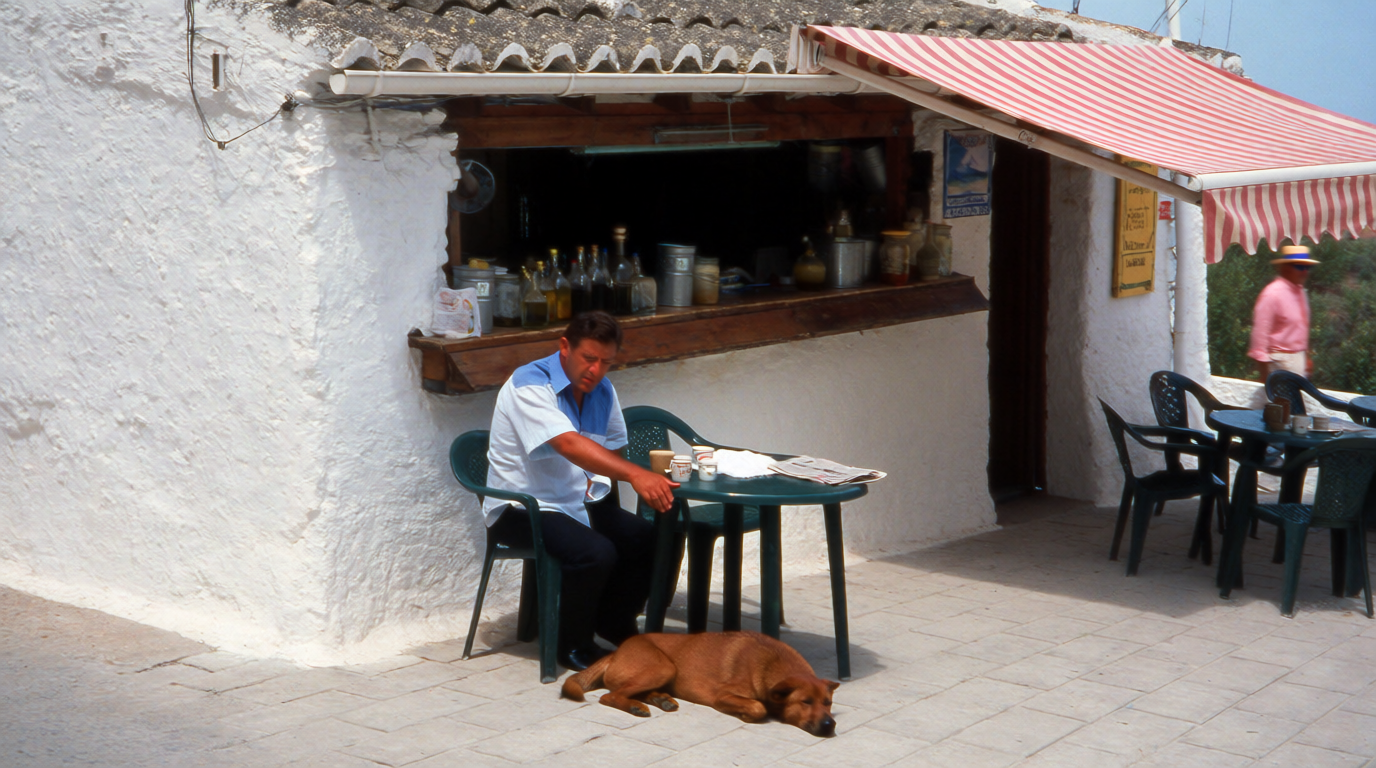
What catches people out is how relaxed everything else is by comparison. Bars and terraces across both coasts will happily let a dog lie under the table so long as it is calm, and nobody blinks. Ironmongers, bakeries, even some banks, will let a well behaved dog wait by the counter. It is less a rule than a general assumption that a dog accompanying its owner is simply part of the day.
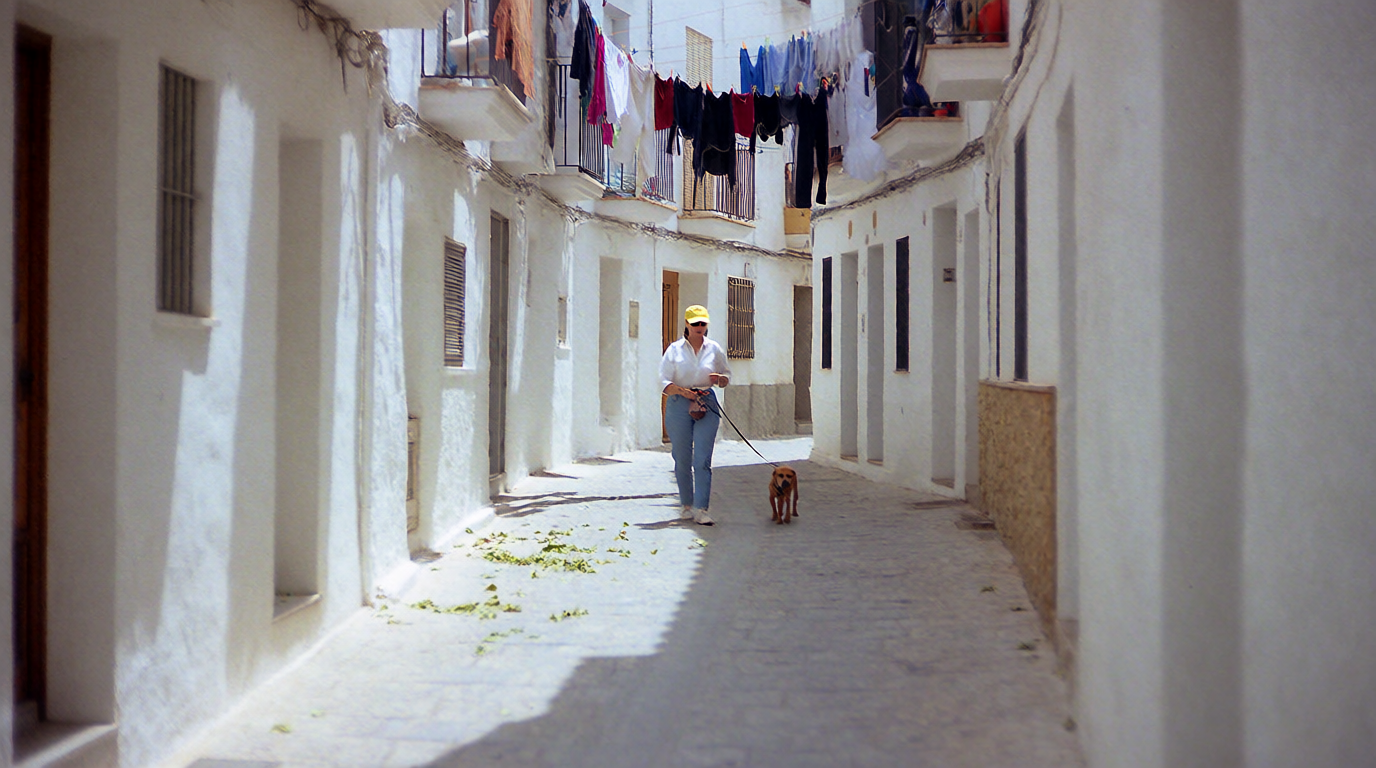
Nobody hands you a sign that says dogs welcome here. You just notice, after a while, that nobody has ever told you otherwise.
The protectoras, and the dogs that find you
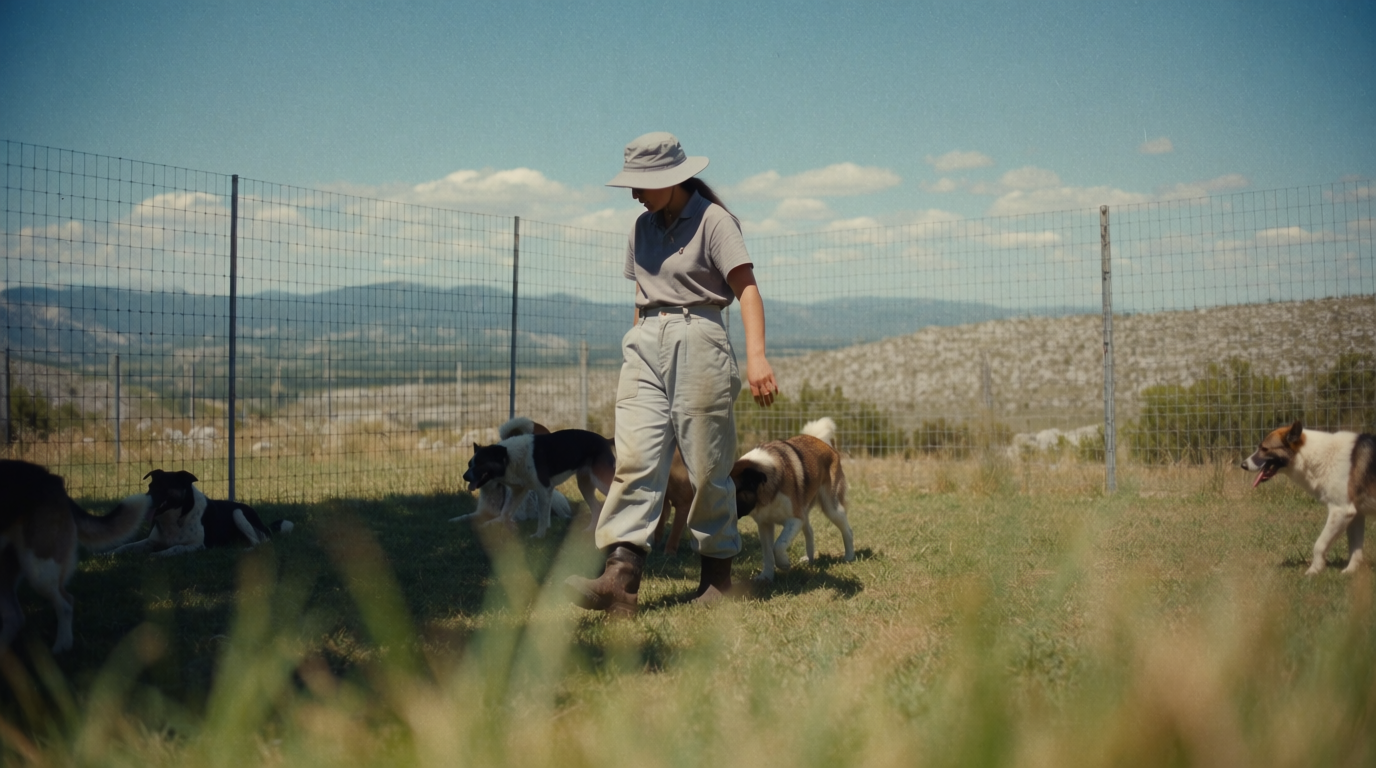
A large number of the dogs walking these streets did not start in a shop or a breeder's litter. They came from a protectora, one of the volunteer run shelters that exist in almost every comarca, often keeping far more dogs than their funding comfortably allows. Rural Andalucía and inland Alicante both have a long standing, if uneven, relationship with abandoned and stray dogs, and the shelters that have grown up to answer it rely heavily on adoption, fostering, and word of mouth among the foreign resident community.
Many owners we speak to did not go looking for a dog at all. They fostered one for a fortnight while a friend was away, or took a walk at a shelter open day out of curiosity, and came home with considerably more than they arrived with. It is one of the quieter, more unplanned ways that people put down roots here.
Before you bring one, or take one on here
A few practicalities are worth knowing early rather than discovering by accident.
- A microchip and an EU pet passport (or the UK equivalent for post-Brexit arrivals) are required to bring a dog into Spain, and airlines vary considerably in their cabin and hold policies.
- Larger and certain breeds classed as potentially dangerous under Spanish law need a specific licence and third party insurance, arranged through the local ayuntamiento.
- Summer heat is the real hazard, not the paperwork. Pavement can burn paws by mid morning from around May onward, and most locals simply shift walks to before nine and after eight.
None of this is complicated once you know it, and most owners pick it up within a season through the same informal channel as everything else here, a neighbour, the vet, someone at the dog beach.
If you are weighing up a move to the coast and wondering how a dog, current or future, fits into that picture, it is exactly the kind of everyday question we like talking through. Get in touch with us and we will happily share what we have learned, and put you in front of the local people, vets, protectoras and otherwise, who know this coast's dog life better than anyone.