Villajoyosa: a working fishing town that still colours its own streets

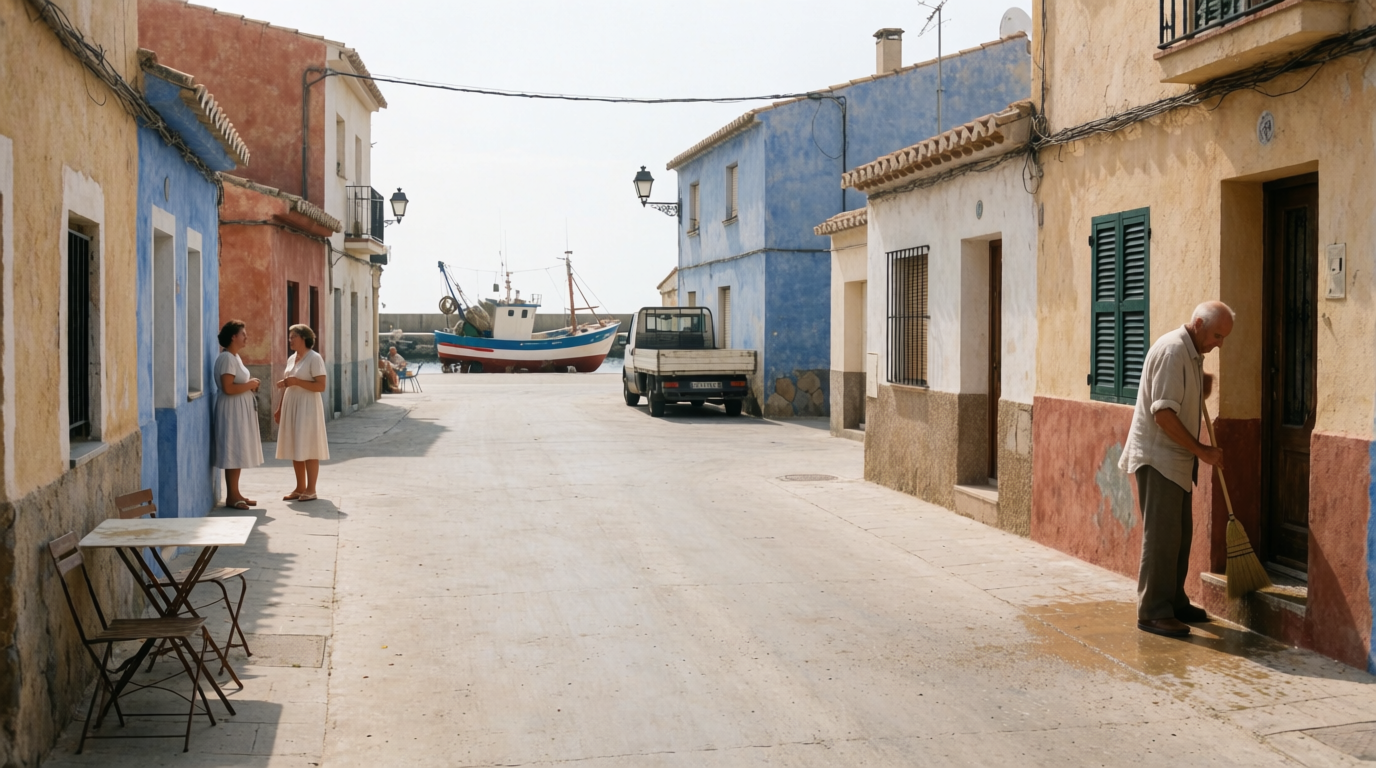
Villajoyosa does not perform for visitors the way some of its neighbours do. The painted houses along the seafront are real working buildings, not a backdrop, and the smell that drifts through the old town most mornings is often chocolate, not sun cream, courtesy of the cacao factories that have operated here for generations. It is a town that carries on with its own business, which is exactly why some people end up loving it.
Sitting between Benidorm and Altea on the Costa Blanca, La Vila Joiosa, to give it its Valencian name, has a working port, a long municipal beach, and an old quarter built tight against the mouth of the Riu Amadorio. It is a fifteen minute drive from Benidorm's airport-adjacent bustle, yet it feels like a different register of coastal life altogether: slower, saltier, and considerably less interested in impressing anyone.
Buying here is not really about buying into a resort. It is about buying into a town that happens to have a beautiful stretch of coast attached to it, and that distinction matters more than it might sound.
The seasons, honestly
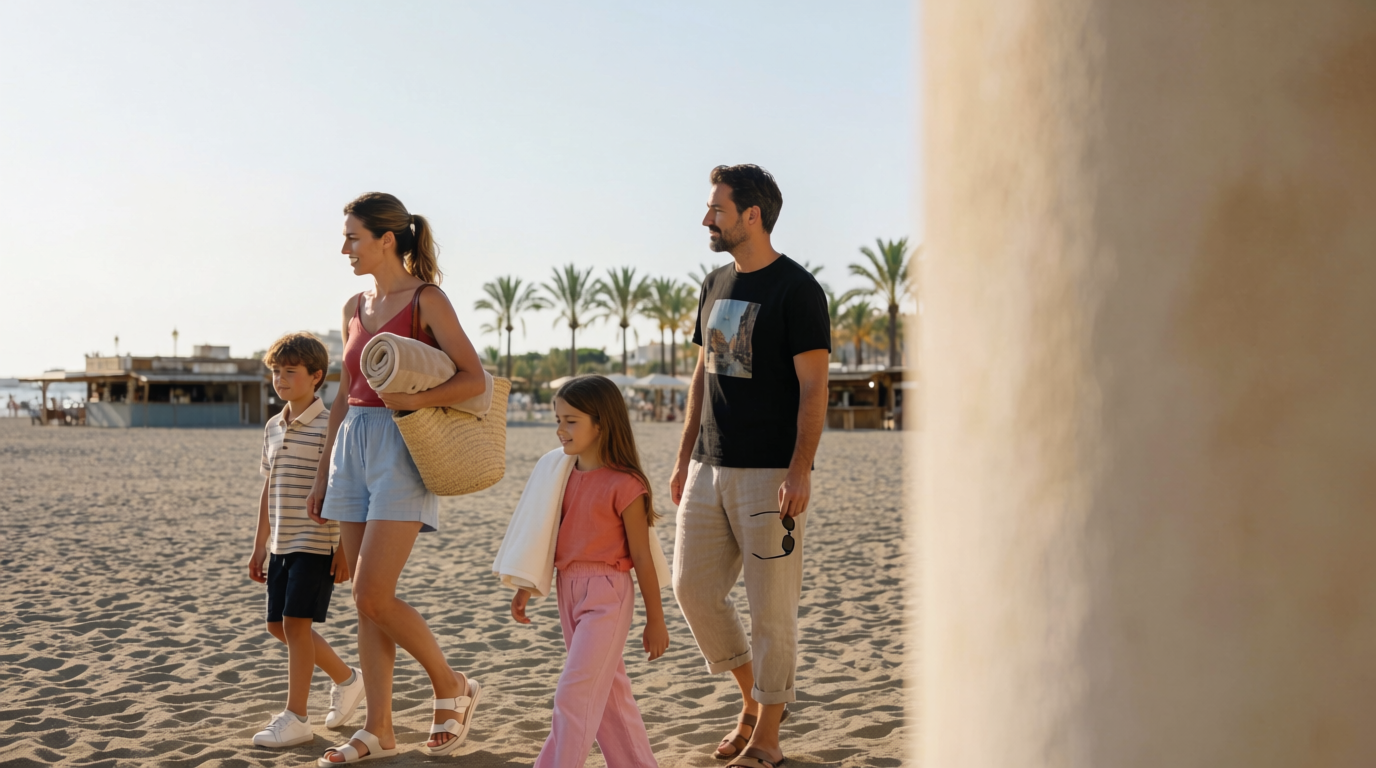
Summer in Villajoyosa is lively without tipping into chaos. The Playa Centro fills with local families and Spanish holidaymakers more than international ones, the chiringuitos do brisk trade, and the Moros y Cristianos festival at the end of July brings mock naval battles into the harbour itself, complete with smoke and noise that the whole town turns out for.
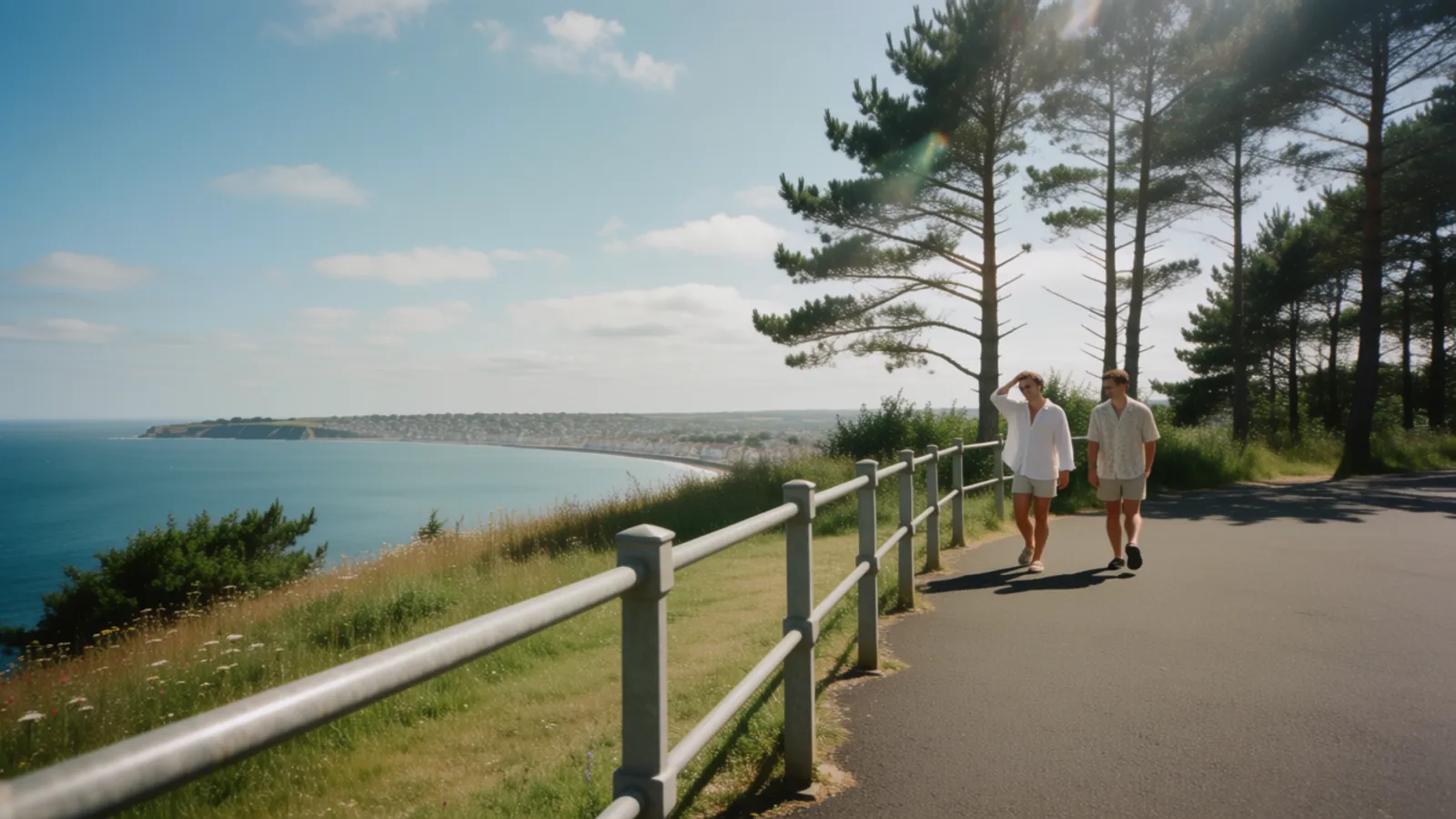
Autumn and spring are when the town shows its better side. The old quarter's steep lanes are quiet enough to actually notice the colour of the houses, the sea stays swimmable well into October, and the walking paths up into the hills behind town, towards Sella and the Aitana range, are at their best with the summer heat gone.
Winter here is genuinely lived in, not shuttered. The chocolate factories keep running, the Wednesday market keeps its full spread of stalls, and the paseo along the seafront still draws a steady stream of walkers each evening, just wrapped in an extra layer. This is not a town that empties out once the tourists leave, because most of the tourists here were never quite the point.
Neighbourhoods, in plain terms
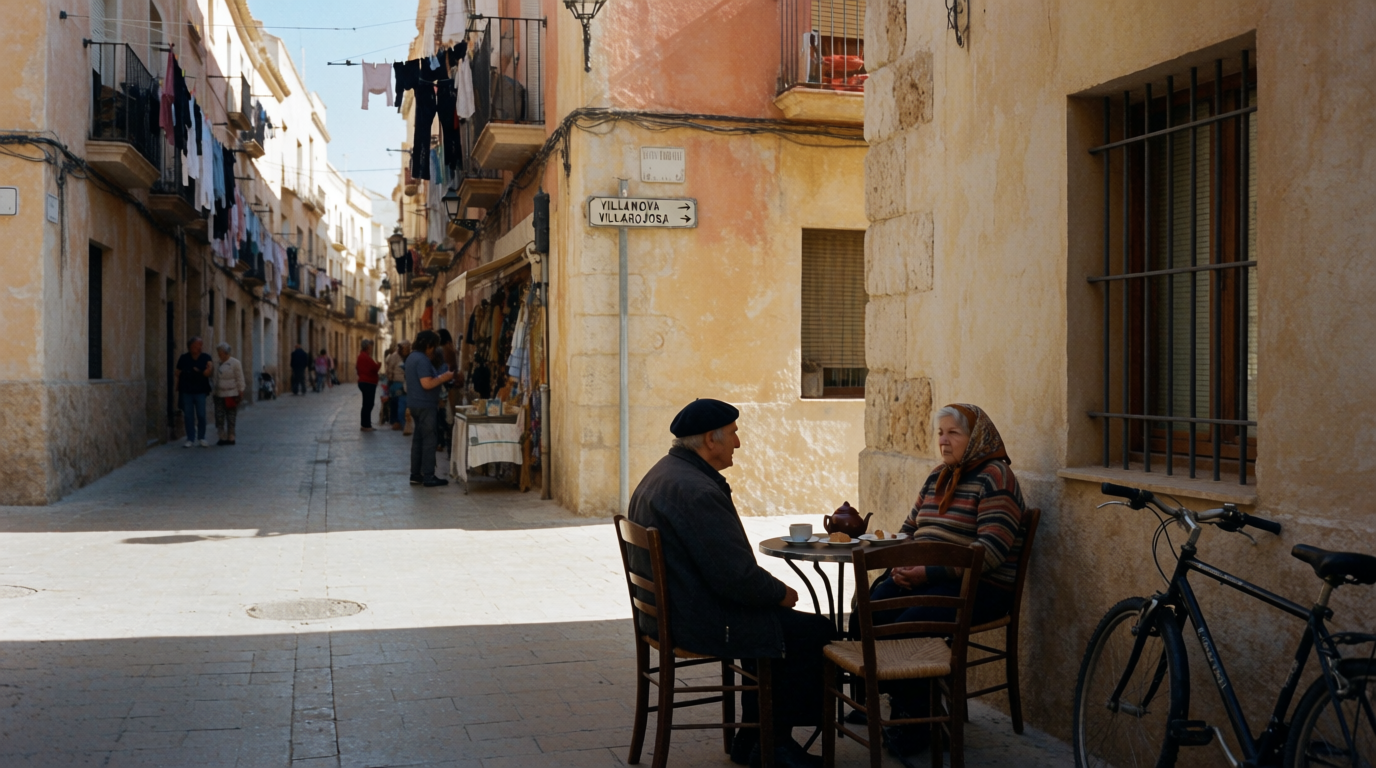
The old town (Vila Vella), climbing the hill above the river mouth, is the postcard image: tall narrow houses in blues, ochres, and pinks, originally painted, so the story goes, so fishermen could spot their own homes from out at sea. Living here means steps, small footprints, and being a genuine part of the town's daily rhythm, market stalls and bakeries included.
The seafront strip around Playa Centro and Playa del Paraíso is more conventional coastal living: apartment blocks, a proper promenade, and an easy walk to both the beach and the old town without needing a car for daily errands.
Further out, urbanisations like El Xarco, Playas del Torres, and the hillside developments towards Cap Negret trade a little walkability for private pools, sea views, and more space, which tends to suit those wanting the Villajoyosa address without old-town compromises.
Inland, towards the Amadorio reservoir and the road up to Orxeta and Finestrat, you find quieter rural plots and villas, popular with those who want genuine countryside within ten minutes of a beach.
Daily life, texture and rhythm
The Wednesday market is a proper working market, selling produce and household goods to residents rather than souvenirs to day trippers, and it is one of the better ways to gauge whether a town's daily life will suit you. Villajoyosa's version, held near the river, still draws locals doing their actual weekly shop.
Café culture here leans unfussy: bakeries doing a brisk trade in coffee and pastries before the shops open, older residents holding their usual tables, and very little pretension about any of it. The chocolate heritage shows up in small ways too, a shop selling turrón and chocolate blocks tucked between more ordinary businesses.
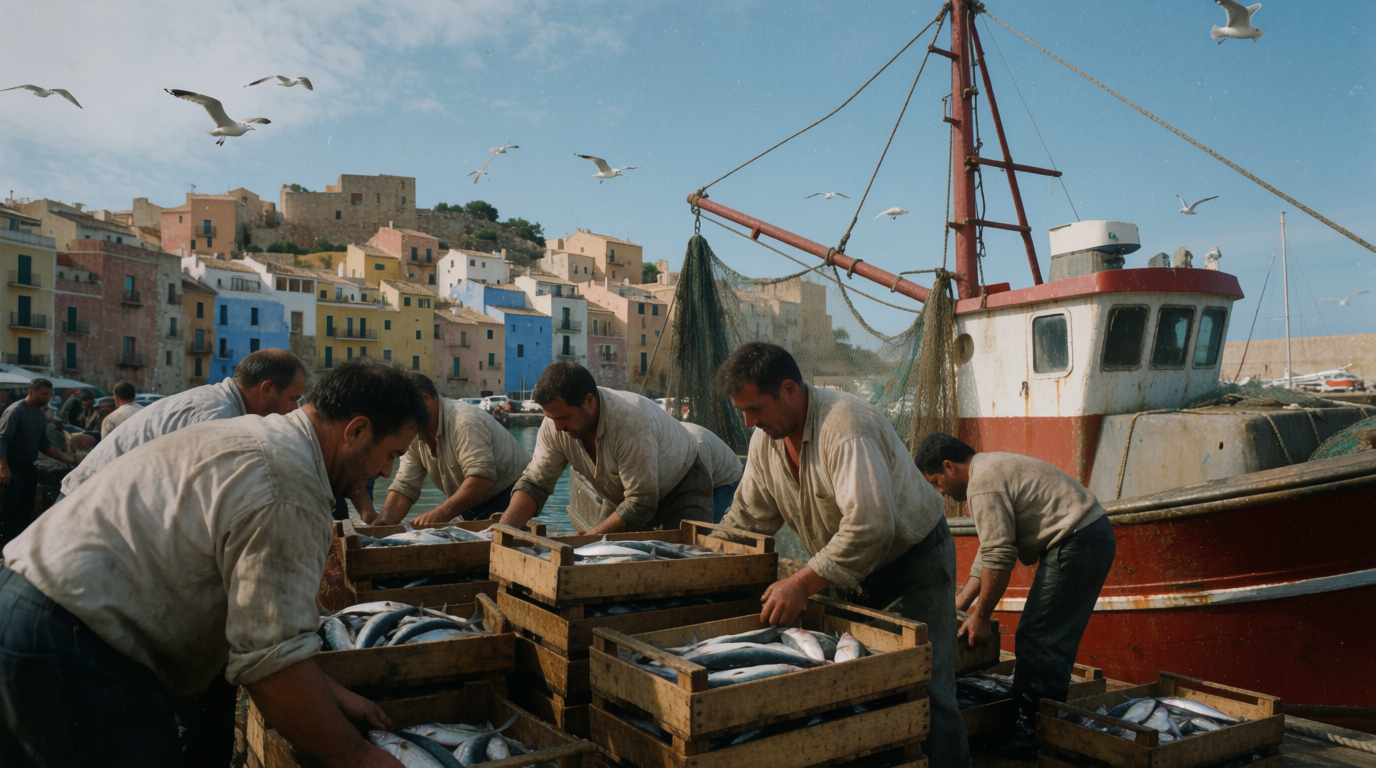
Villajoyosa was never built for visitors. It was built by fishermen and chocolate makers, and it still runs largely on their timetable.
The paseo marítimo along the beachfront fills each evening with a proper cross-section of the town, families, older couples, groups of teenagers, which tells you something honest about who actually lives here year round.
Who tends to be happiest here
People drawn to a working Spanish town rather than a resort tend to settle in fastest here. Walkers and cyclists do well, given the hill trails behind town and the flatter routes along the coast towards Benidorm or Altea. Families who want good beaches without Benidorm's density, and who do not mind a slightly less polished international scene, often find Villajoyosa suits them better than they expected.
Remote workers who value a proper town centre with everyday services, rather than a seasonal bubble, tend to settle well too, since the town functions fully in January as much as in August. Those chasing an English-speaking social scene, golf courses on the doorstep, or a highly polished promenade with international restaurants might find Villajoyosa a touch plain by comparison, and would likely be happier a little further along the coast in Altea or Albir.
What Villajoyosa is not
It is not a resort town, and it does not pretend otherwise. There is no marina full of yachts, no strip of international bars, and relatively little English spoken compared with Benidorm or Calpe. If a highly social expatriate community with organised clubs and events is what you are after, this is probably not your town.
It is also not a golfing base. The nearest courses are a reasonable drive away, so those buying primarily around golf tend to look elsewhere on this stretch of coast. What Villajoyosa offers instead is something harder to manufacture: a town with its own economy, its own festivals, and its own reasons for existing that have nothing to do with tourism.
If that sounds like the kind of place you would want to wake up in, whatever the season, we would be glad to talk it through, and to introduce you to the local people who know its streets and its market days better than anyone.