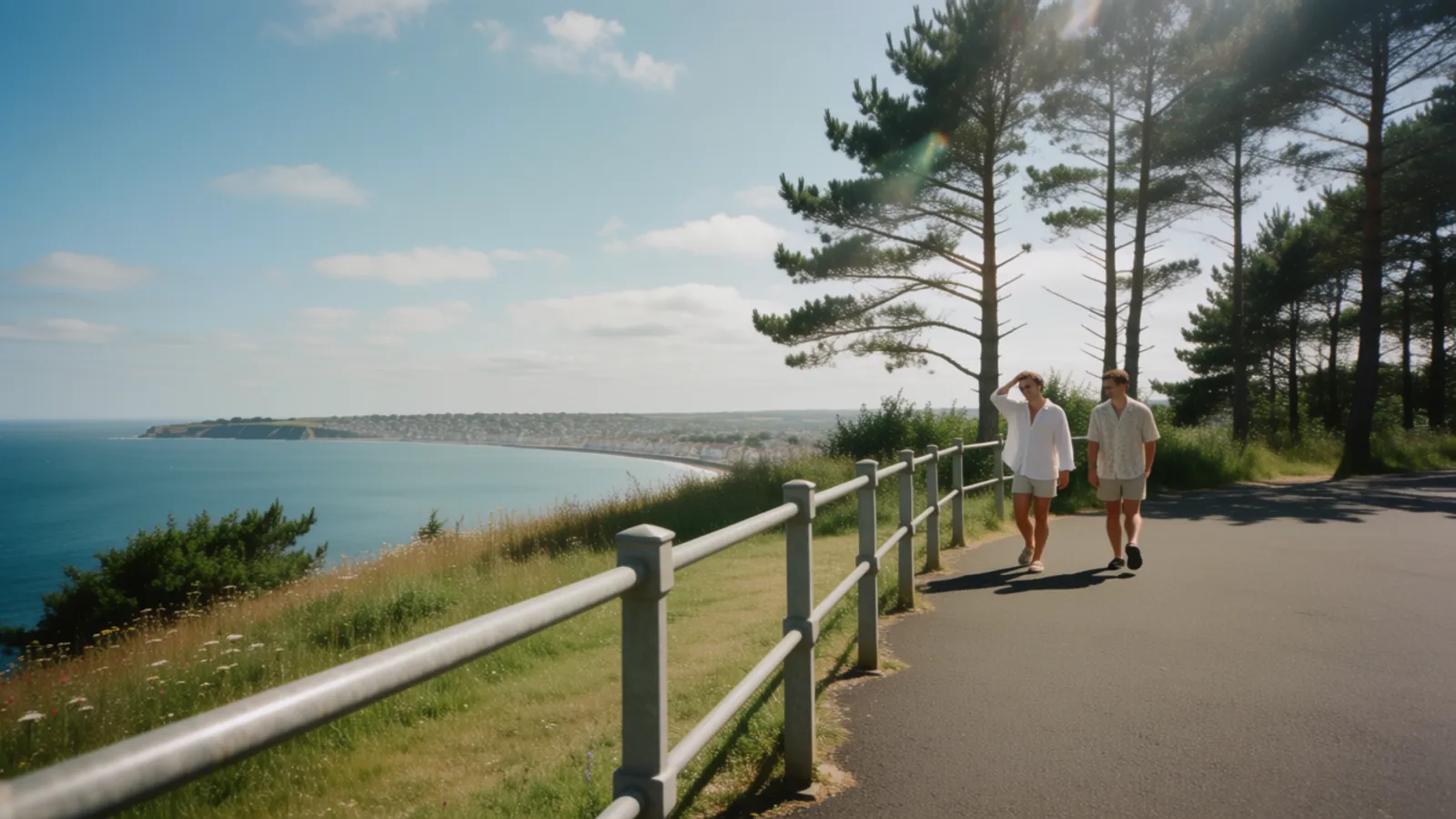

Manilva: where the vineyards meet the sea on the coast's western edge

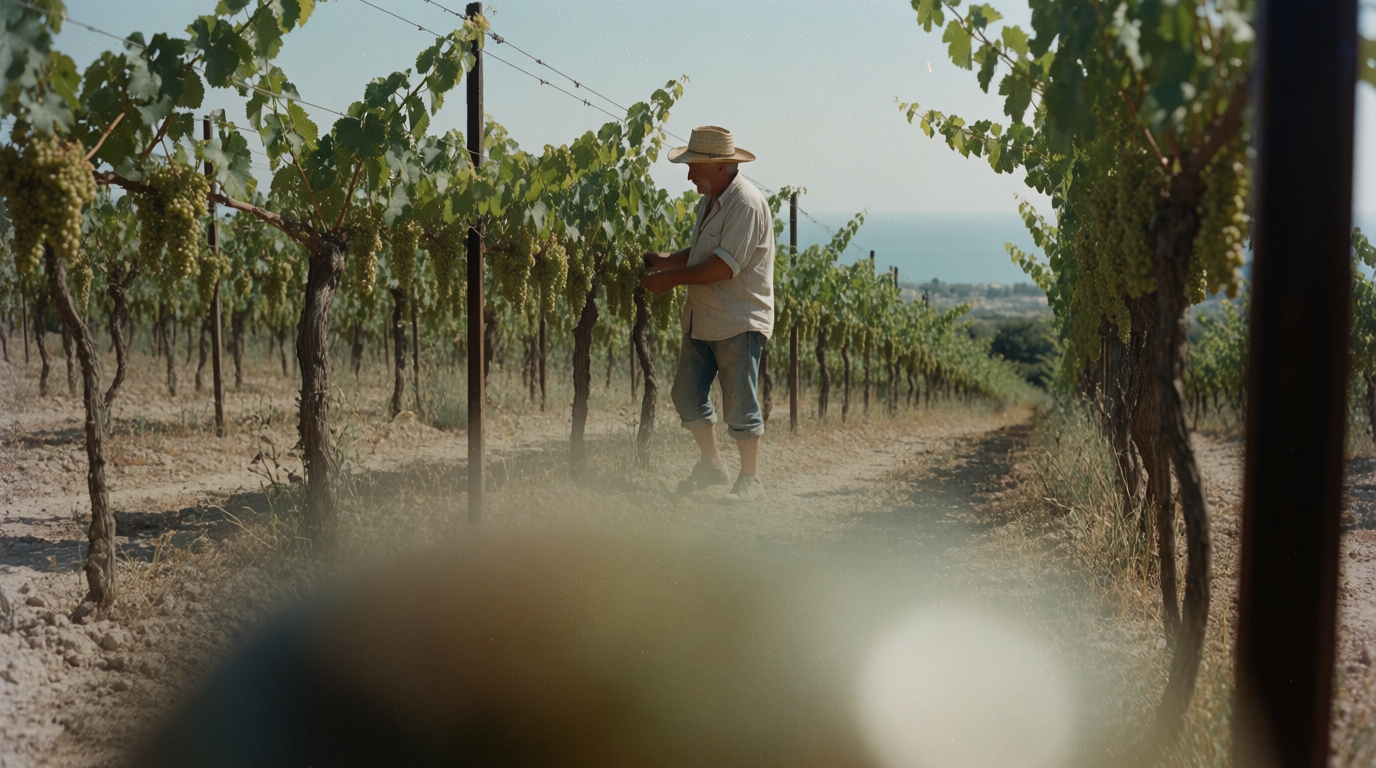
Manilva sits at the western hinge of the Costa del Sol, past Estepona and short of Sotogrande, where the coast road starts to feel less like a corridor of resorts and more like a place people actually farm. Vineyards climb the hills behind the town, the same slopes that have grown the moscatel grape for generations, and the sea is never far below. It is not a name that comes up first when people talk about buying on this coast, and that, for a certain kind of buyer, is exactly the appeal.
What you notice first is the split personality, and it is a useful one to understand before anything else. There is Manilva pueblo, the old hill town, dry and quiet and Spanish in the way that has nothing to do with tourism. Then there is the coastal strip, Sabinillas and Puerto de la Duquesa, where the beach life, the marina and most of the foreign residents actually are. Deciding which of these you want is really the first decision anyone makes here.
Season by season, Manilva keeps its own rhythm rather than the coast's usual one. August brings the Feria and a busy marina, but even then the town does not feel overrun the way Marbella or Fuengirola can. Winter is genuinely quiet, shutters down in the pueblo by mid afternoon, the coast road half empty, which some buyers find restorative and others find a little too still.
The pueblo versus the coast
Manilva's old town sits inland on a hill, a proper Andalusian pueblo blanco with narrow streets, a church tower you can see from the vineyards, and a pace of life set by locals rather than visitors. Property here tends to be older townhouses, often needing work, bought by people who want Spain rather than a Spanish beach resort. It is a fifteen minute drive down to the sea, which matters for daily life and matters more for winter, when that road can feel longer than it looks on a map.
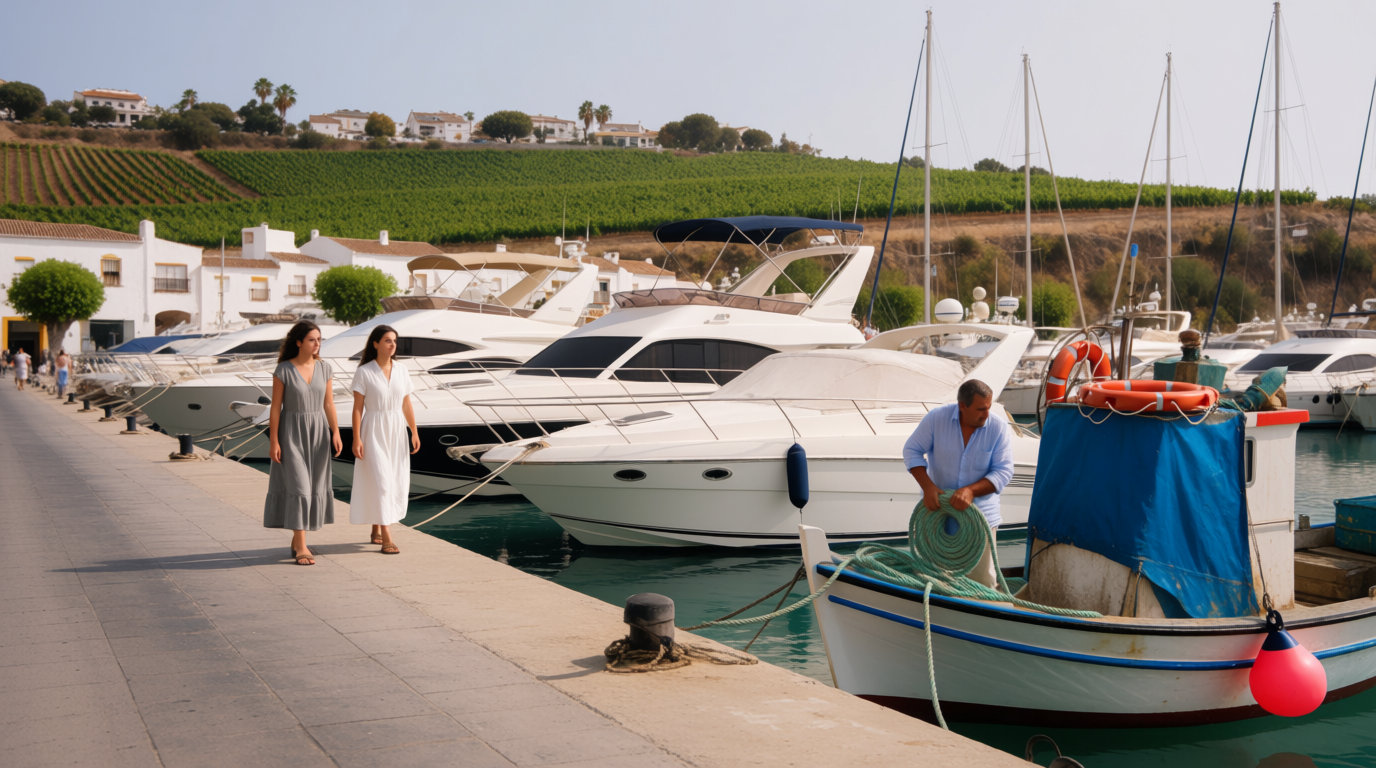
Down at the coast, Sabinillas is the working heart of things: a proper high street, a daily grocery rhythm, banks, pharmacies, a Wednesday market that draws people from along the coast. Puerto de la Duquesa, just along the front, is the marina end, all rigging and restaurant terraces, busier in summer and quieter but still pleasant in winter. Most people who move to Manilva for the sea end up somewhere between these two, close enough to walk to both.
Daily life, texture and pace
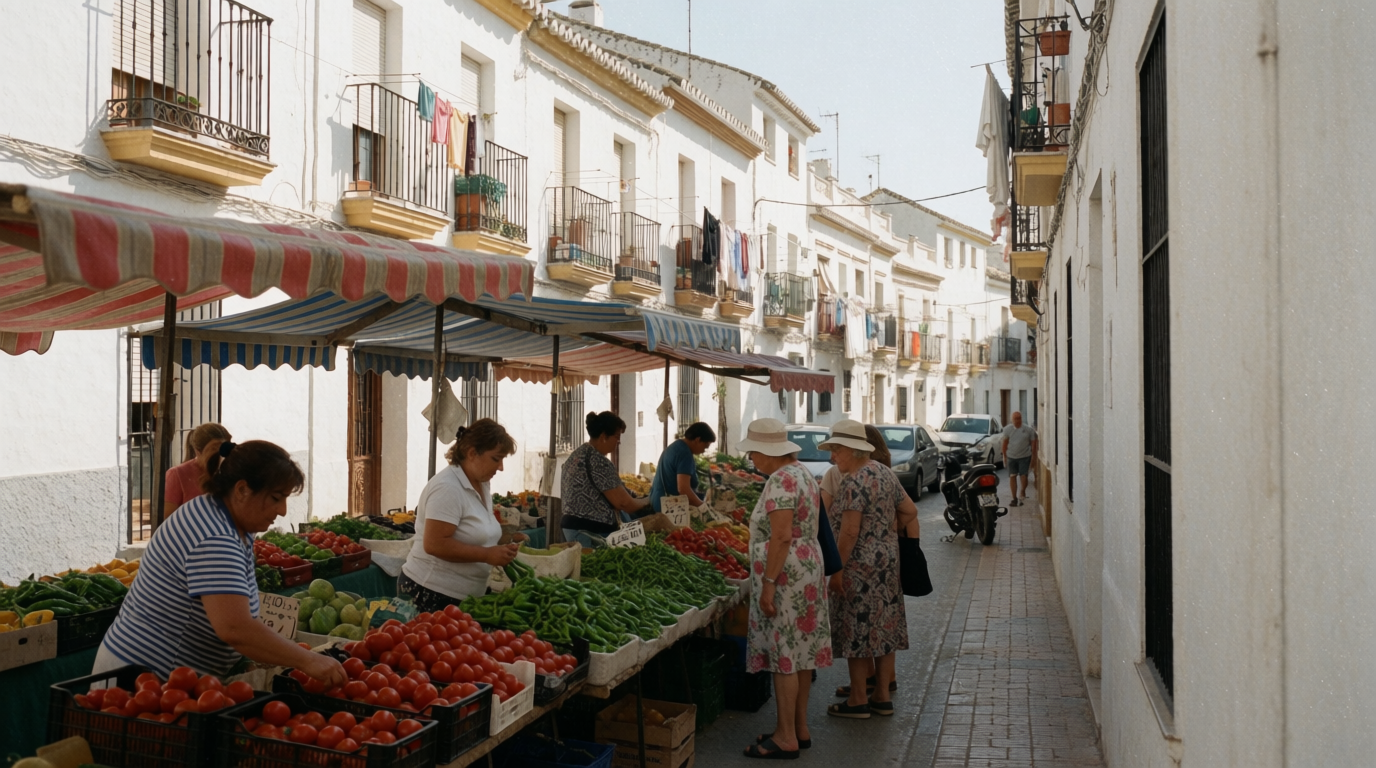
The Sabinillas market on Sunday mornings is one of the better ones on this coast, and it is worth building a week around rather than just visiting once. Stalls run along the seafront selling local cheese, olives, fruit from the Guadiaro valley, clothes and hardware, and by midday half the town seems to be there, market bag in hand, stopping for coffee before or after.
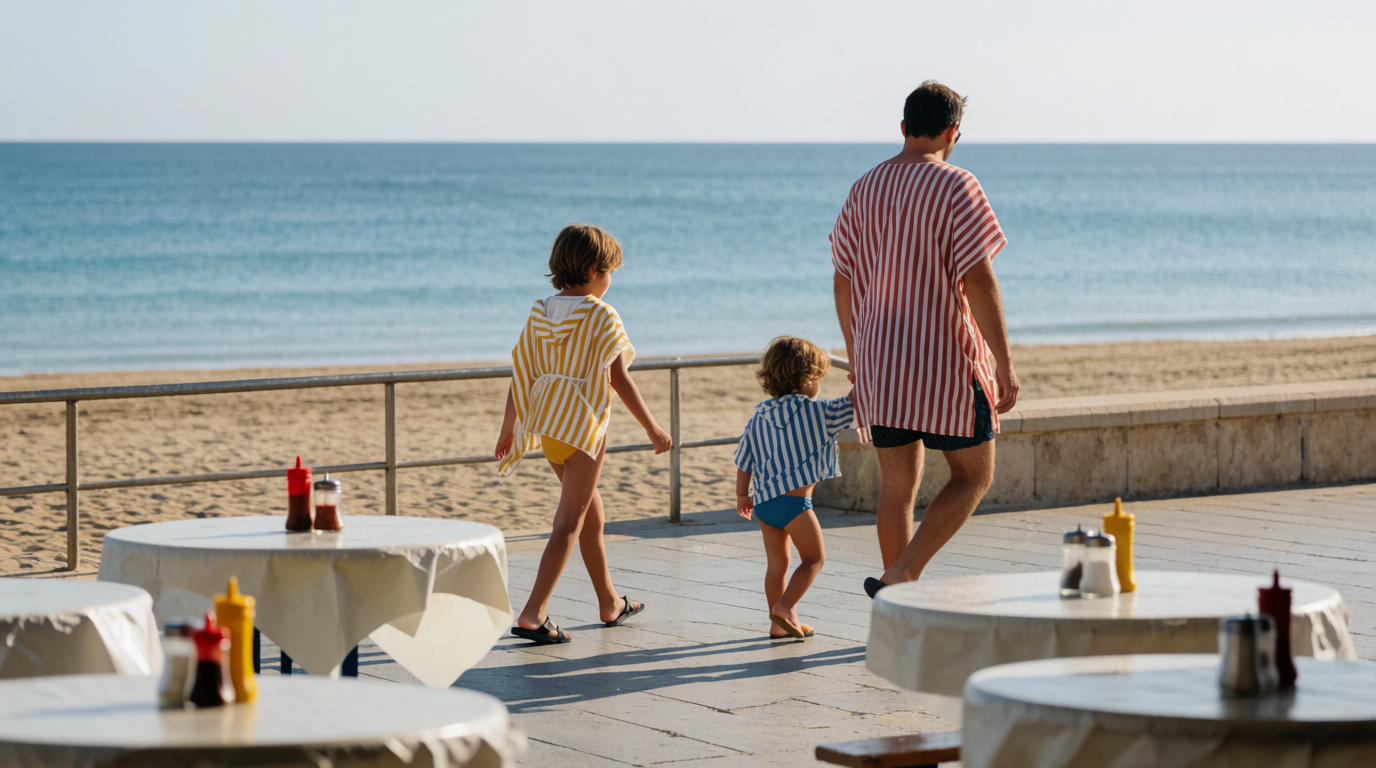
The paseo at Sabinillas is a proper working promenade rather than a manicured resort strip, running along the beach with a string of chiringuitos where you can get grilled sardines on a skewer without any fuss. In the pueblo, life centres on smaller things: the bar on the plaza, the church bell, the bakery that opens before anyone else is awake. Neither version is dressed up for visitors, which is part of what people come to like about the place.
Manilva does not perform for anyone. It is not trying to be Marbella, and it has stopped apologising for not trying.
Who tends to be happiest here
Manilva suits people who want the coast without the theatre of it: retirees who like a quiet winter and don't mind driving twenty minutes to Sotogrande or Estepona for a wider choice of restaurants, walkers who use the hills behind the pueblo and the coastal path toward Sabinillas, and year round residents who want a real Spanish town rather than an expat enclave with sea views.
Golfers do well here too. The area sits within easy reach of several courses along this stretch, including those around Sotogrande, and a number of residents build their week loosely around a round and lunch afterward. Families with school age children tend to look slightly further east, toward Estepona or Sotogrande, where international schools are closer and the drive shorter on a weekday morning.
Summer only owners find Manilva quietly rewarding rather than exciting: it fills gently in August, empties by October, and does not ask you to entertain it. If you want a lively winter social calendar and restaurants that stay open past ten most nights of the week, this is not that town, and Estepona or Marbella will serve you better.
What Manilva is not
It is worth being plain about the trade-offs. Manilva does not have the restaurant depth of Estepona's old town or the polish of Sotogrande's marina. Nightlife is limited to a handful of bars, mostly seasonal. If you want walkable culture, a wide choice of galleries and a buzzing evening scene twelve months of the year, you will find Manilva thin by comparison.
What it offers instead is proximity without pressure: a working vineyard landscape a few minutes from a proper beach, a market town that has not been rebuilt for tourists, and property prices that, relative to Estepona or Sotogrande just along the coast, still reflect its lower profile. That gap has been narrowing as more buyers discover the area, but it remains one of the more grounded corners of this stretch of coast.
The AP7 and the coast road put Manilva within about twenty five minutes of Estepona and perhaps forty of Marbella, so it is never cut off, simply quieter by choice. Gibraltar and its airport are close too, roughly thirty minutes along the coast, which some residents use more than Málaga.
If any of this sounds like the pace you are after, whether that is a townhouse in the old pueblo or an apartment near the Sabinillas front, we would be glad to talk it through and introduce you to the local people who know Manilva properly, street by street and season by season.